Tag: forex

  • DAB: The Hidden Bias That Destroys Profitable Traders

    DAB: The Hidden Bias That Destroys Profitable Traders

    There’s a moment—every trader knows it—when you’ve had a good run. You’re up for the session, maybe even on a streak. The charts have been generous. You’re calm. Confident. Dialed in.

    And then it happens.

    You take one more trade. Maybe it’s not your best setup. Maybe it is. But this time… it turns. Fast. And instead of cutting it when your rules say to, you freeze.

    Why?

    Because it’s not just a losing trade.

    It’s threatening to take back your wins.

    And the pain of giving up $150 of profit feels worse than the risk of losing everything.

    That’s DAB—Drawdown Aversion Bias.

    A psychological trap where the fear of surrendering a small win causes us to abandon the very discipline that earned that win in the first place.


    What DAB Sounds Like:

    • “It’s only a pullback. It’ll bounce.”
    • “I’ll just wait a little longer—then close.”
    • “I’ve had such a good day, I deserve this trade to work.”
    • “I can’t give it all back now…”

    DAB doesn’t scream. It whispers. And its voice sounds a lot like hope.


    Why DAB Is So Dangerous

    Because it doesn’t strike in chaos—it strikes in confidence.

    After you’ve already proven you can win.

    It tricks you into thinking you’ve earned an exception to your rules.

    That you’ve ascended past discipline.

    And before you know it, you’re $600 in drawdown on a trade you never should’ve let go past -$150.

    You’re negotiating with yourself.

    You’re justifying, praying, watching.

    You’re no longer trading.


    How to Defuse DAB

    1. Name It.If you can spot it, you can stop it. When that creeping resistance to cutting a loser shows up, say it out loud: “This is DAB.”
    2. Use a Session Trailing Stop.Decide ahead of time: once I’m up X, I won’t give back more than Y—no exceptions.
    3. Pre-Commit a Max Per-Trade Risk Once Green.E.g. “If I’m up $500, no trade may risk more than $150 of that.”
    4. Journaling the Feeling.Capture what it feels like in the moment DAB kicks in. You’ll start to see the pattern—and build immunity.
    5. Honor the Exit More Than the Outcome.Don’t judge the trade by what happened after you closed it.Judge it by whether you followed the rules that keep you in the game.

    Final Thought:

    Most traders don’t blow their accounts on their worst day.

    They blow it trying to protect their best ones.

    DAB is sneaky. It’s emotional.

    And if you don’t learn to beat it, it will beat you.

    But when you master it?

    You don’t just keep your profits.

    You earn your trust back. Trade by trade.
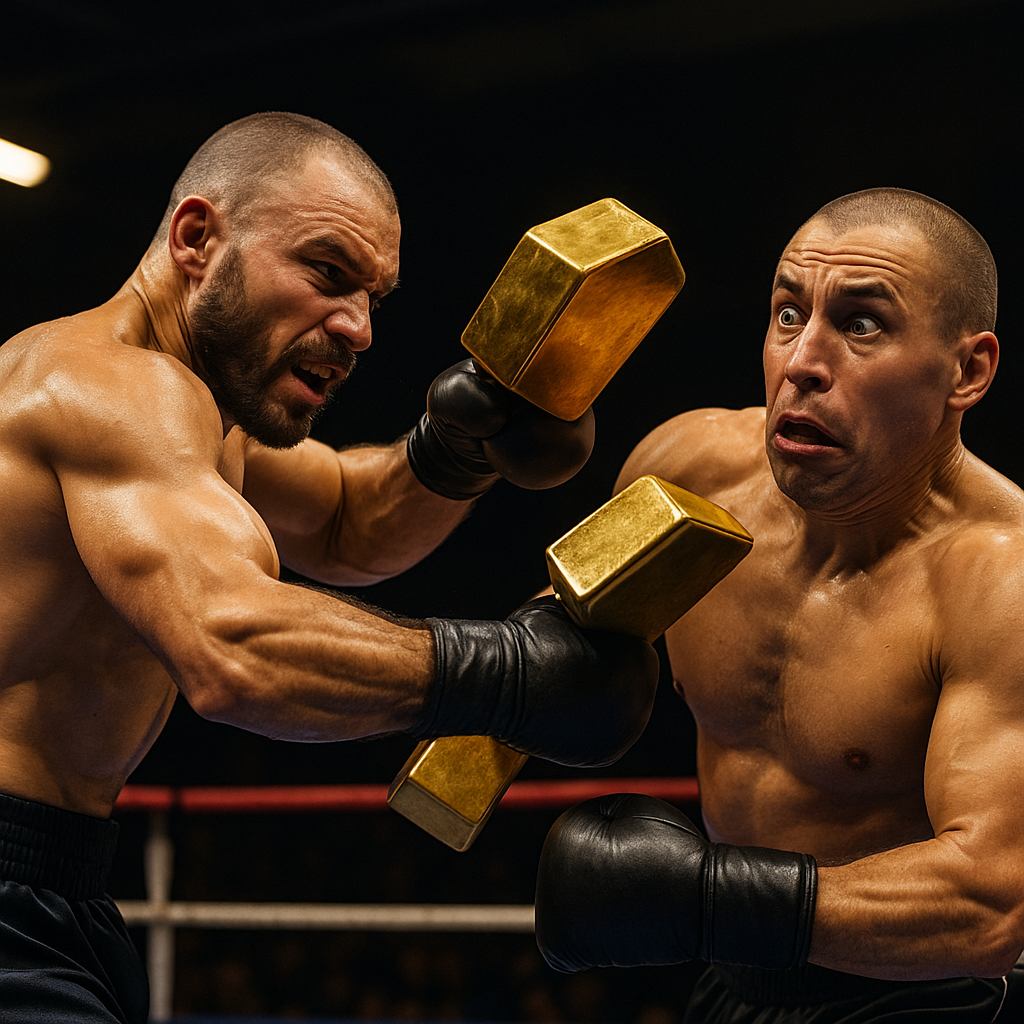
  • The Gold Market Isn’t a Fair Fight — And That’s Exactly Why We Trade It

    The Gold Market Isn’t a Fair Fight — And That’s Exactly Why We Trade It

    I used to think the gold market was a dignified place — a realm where central banks, jewelers, and bullion dealers transacted based on genuine supply and demand. A place where price moved because someone needed to hedge, deliver, or diversify.

    How quaint.

    Then I started trading it.

    What I discovered is that beneath the polished veneer of the gold market lies a battleground teeming with sharks, spoofers, and algorithmic predators. It’s less of a serene exchange and more of a high-stakes poker game — except the house has a PhD in behavioral finance and an army of bots sniffing out retail fear like blood in the water.


    🕵️‍♂️ The Puppet Masters Behind the Curtain

    Let’s start with spoofing — the art of placing massive orders with no intention of executing them, purely to trick the market into thinking there’s demand or supply. It’s like shouting “fire” in a crowded theater just to cut to the front of the popcorn line.

    Example? Look no further than JPMorgan, whose traders spent nearly a decade playing the precious metals markets like a piano — layering fake orders to move price and triggering stop-losses for fun and profit. The result? A tidy $920 million fine, which sounds like a lot until you consider how much they probably made. No criminal charges. Just another day in the financial Hunger Games.

    And then there’s Andrew Maguire, the whistleblower who exposed manipulation in the silver market — watching in real-time as massive sell orders were dumped to create panic, only for the same players to scoop it up cheaper seconds later. This isn’t conspiracy theory. It’s documented market behavior.


    🧠 Why Retail Traders Are So Often the Punchline

    The average retail trader is taught that the market is logical, efficient, and maybe even a little fair. Which is adorable.

    What really happens is this: large players — institutions, market makers, and liquidity providers — spend a non-trivial amount of effort figuring out where retail money is sitting. They want to know:

    • Who’s long?
    • Where are the stops?
    • Where is the “obvious” breakout entry?

    And then?

    They trigger those levels on purpose.

    Enter the bull trap: price rips above resistance, retail floods in long, thinking “we’re breaking out!” — only for it to reverse and cascade down. Retail gets stopped out. Institutions scoop it up cheaper.

    Or the bear trap: price plunges below support, retail shorts in a panic, convinced the bottom’s falling out — and then the market V-shapes higher, fueled by their stop orders.

    It’s not personal. It’s just math. When you’re running millions or billions, you need liquidity to enter a position. You find it where the retail stops are — just beyond the obvious lines on the chart.

    This isn’t theoretical. It happens every day.

    If you’ve ever had a perfect breakout trade reverse the moment you entered — congrats. You’ve been stop-hunted.


    🎯 Why We Still Trade Gold Anyway

    So if it’s rigged, manipulated, and full of traps… why trade gold?

    Because volatility is opportunity. And gold — unlike most markets — moves every day. It doesn’t sit around waiting for an earnings report or some quarterly guidance. It breathes. It pulses. It reacts to everything — inflation prints, rate whispers, war rumors, DXY jitters, 10-year yields, and occasionally just the mood of the room.

    We don’t trade everything. We trade gold. Because when you focus on one instrument long enough, you start to see the traps before they’re laid. The price action whispers to you. You sense when a candle is real and when it’s bait. You stop being lunch, and start getting your share.

    But here’s the thing: gold isn’t just any market. It’s one of the hardest instruments in the world to master. It moves fast. It fakes out both sides. It responds to signals from five different markets at once. It humbles the cocky and rewards only the obsessive.

    Which is why we believe: if you can learn to ride the gold bull, you can ride any bull in the rodeo. All it takes is a few adjustments to your saddle.


    📉 Our Edge: Specialization, Not Magic

    Most retail traders lose because they try to trade everything — chasing action instead of mastering one battlefield. But gold rewards patience. It rewards focus. Every fake breakout, every stop hunt, every trap becomes a lesson — if you’re paying attention.

    Our group doesn’t claim perfection. We take hits. But we understand this market. We know what it’s capable of. And we know what we’re capable of when we stick to the plan.


    So yes — the gold market is rigged, sharp-edged, and full of people trying to take your money.

    But that’s why it’s worth mastering.

    Not because it’s safe.

    Because it’s real.

  • When You Hope There’s Only One More Thing to Fix

    When You Hope There’s Only One More Thing to Fix

    There comes a point in every serious trader’s journey where you start whispering to yourself, “Maybe it’s just this one last thing.” One more dial. One more adjustment. One more rule you finally start obeying like it actually matters.

    It’s not perfectionism exactly. You’re not trying to be flawless. You’re just… tired. Tired of the ups and downs. Tired of knowing you’re close. Tired of watching your system almost work—if only you could stop screwing it up.

    It’s not delusion. It’s hope.

    It’s earned hope backed by thousands of hours of screen time and heartbreak.

    At this stage, you don’t need a new system. You don’t need another coach. You don’t need to watch another damn YouTube video of a dude in a Bugatti explaining risk management while wearing a tank top and gold chain.

    You already know what works.

    You just need to do it.

    Again. And again. And again.

    That’s where I am.

    After years of refining my process, blowing up accounts, clawing my way back, writing rulebooks and ignoring them, building trading AI to keep me sane—I finally believe this may actually be it. The last adjustment. The final behavioral shift that lets everything lock in.

    And I’m writing this not just to remind myself, but to speak to anyone else standing in this same weird psychological hallway:

    You are not asking the wrong question.

    There is a point where you don’t need to fix ten things.

    Just one.

    And it’s the boring one.

    It’s the emotional one.

    It’s the “Can I do this again tomorrow?” one.

    If you’re hoping it’s just one more thing, and you’re showing up with honesty, humility, and self-awareness—you might not be dreaming.

    You might be right.