Category: Insights

  • The Trade You Should’ve Taken Isn’t Coming Back

    The Trade You Should’ve Taken Isn’t Coming Back

    There’s a certain kind of regret that only traders know.

    It’s the one that shows up five minutes after you watch your setup trigger, run clean to target… and you weren’t in it.

    Maybe you hesitated.

    Maybe you flinched.

    Maybe your cat jumped on your keyboard.

    Doesn’t matter.

    You missed it.

    And now you’re staring at your screen like it owes you something.

    Here’s the trap:

    You start telling yourself:

    “I just need to get back what I should’ve made.”

    “The next trade can be a makeup trade.”

    “If I catch the next one, I’ll be even emotionally.”

    That’s when you place a bad trade trying to undo a missed good one.

    And just like that, you’re not trading anymore—you’re negotiating with regret.

    Let’s be clear: the missed trade is gone.

    It’s not “coming back.”

    Price doesn’t care what you meant to do.

    The market doesn’t run on should’ve.

    Every time you try to “make up for it,” you’re tying your current decision to a moment that no longer exists.

    Here’s the real move:

    Breathe.

    Zoom out.

    Admit you missed it—and then protect your edge like it’s the last thing you own.

    Because it kind of is.

    Some truths that will save your capital:

    • A missed A+ setup is better than a forced B- one.
    • Discipline doesn’t mean never flinching—it means not compounding the flinch.
    • Regret isn’t a trading signal.
    • The next trade has nothing to do with the last one unless you let it.

    Your job isn’t to be perfect.

    Your job is to protect the integrity of your system.

    That trade you should’ve taken? Let it go.

    The next real one? Show up clean.

    “Discipline is refusing to punish yourself with a worse trade.”

    Write it on your wall.

    Because the market doesn’t care if you missed the good one.

    But it will absolutely punish you for chasing it.

  • Outlasting Luck: What Roman Paolucci Can Teach You About Trading

    Outlasting Luck: What Roman Paolucci Can Teach You About Trading

    I came across a video by Roman Paolucci recently, and it hit me hard. His point was simple but devastating: in trading, luck and skill look the same in the short run.

    That’s why trading feels so damn deceptive.

    Luck vs. Skill

    Think of trading like poker.

    • In roulette, no amount of skill matters. It’s pure chance.
    • In poker (and trading), you can play your cards better than the next guy — but luck still decides who wins in the short term.

    The kicker? Some people get lucky streaks so good that they look like geniuses. A trader can flip coins for a few months and, by chance alone, look “consistently profitable.” Those folks become the gurus who parade their results and sell courses, while ignoring the other 990 students who blew up.

    Why This Matters for You

    If you’re a trader, here’s what it means:

    • A green month doesn’t prove you have an edge.
    • A red month doesn’t prove you’ve lost it.
    • Variance can make you feel like a hero or a failure, but neither is the truth.

    The only thing that separates real traders from coin-flippers is this: discipline and structure that allow you to outlast randomness long enough for your edge to show.

    Edges Don’t Last Forever

    Paolucci also points out that even when you do have an edge, it’s temporary.

    • Markets change.
    • Patterns decay.
    • The inefficiency you’re trading today might not exist in six months.

    That doesn’t mean you’re doomed. It means you can’t “set and forget.” You adapt. You refine. You keep learning.

    The Hard Truth

    • There is no holy grail.
    • No course or signal service can give you a money-printing strategy.
    • If someone claims otherwise, they’re selling hopium, not trading.

    The irony? If 1,000 people take their course, statistics guarantee that a few will get lucky and look successful — and the guru will point to those students as “proof” it works.

    My Hydra Heads

    I’ve lived this in my own trading.

    • At first, I thought all my problems were solved when I added an automatic hard stop exit. No more catastrophic wipeouts! I thought I was “there.”
    • But solving that problem exposed another: my win rate fell, and my expectancy started bleeding out.
    • Each fix created a new hydra head to slay — tilt, overtrading, expectancy drag, edge decay.

    It’s frustrating. Every time you think you’ve cracked it, the market hands you a new problem. But that’s also how I know I’m moving past randomness. A coin-flipper never even gets to this stage.

    The Way Forward

    Trading isn’t about chasing luck. It’s about surviving variance and adapting as edges shift.

    If you want to last:

    1. Build rules that protect you from tilt and catastrophic loss.
    2. Measure your performance over hundreds of trades, not days or weeks.
    3. Expect to adapt — every edge has an expiration date.

    Most traders wash out because they confuse luck with skill and give up before their true edge can prove itself.

    The game isn’t about being lucky. The game is about outlasting luck.

    That’s Paolucci’s real message, at least as I heard it: you don’t need a holy grail. You need to survive the noise long enough for your discipline to separate you from the coin-flippers.

  • The Boredom Trap: What Nobody Tells You About Trading Mastery

    The Boredom Trap: What Nobody Tells You About Trading Mastery

    Most traders never get good enough to even see the boredom trap.

    That’s the cruel little secret of trading mastery.

    You spend years grinding, sweating, bleeding, blowing accounts, rebuilding, questioning your sanity…

    …all so you can eventually sit down at your desk, execute a handful of trades, and feel…

    nothing.

    No thrill.

    No panic.

    No drama.

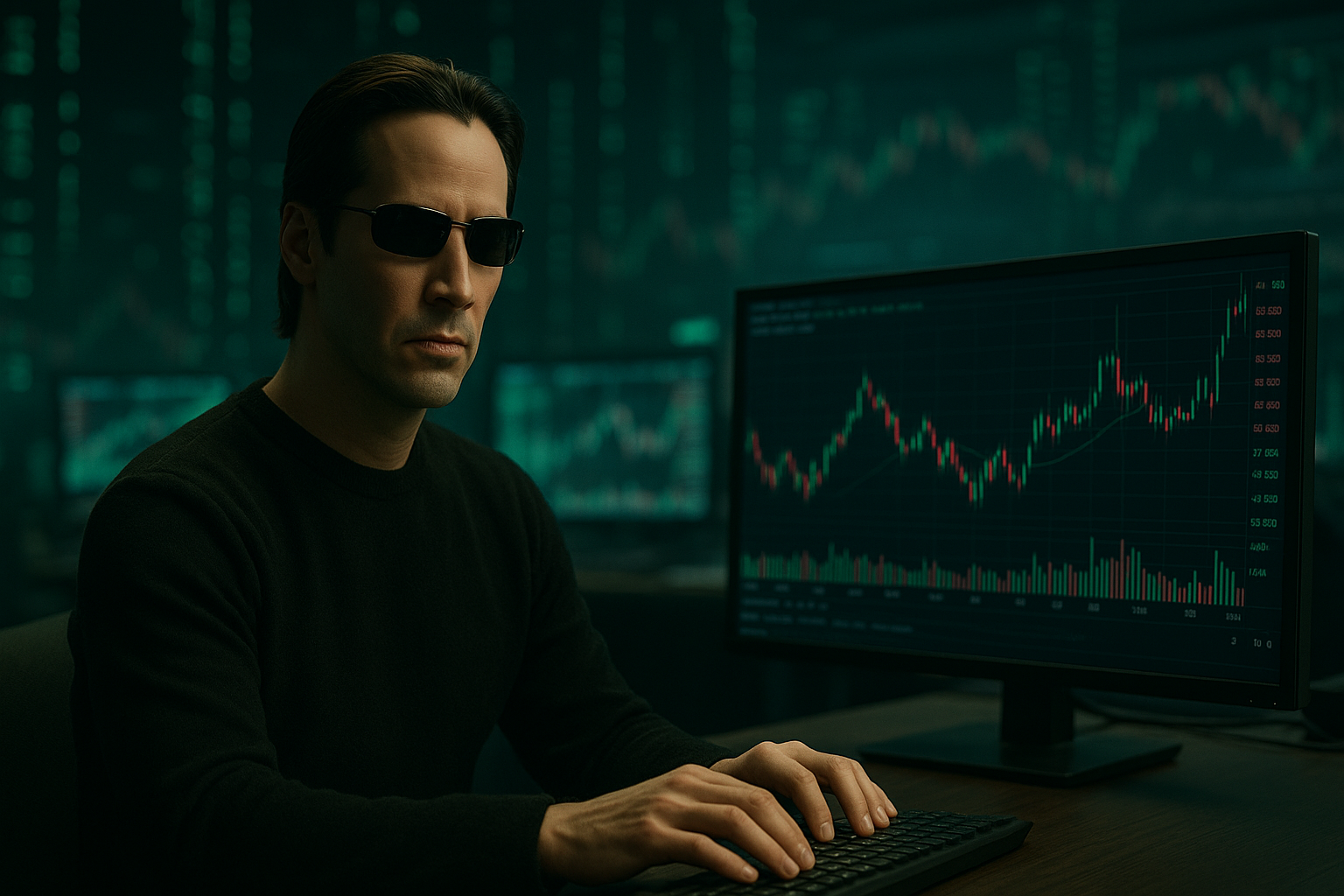
    Just… mechanical, procedural execution— like that scene in The Matrix when Neo finally sees the code for what it is, stops dodging, and effortlessly controls the fight against Agent Smith. The bullets slow. The chaos dissolves. He’s no longer reacting — he’s simply operating inside the system with total calm.

    Congratulations.

    You’re now boring.


    But here’s the danger:

    Boring is not the enemy.

    But boredom is.


    Why The Boredom Trap Exists

    When you were in the “struggle phase,” every trade felt important.

    Every session was an emotional referendum on whether you were good enough.

    Every mistake triggered a self-examination.

    You were alive in the fight.

    But eventually, if you actually do the work, something incredible happens:

    • The setups become obvious.
    • The entries become automatic.
    • The exits happen without bargaining.
    • The losses no longer shake you.
    • The wins no longer thrill you.

    You are simply… executing.

    That’s mastery.

    That’s where the real money is made.

    And that’s also where many traders slowly start self-sabotaging.


    The Two Types of Traders Who Reach Mastery

    1️⃣ The Identity Seeker

    They were addicted to becoming a trader.

    The challenge was the thrill.

    The struggle defined them.

    Now that it’s just execution? They feel empty.

    So they unconsciously seek out ways to bring back the feeling — often by taking dumb risks they don’t need to take.

    2️⃣ The Operator

    They weren’t in it for the thrill.

    They were in it to build something durable.

    To master a complex skill and run it like a business.

    For them, the absence of emotional spikes is not boring — it’s deeply satisfying.

    They scale quietly.

    They compound wealth.

    And they don’t need drama to feel alive.


    Which One Are You?

    Here’s the test:

    If you secretly fear that once trading feels easy, you’ll lose interest — that’s a good sign.

    It means you’re self-aware enough to recognize the trap before you fall into it.

    If you’re excited to make trading so boring that you forget what you traded yesterday?

    You’re wired for long-term wealth.


    What to Do About the Boredom Trap

    1️⃣ Build Rituals of Professionalism

    Treat your trading desk like an operating room.

    Pre-session checklist.

    Post-session logs.

    High-level journal entries.

    It’s not entertainment. It’s precision.

    2️⃣ Find Satisfaction in Clean Execution

    Every perfect HSE exit? A private fist bump.

    Every day you followed your rules? Another brick laid.

    Build your identity around the behavior, not the P&L.

    3️⃣ Avoid the Dopamine Drift

    The second you start “spicing things up” with unnecessary size or marginal setups, catch yourself.

    That’s boredom whispering in your ear.

    Ignore it.

    4️⃣ Respect the Machine

    Once you’ve built the machine, your job is to operate it, maintain it, and keep it fed.

    You don’t need to tinker with it every day.

    5️⃣ Create Meaning Outside the Charts

    Boring trading gives you something far more valuable than excitement:

    Freedom.

    Use it.

    Spend time with your family.

    Build something new.

    Mentor someone.

    Write.

    Travel.

    Leave the charts alone after the session ends.

    The goal isn’t to fill your emotional needs through trading.

    It’s to let trading fund the life you want to live.


    The Real Mastery

    You don’t master trading by chasing excitement.

    You master trading by building a machine that produces capital without your emotions being involved.

    Boredom isn’t failure.

    Boredom is the victory lap.

    Stay sharp.

    Stay grounded.

    Stay boring.

  • Trading: The Fine Art of Not Maiming Yourself

    Trading: The Fine Art of Not Maiming Yourself

    Trading is a little like juggling knives. At first, you’re terrified. Every toss feels like a near-death experience. Then you get used to it. You start to think, Hey, maybe I’m actually good at this. You start flipping them higher, showing off. And that’s exactly when you lose a finger. Or two.

    The danger isn’t that the knives suddenly get sharper—it’s that you forget what you’re holding. You forget that one bad catch and you’re bleeding on the carpet.

    Or take juggling chainsaws. Sure, the teeth don’t bite you every time. Sometimes you can toss them around for hours without incident. But one slip when you’re tired, distracted, or just a little too cocky—and the chainsaw reminds you what it was built for.

    Trading is the same. The market doesn’t even have to do anything unusual. It’s you. Lack of sleep. Revenge trading. That little voice saying, Just one more trade, I’ll get it back. That’s the moment you’re reaching up with bare hands into spinning steel.

    I’ve seen it in myself and in others:

    • Trading is like walking a tightrope. You can cross it ten times, twenty times, and then on the twenty-first you decide to look at your phone. Gravity doesn’t care how many times you’ve been lucky.
    • Trading is like cooking with hot oil. Most of the time it just sizzles. But turn your back for a second, toss something in carelessly, and suddenly you’re explaining to the ER nurse how you got third-degree burns trying to make onion rings.
    • Trading is like keeping a tiger on a leash. It might seem tame—heck, you might even start to think it likes you. But it’s still a tiger. The moment you forget that, you’re dinner.

    The point is: the risk never goes away. You can get sharper, faster, better at catching the knives. You can even add more knives, or a chainsaw or two. But the danger never leaves the act—it only hides behind your growing comfort.

    And that’s the trap. Comfort is what gets traders killed. Confidence is fine. Overconfidence is where the blood starts to spatter.

    So don’t forget: every session, every trade, you’re back on stage, tossing blades under hot lights. Respect the knives. Respect the chainsaws. Respect the tiger. Because the moment you don’t—you’ll be counting your fingers and realizing you’ve got fewer than when you started.

  • Scientist Are Turning Lead Into Gold—Sort Of

    Scientist Are Turning Lead Into Gold—Sort Of

    For as long as humans have been staring at shiny things, we’ve dreamed of turning lead into gold. The alchemists gave it a go in their candle-lit labs, usually ending up with smoke, mercury poisoning, and a deep need for medieval health insurance.

    Now, the scientists at CERN’s Large Hadron Collider have finally pulled it off—just not in a way that’s going to make anyone rich. By smashing lead atoms together at nearly the speed of light, they managed to knock out a few protons here and there. Boom: instant gold. Actual transmutation. The dream of the ancients, realized.

    Before you run out to melt down your fishing sinkers, here’s the catch:

    • They created about 86 billion gold atoms during Run 2 of the collider. Sounds like a fortune, right? Wrong. That’s a grand total of 29 picograms—less than a trillionth of a gram. You’d lose more in the lint of your pocket.
    • Each atom exists for only microseconds before disintegrating. By the time you even thought “cha-ching,” the gold was gone.
    • Even with upgraded machines, they’re now making 89,000 gold nuclei per second. Which is like bragging about how fast you can print Monopoly money.

    So, is this a victory? Absolutely. Not for investors, but for physics. The experiment helps scientists understand particle interactions, validate their models, and push the boundaries of what’s possible.

    But here’s the takeaway for us traders: sometimes the shiny headline isn’t the real payoff. “Scientists Turn Lead Into Gold” makes you think retirement yachts and Scrooge McDuck vaults. The reality? A few atoms that vanish faster than your profits when you don’t exit at the hot stove line.

    It’s a reminder that value isn’t just about what exists—it’s about scalescarcity, and stability. Gold is still precious because it can’t be manufactured in bulk. At least not yet. If they ever figure out how to churn it out by the ounce, then you can start shorting gold futures with both fists. Until then, gold remains what it has always been: the ultimate store of value, not because it’s magical, but because it’s stubbornly hard to fake.

    So no, this isn’t the start of a new gold rush. It’s more of a scientific magic trick—fun to watch, but no one’s paying the rent with it. Meanwhile, in the actual market, gold still trades on fear, greed, and whether central bankers have had their morning coffee. That’s the alchemy we care about.

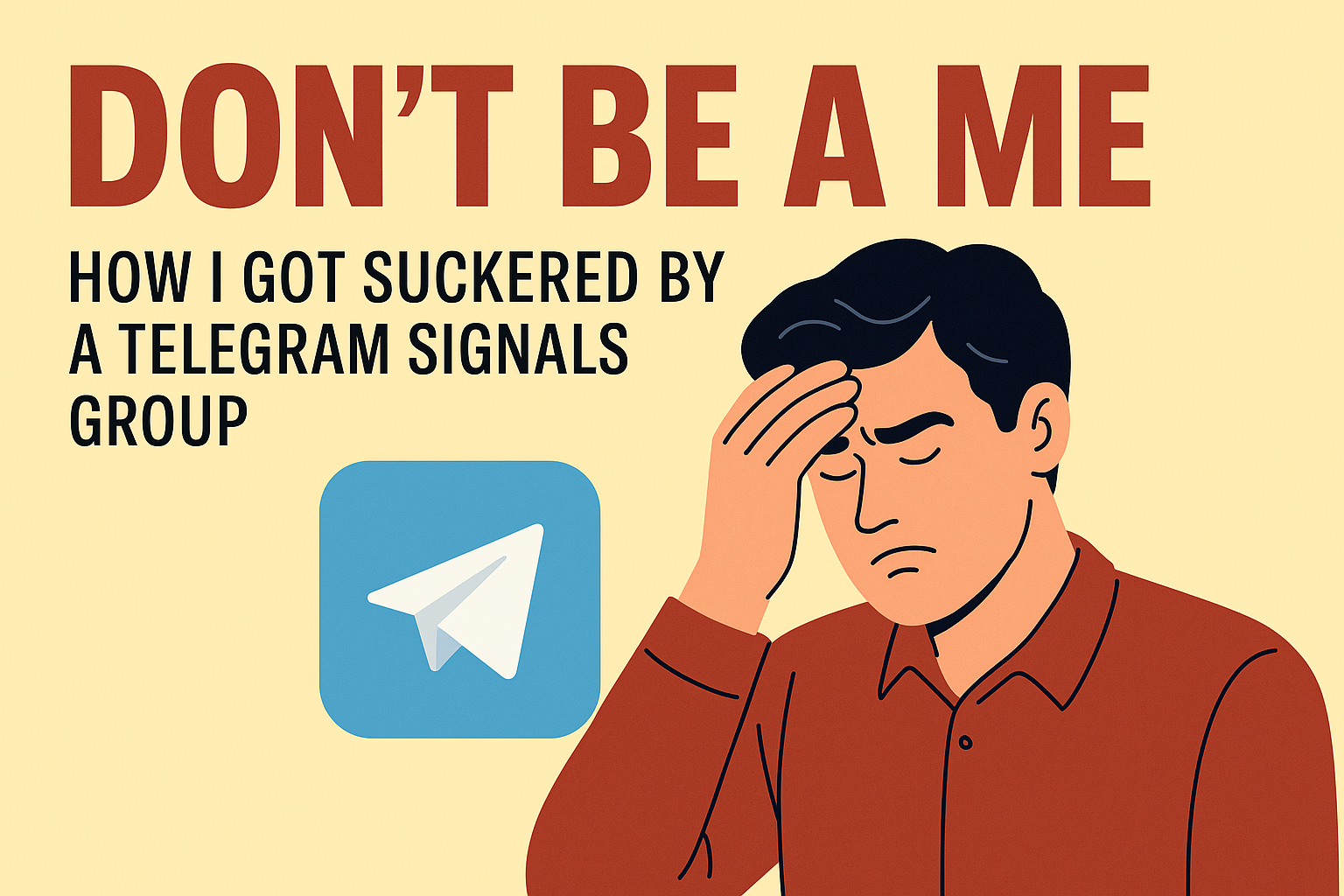
  • Don’t Be a Me: How I Got Suckered by a Telegram Signals Group

    Don’t Be a Me: How I Got Suckered by a Telegram Signals Group

    Early in my trading journey, I was starving for information. Hungry. Obsessed. I had a mentor, but I didn’t want to become a nuisance with my constant stream of rookie questions. So I did what every ambitious but impatient new trader does: I went looking for answers everywhere.

    YouTube? Check.

    Discord and Telegram? Check.

    Trading “gurus” with live streams and promises of secret sauce? Sadly, check.

    That’s how I ended up in a Telegram signals group.


    The Allure of Easy Trades

    This group was pumping out “signals” all day long. Every ping was like a dopamine hit. “Sell gold slowly,” the message would say. Then came the entry signal. Then, barely minutes later, the exit signal.

    Sometimes the move in my favor was so tiny it didn’t even cover the spread. Yet the provider would declare victory like they’d just nailed the trade of the year. I’d still be sitting in drawdown wondering what I was missing.

    Occasionally, yes, the trades made a little money. But just as often, the group would call it a “win” on a whisper of movement before the reversal took me under. And when the market really went against them? That’s when the stop loss magically got “adjusted” or the trade just got memory-holed. Rarely, and I mean rarely, would they flat-out admit they were wrong.

    Meanwhile, I was bleeding — financially and mentally. I thought I was the idiot. I thought I was the one who couldn’t execute what these “pros” were handing me on a platter.


    The Punchline: They Weren’t Even Traders

    Here’s the part that still makes me shake my head. Eventually, I discovered that the group I’d joined wasn’t even run by real traders. They weren’t analyzing charts, managing risk, or trading live accounts. They were simply copy-pasting signals from another group — which, surprise, turned out to be another scam.

    So not only was I paying for bad signals, I was paying for recycled bad signals. Think about that: I was losing money on knockoff trades from a knockoff provider. That’s like buying a fake Rolex and finding out it’s just a knockoff of another fake Rolex.

    At that point, the lesson became clear: if someone can churn out dozens of “winning” trades a day in a Telegram channel, they’re not traders — they’re marketers. And the only thing they’re trading is your subscription money for their lifestyle.


    The Hard Truth

    It took me longer than I’d like to admit to realize what was going on. The entire point of that signals group wasn’t to help me trade. It was to look successful enough to hook the free-trial crowd into paying full freight. I paid. I traded. I lost. They “won.”

    I wasn’t just taken for the subscription fee. I was taken for every dollar of drawdown those false victories left me holding.

    And here’s the kicker: the most damaging part wasn’t even the money. It was the false belief it planted — the idea that a “real trader” is in a trade all the time. That there’s always a setup. That more trades = more opportunities. That’s poison.


    What I Learned the Hard Way

    Yes, I eventually absorbed useful knowledge from various sources. But in the early days, I didn’t know how to filter it. I didn’t know how to separate good context from bad advice. And I sure as hell didn’t know that a Telegram channel blasting out trades like a firehose was closer to a carnival hustle than a trading plan.

    Trading isn’t about signals. It’s about discipline, structure, and patience. It’s about knowing when not to click as much as when to click. And no $50-a-month signal group is going to hand that to you.


    Don’t Be a Me

    So here’s the warning I wish someone had tattooed on my forehead when I was new:

    If you’re in a Telegram group that declares victory when the market barely sneezes, you’re not learning how to trade. You’re paying tuition to scammers whose business model depends on making you think you’re the problem.

    Don’t be a me. Save your cash. Save your mental health. Find a real mentor, build your own system, and understand that no one is going to sell you a shortcut to mastery.

  • When Gold Became Money: Humanity’s Shiniest Mistake

    When Gold Became Money: Humanity’s Shiniest Mistake

    Gold has been many things: decoration, status symbol, cause of wars, excuse for bad tattoos. But at some point in human history, it crossed the line from “shiny trinket” to “medium of exchange.” That shift—turning lumps of cosmic shrapnel into money—might be the most consequential branding campaign of all time.


    The First Spark: Egypt and Mesopotamia

    The earliest recorded use of gold as money goes back over 4,500 years. Ancient Egypt was hoarding it as early as 2600 BCE, calling it the “skin of the gods.” They didn’t quite use it as pocket change—more as a divine bling repository. Pharaohs weren’t making it rain; they were burying themselves with it.

    Meanwhile, in Mesopotamia, gold was being used in trade by about the same period, though not in neat little coins. It was weighed out in dust or bars, valued against silver and grain. Imagine buying your groceries with a handful of glitter and a scale—that was the system.

    So did gold-as-money start in one place? The evidence suggests it emerged in multiple cultures around the same time, like a bad meme spreading without Wi-Fi. Humans, scattered across the Near East and beyond, independently looked at this rare, shiny metal that never tarnished and thought: This should probably run the world.


    The Lydian Leap: First Coins

    Fast forward to about 600 BCE, and we get the first real “coins” in Lydia (modern-day Turkey). The Lydians stamped lumps of electrum (a natural gold-silver alloy) with official marks to prove authenticity. This was revolutionary: suddenly, you didn’t need scales or trust issues. The king’s stamp meant the weight and purity were guaranteed.

    This idea spread faster than bad financial advice on Reddit. Within a few centuries, the Greeks, Persians, and Romans were minting their own coins, and gold was firmly entrenched as the standard of value.


    Gold Across Civilizations

    • China: Used gold as a store of wealth but preferred bronze for day-to-day transactions. Gold was more of a status vault than a grocery fund.
    • India: Revered gold spiritually and culturally, using it in both jewelry and trade. Even today, India is one of the world’s largest consumers of gold—not because they all want to hedge inflation, but because weddings are basically Olympic events in precious metal.
    • The Americas: Civilizations like the Incas and Aztecs treated gold as sacred, a physical manifestation of the sun. They didn’t use it as currency in the Western sense; that brilliant idea came later when conquistadors showed up and said, “Oh cool, you call this the sweat of the gods? We call it collateral.”

    From Coins to Standards to Chaos

    Gold’s journey didn’t stop with coins. It went on to underpin empires:

    • The Roman Empire minted the aureus, a gold coin that symbolized stability—until, of course, they started shaving edges and debasing it, proving governments have always been creative with money-printing.
    • Medieval Europe ran on gold coins like florins and ducats, which became the global standard for trade.
    • Modern Era: By the 19th century, the Gold Standard was born—currencies pegged to a fixed weight of gold. It gave the illusion of discipline until World War I blew it up.
    • 1971: Nixon finally took the U.S. off the gold standard, which is why today the dollar is backed not by gold but by the world’s collective shrug and America’s military budget.

    So, One Origin or Many?

    Gold didn’t become “money” in just one place—it emerged organically across multiple civilizations. Human brains, separated by geography and culture, all zeroed in on the same thing: gold doesn’t corrode, it’s rare, it’s divisible, and it makes a great status flex. That convergence suggests it was less a cultural fad and more an inevitability.

    In other words: if aliens exist, I wouldn’t be surprised if they also argue about whether their currency should be pegged to some shiny cosmic metal.


    Why It Matters Now

    Gold’s story is our story. It’s the tale of how something completely useless—seriously, try building a house out of gold—became the ultimate symbol of power. We didn’t choose it for practicality. We chose it for psychology. It was rare, it was beautiful, and it was eternal.

    And that’s still true today. Every tick on the XAUUSD chart is a pulse of that ancient human obsession. The same force that drove Lydian kings to stamp coins, Egyptian pharaohs to hoard tombs, and conquistadors to plunder temples now drives traders, central banks, and yes, guys like me, staring at candles on a screen.

    Gold: the original influencer.

  • How to Handle the Weekend After a Bad Trading Week

    How to Handle the Weekend After a Bad Trading Week

    There’s a very specific kind of pain that only traders know.

    You’ve had a rough week.

    You’re sitting in drawdown.

    You’re disappointed, angry, frustrated.

    And worst of all?

    The markets are closed.

    You can’t fix it.

    You can’t take action.

    You just sit there.

    Marinating in your own bad decisions.


    The trader’s weekend dilemma:

    When you’re in a losing streak, the weekends feel longer.

    Because unlike most normal people, weekends aren’t rest for traders — they’re emotional purgatory.

    • Your brain obsesses over charts that aren’t moving.
    • You replay trades you should’ve exited earlier.
    • You run fantasy simulations of what would’ve happened “if only.”

    The urge to make the pain stop starts to build.


    Here’s where it gets dangerous:

    The natural instinct is to reach for a dopamine hit to alleviate the discomfort:

    • Binge Netflix.
    • Scroll social media endlessly.
    • Overeat.
    • Numb yourself with alcohol.
    • Start planning “big” trading adjustments.
    • Fantasize about how you’ll make it all back Monday morning.

    Anything to make the emotional sting feel less sharp.


    But here’s the truth nobody wants to hear:

    Every time you seek relief, you train your brain to seek immediate comfort instead of long-term discipline.

    And that’s the exact dynamic that shows up when:

    • You revenge trade to erase losses.
    • You overtrade trying to feel “back in control.”
    • You hold losing trades beyond your stop because “it might come back.”

    Seeking relief becomes your default trading behavior.


    The real work is done in this weekend pain.

    This is your training ground.

    Not the charts.

    Not the trades.

    Right here. Inside this discomfort.

    Because trading success isn’t about feeling great while you trade.

    It’s about executing correctly while you feel like absolute garbage.


    What to do instead:

    1️⃣ Sit in the pain.

    Feel it. Let it wash over you without trying to numb it.

    This is the currency you’re paying for your growth.

    2️⃣ Reflect with brutal honesty.

    • What actually happened this week?
    • What rule did you break?
    • Where did your emotional brain hijack you?

    3️⃣ Journal with purpose, not fantasy.

    • Write down what you’ll do differently.
    • Write out your process for catching yourself next time.
    • Don’t write “how you’ll make it back.” That’s poison.

    4️⃣ Respect Monday.

    Monday is not your redemption day.

    It’s just another session. Another opportunity to execute cleanly.

    If you try to erase last week’s losses emotionally, you’ll just compound them.


    In truth:

    This weekend pain is exactly why most people never make it as traders.

    They’re not willing to sit in the discomfort long enough to retrain their nervous system.

    But if you can build the muscle to act correctly inside discomfort,

    You’re doing the real work most traders will never do.


    Final thought:

    The pain you feel this weekend is the tuition.

    How you process it determines whether you’re building mastery or simply running laps around your same old cycle.

    If you want comfort, there are easier careers.

    If you want mastery, lean into the pain.


  • Trading With the Hulk

    Trading With the Hulk

    Here’s what I’ve learned the hard way: I am not a rational person who occasionally gets emotional. I’m an emotional animal who manages to have rational experiences.

    Most of the time, I can play the part of the disciplined trader. Cool head, tight rules, clean exits. Bruce Banner at the desk. But the second anger gets triggered — a loss that stings, a stop that feels unfair — Banner is gone and the Hulk takes over.

    And the Hulk doesn’t “trade.” The Hulk smashes buttons. He doubles down on losers, chases reversals, and treats my account like it owes him money. He is not interested in logic, or setups, or risk management. He is interested in destruction — and he’s very, very good at it.

    Here’s the cruel part: you can’t negotiate with the Hulk. Once the adrenaline hits, once the blood pressure spikes, the transformation is already underway. There’s no talking him down. By the time I’m green and raging, the account is already red and bleeding.

    So the only move is prevention. At the very first flicker of anger, at the very first whisper that the Hulk might be coming, I have to walk away. If I don’t, it’s too late.

    Because the first loss never kills my account. The Hulk does.

  • The Cosmic Origins of Gold: Why We Treasure Stardust

    The Cosmic Origins of Gold: Why We Treasure Stardust

    Let’s talk about gold. Not the “I just bought another fake Rolex off Canal Street” kind of gold, but the real stuff. The shiny metal that kings killed for, empires bankrupted themselves over, and miners ruined their lungs chasing down streams with pans like they were auditioning for Gold Rush: Dysentery Edition.

    Gold isn’t just valuable because it’s shiny, or because rappers decided to make it a status symbol. Gold is valuable because it’s cosmically rare. The atoms in your wedding band—or in my trading charts—were born in cataclysms so violent they make a stock market crash look like a kids’ lemonade stand going out of business.


    The Old Story: Neutron Star Smash-Ups

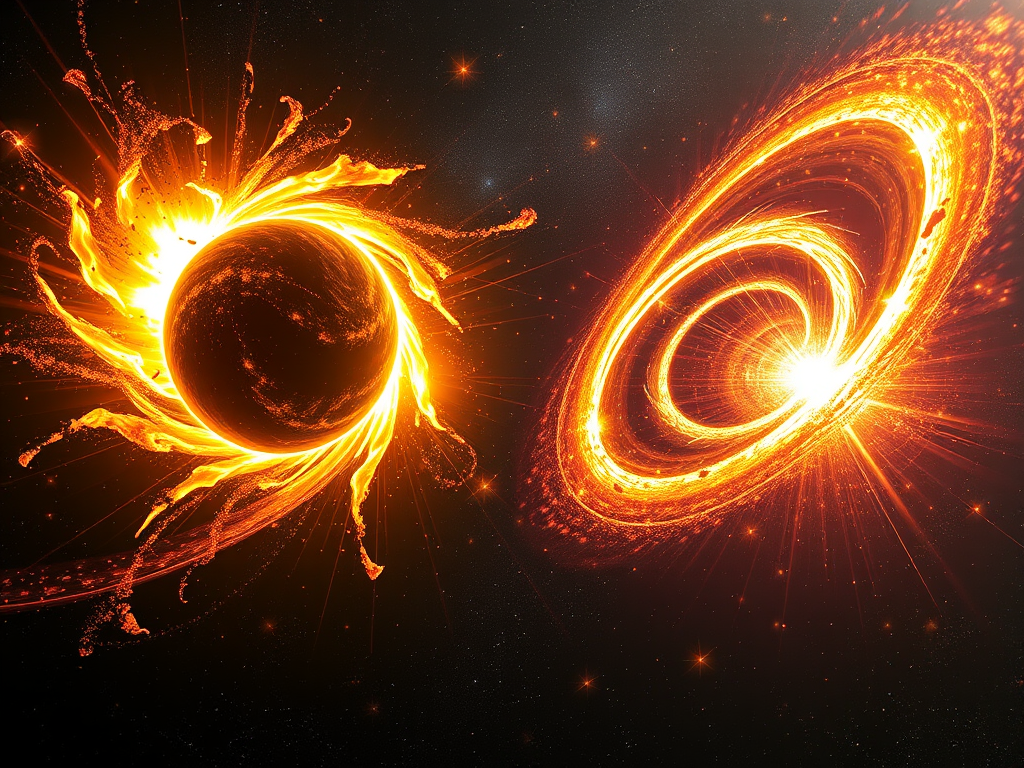
    For years, scientists thought that nearly all gold came from neutron star mergers—basically, when two ultra-dense stellar corpses slam into each other and spray the universe with debris. These collisions produce gravitational waves, gamma-ray bursts, and—if you’re lucky—enough precious metal to keep Tiffany’s in business for a few billion years.

    It made sense. Those events release the kind of energy needed to force protons and neutrons together into heavy elements like gold, platinum, and uranium. Without them, the periodic table would have ended somewhere around tin foil.

    But there was a problem: these mergers don’t happen often enough, or early enough, to account for all the gold we see around us today. It was a nice theory, but like most “the market only goes up” narratives, it had some holes.


    The New Twist: Magnetar Tantrums

    Enter the latest research, reported in The Washington Post. Turns out, there’s another culprit in the cosmic gold factory: magnetars.

    Think of magnetars as neutron stars with a bad attitude and magnetic fields so intense they make your fridge magnet look like a participation trophy. When they throw a tantrum—what scientists call a “flare”—they blast out more energy in a tenth of a second than our Sun will produce in 100,000 years.

    One such flare in 2004 was so powerful it actually messed with Earth’s ionosphere, and that was from 30,000 light years away. Do you know how violent you have to be to reach across 30,000 light years and still smack us?

    These magnetar flares appear to have the perfect recipe for gold-making: searing heat, an avalanche of neutrons, and enough explosive force to fling that newly-forged heavy metal into the galaxy. According to the study, a single flare could cough up more gold and platinum than the mass of Mars. Yes, Mars. That rusty little ball we’ve been sending rovers to.


    How It Got Here: From Stars to Streams

    So if the gold was forged in these cosmic demolition derbies, how did it end up tucked away in veins under Nevada or sprinkled in streams in the Yukon?

    When Earth formed, heavy elements—including gold—sank into its molten core. By rights, most of the planet’s gold should be completely inaccessible, locked away like a cosmic hedge fund. The reason we have any at all in the crust is because later, asteroids (also packed with heavy metals) slammed into Earth and delivered fresh deposits. You can thank random space rocks for your wedding ring and for the California Gold Rush.

    Once here, gold tends to cluster in veins—formed when hot fluids carrying dissolved gold seep through cracks in rock and cool, leaving behind glittery traces. It’s also found in alluvial deposits—streams and rivers where erosion has washed nuggets out of those veins and concentrated them in little pockets, making life briefly exciting for men with pans and big dreams.

    That’s why prospectors stood knee-deep in freezing rivers, swishing pans like they were stirring soup. They weren’t idiots—they were chasing the natural process of erosion and concentration. The fact that most of them died broke and toothless just adds to gold’s mystique.


    Why It’s Rare (and Precious)

    Gold is rare because the universe had to pull off some truly ridiculous stunts to make it in the first place. It’s not renewable. There are no biological gold farms, no photosynthesis of bling. Once it’s here, that’s it. And the stuff we find is only a tiny fraction of what exists—most of it remains trapped in Earth’s core, well beyond the reach of human mining.

    That rarity, combined with its incorruptibility (it doesn’t rust, tarnish, or rot), made it the universal symbol of wealth and power. You can melt it down, reshape it, bury it for 5,000 years, and it’ll come back looking brand new. It’s the cockroach of precious metals—indestructible, eternal, and here long after the rest of us are gone.


    So What Do We Do With This Knowledge?

    Next time you see gold charts spike—or you hear some guy in a cowboy hat ranting about fiat currency—remember: you’re not just looking at a shiny commodity. You’re looking at the aftermath of neutron stars colliding, magnetars losing their temper, and asteroids sucker-punching Earth.

    Gold is cosmic shrapnel, forged in violence, delivered by chaos, and hoarded by humans who still think shiny equals safe. Maybe that’s why I like trading it. It’s honest. It doesn’t pretend to care about you. It’s just the universe’s way of reminding us that even after billions of years, we’re still panning in the cosmic stream, hoping to catch something rare.