Category: Insights

  • Your True Edge Isn’t Your System—It’s Your Risk Management

    Your True Edge Isn’t Your System—It’s Your Risk Management

    Let’s get something straight: your edge is not your indicator.

    It’s not your 10-second chart, your Renko bricks, or that slick Fibonacci overlay you paid $97 for from some guy on YouTube who calls himself “AlgoSavage69.”

    Those tools might help. They might even give you structure. But they’re not your edge.

    Your edge is this:

    You know where you’re getting out before you ever get in.
    You take the trade when your setup appears—not when you’re bored.
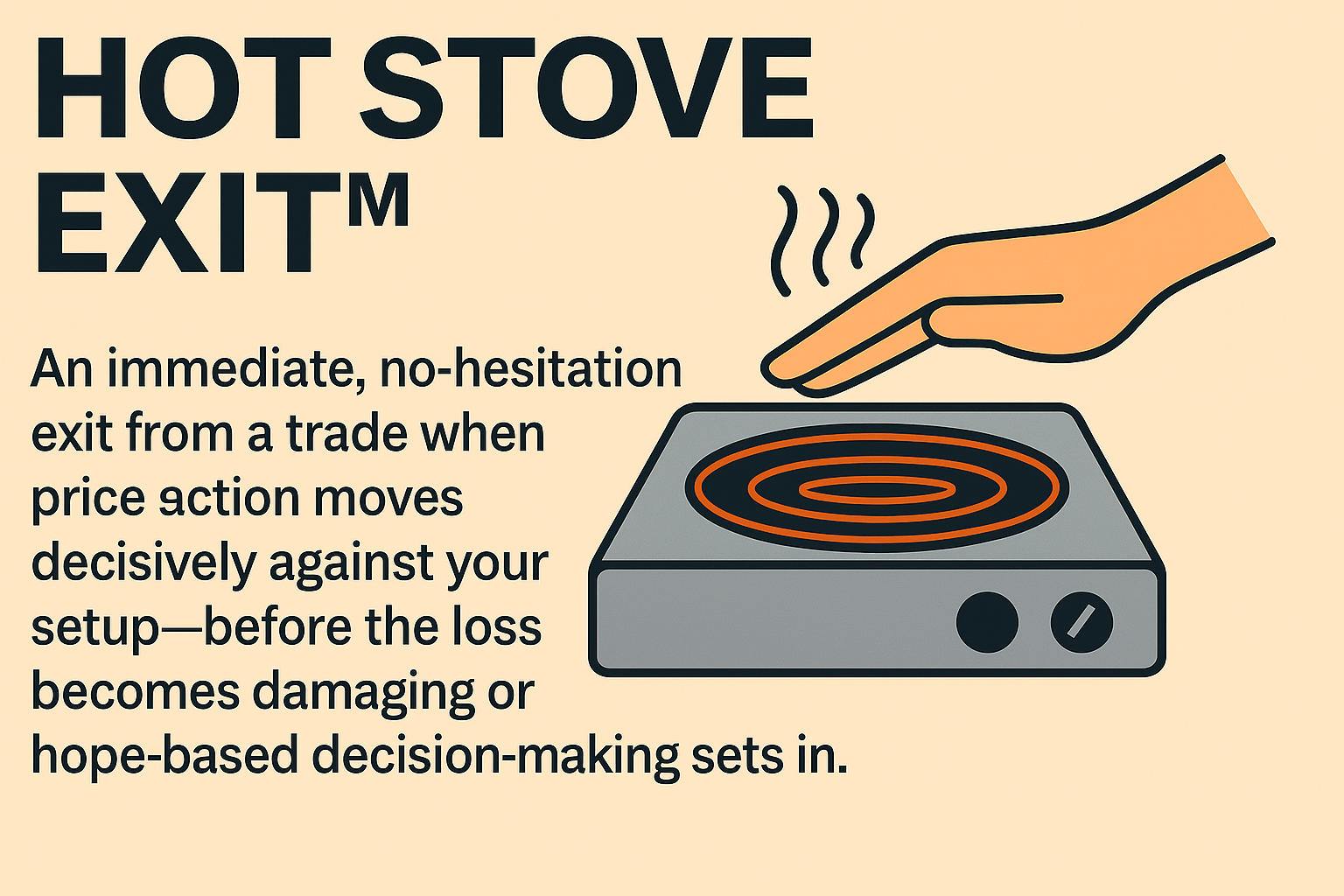
    You obey your stop—not negotiate with it.
    You know the difference between control and hope—and you choose control.

    Let me say it a little louder for the traders in the back: Your edge is your risk management.

    Not sexy. Not algorithmic. But it’s the truth.

    We love to tell ourselves we’re just one more tweak away from profitability. “If I just adjust my moving average from a 21 to a 24…” Or, “Maybe this new breakout indicator is the missing piece…”

    It’s not.

    You don’t need a better entry. You need a cleaner exit.
    You don’t need another strategy. You need a repeatable process you don’t sabotage.

    Most traders don’t fail because they lack edge.
    They fail because they override it.

    They bail early on winners. They hesitate on losers.
    They double down on setups that weren’t even on their plan.

    You know what works.
    You’ve seen your system deliver. You’ve had good sessions. You’ve seen trades run to target while you sat on your hands after exiting too soon.

    So what’s missing?

    Discipline under fire.

    Every funded trader I know has one thing in common. Not brilliance. Not clairvoyance.

    They follow their rules like it’s a religion—not a suggestion.

    They don’t hope. They obey.

    They know that the moment they start rationalizing a loss, they’ve already lost more than money. They’ve lost control.

    And that’s what separates traders who pass challenges from those who just keep re-buying them.

    Here’s the truth no one sells you in those trading course ads:

    An edge is useless without discipline.
    Risk management is your strategy.
    And every time you hit the button, you’re not proving your system works—you’re proving you do.

    Want to be elite? Want to be consistent? Want to be funded and stay funded?

    Then here’s your mantra:

    “I don’t get paid to predict. I get paid to obey.”

    Let your system do its job.
    Let your stop do its job.
    And do your job: Protect the edge.

    That’s where the game is won.

  • The Tedium of Trading

    The Tedium of Trading

    Nobody tells you this when you’re getting started, but I’m going to do you a favor:

    Trading is boring.
    Stupidly boring.
    Like-watching-a-pot-of-gold-not-boil boring.

    Not always, of course.
    There are moments of chaos, adrenaline, and “holy sh*t I nailed that entry”—
    But those moments are rare.

    Most of the time?
    You’re waiting.
    Staring.
    Marking levels.
    Checking news.
    Scrolling.
    Talking to yourself.
    Convincing yourself not to click anything.
    And then deleting the Discord app for the fifth time that week.

    This is the part that almost no one posts about.
    Because let’s be honest: “Traded nothing for three hours, went flat, journaled, ate a sandwich” doesn’t make for exciting content.

    But that’s the job.


    Trading isn’t charts and fireworks.

    It’s mostly sitting still, managing boredom without making a mistake.

    It’s knowing the level you want, seeing price dance 20 pips below it for 45 minutes, and still not jumping the gun.
    It’s waiting for your setup to actually trigger, while your brain whispers,
    “Come on, we could just get in now. We know what we’re doing.”

    Sure you do, cowboy.
    That’s how you blow $800 on a Tuesday morning.


    And then—suddenly—it happens.

    The setup forms.
    Structure confirms.
    The candle closes.
    And now you have… 90 seconds to make a decision that took you 4 hours of discipline to earn.

    You click.
    You manage.
    You hold. Or cut. Or hedge.
    And then…
    back to the boredom.


    This is the real rhythm of trading:
    Boredom. Boredom. Boredom. Decision.
    Repeat.

    If you can’t master the boredom, you’ll never survive the trade.
    Because the trades don’t get you.
    The boredom does.

    It eats at your discipline.
    It invites your impulses.
    It tricks you into “doing something” just to feel productive.
    And nine times out of ten, that “something” costs you money.


    So if you’re bored while trading…
    Good.
    That means you’re doing it right.

    You’re not overtrading.
    You’re not chasing.
    You’re not making stuff up just to stay stimulated.

    You’re waiting.
    Like a sniper.
    Like a pro.

    And when the moment comes—you’re ready.


    Let the others post fireworks.
    You focus on the part that matters:

    The boring, brutal, beautiful discipline of doing nothing… until it’s time.

  • When the AI Machines Start Fighting Each Other

    When the AI Machines Start Fighting Each Other

    You’ve probably heard that AI is going to change the markets.
    What you might not have thought through is this:

    What happens when it’s not just one AI driving price—
    but multiple AIs, run by billion-dollar firms, battling each other in real time?

    Because that’s not the future. That’s the very near present.

    The firms with the deepest pockets—Citadel, Renaissance, BlackRock, Millennium—are already training machine learning systems to read order flow, scrape news, track macro sentiment, and front-run retail behavior.
    But now they’re doing something more:

    They’re training their models to predict and counter other AIs.

    Which means you’re not just trading against machines anymore.
    You’re trading inside a war zone of competing, adaptive machines trying to outmaneuver each other at lightspeed.


    So what does that mean for retail traders?

    Let’s start with the truth:

    Retail trading is not going away.
    But the nature of the opportunity is changing.

    You’re not getting in early on clean textbook breakouts anymore.
    You’re not front-running retail psychology the way you could 10 years ago.
    And you’re definitely not smarter than a Citadel-built LLM trained on six billion data points and four decades of market behavior.

    But—and this is important—you don’t need to be.

    Because as smart as the machines are, they’re not perfect.
    They overshoot. They trigger false moves. They make volatility.
    And in that chaos? Opportunities still exist—if you know where to look and how to survive long enough to act on them.


    What makes retail trading still viable—even in an AI-dominated market?

    1. Liquidity still needs participation.

    Big money needs volume to execute.
    That means retail isn’t just tolerated—it’s part of the ecosystem.
    You provide the order flow that keeps the machine humming.

    2. The machines still create exploitable patterns.

    AI doesn’t make the market cleaner. It makes it faster.
    But every time it fakes out another AI—or clears liquidity—you get structure, price action, and reversion plays.
    If you’re focused and adaptable, those moments are gold.

    3. Speed isn’t the only edge. Timing and restraint are too.

    You’re not going to beat the machines on reaction time. But you can beat other traders on timing, risk control, and patience.
    That’s how you stay alive—and profitable—in the storm.

    4. You’re small. That’s your advantage.

    Big funds can’t scalp in and out of a 20 pip move on gold without moving the market.
    You can.
    Your size makes you nimble. Use that to your advantage.


    So yes—the market is getting more machine-driven.

    It’s going to be faster. Weirder. More unforgiving.

    There will be flash moves that seem senseless.
    Traps that feel personal.
    And setups that used to work… until they don’t.

    But if you’re disciplined, focused, and trading a real edge—not just vibes and hope—you’ll still have space to succeed.

    You just won’t be able to wing it anymore.


    Retail trading isn’t dead. But lazy trading is.
    The machines are fighting each other now.
    Your job is to stay out of the crossfire—and know when to strike.

  • How AI Will—and Won’t—Change the Game for Retail Traders

    How AI Will—and Won’t—Change the Game for Retail Traders

    Let’s be honest: the market was never “fair.”
    But it was, at times, predictable enough that a disciplined retail trader could carve out an edge.

    Now? The game is changing.

    Because the big players—hedge funds, quant desks, algorithmic trading firms—are integrating artificial intelligence into their infrastructure at scale. And we’re not talking about ChatGPT asking “what is a trendline.” We’re talking about machine learning models trained on terabytes of real-time data, adjusting in milliseconds, front-running your moves, and adapting faster than any human ever could.

    If you think retail trading is tough now, wait until the other team starts reading your playbook before you’ve even called the play.


    So, how will AI change the market?

    1. It’ll make the market more reactive—and less forgiving.

    Expect faster moves, tighter ranges, and more “liquidity sweeps” that just so happen to take out your stop before price reverses.
    That’s not a coincidence. That’s precision targeting by AI-powered systems designed to exploit common retail behavior.

    2. Market structure will evolve—again.

    Classic patterns, setups, and timing windows that worked for decades may stop working as AI models learn to identify, counter, and reverse them.
    If your edge is based purely on old-school retail psychology… it may have a short shelf life.

    3. Fakeouts will get smarter.

    The “stop hunt” is going institutional.
    AI can now detect the likely clustering of retail stops and liquidity zones—and trigger just enough volatility to flush them out.
    Then the move you were waiting for happens… after you’re out.

    4. News and sentiment will get priced in faster.

    No more waiting for the market to “digest” a Fed statement.
    AI models already scrape, translate, and analyze economic releases, social media, and speech tone in real time.
    By the time you react, the market has already moved.

    5. Retail emotion becomes even more exploitable.

    The more retail traders post trades, share biases, and reveal positioning online, the more data AI has to use against them.
    TradingView ideas. Twitter charts. Discord sentiment.
    It’s all intel. And the machines are watching.


    So what does this mean for you?

    It means the bar is going up.
    Not because you’re not smart enough. But because the competition is evolving faster than most retail traders can adapt.

    And here’s the uncomfortable truth:
    You can be emotionally disciplined, technically sound, and still get chewed up if you’re trading an outdated edge against an adaptive machine.


    But here’s what AI can’t do:

    • It can’t stop you from sitting out a chop day.
    • It can’t force you into an overleveraged trade.
    • It can’t break your rules for you.

    That’s still your job.

    And that’s where your edge lives now—not just in strategy, but in execution, awareness, and adaptability.


    Retail traders won’t be locked out of the game. But the game is different now.
    Cleaner charts won’t save you.
    Stronger discipline might.
    Smarter positioning definitely will.

    Adapt—or become target practice.


  • How Retail Traders Can Use AI to Improve Their Trading – And What It Won’t Help Improve

    How Retail Traders Can Use AI to Improve Their Trading – And What It Won’t Help Improve

    Let’s talk about the new buzzword on every trading forum, YouTube video, and overpriced Discord: AI.

    Apparently, artificial intelligence is going to change everything.
    And sure, some of that is true.
    But before you start outsourcing your trades to ChatGPT and packing your bags for Bali, let’s break this down like traders—not fanboys.

    Because yes, AI is powerful.
    But it won’t save you from the real work.


    ✅ What AI Will  Do for Retail Traders

    1. Speed up your learning curve

    Want to learn how to mark up a chart, understand CPI, or decode risk-reward ratios?
    AI can explain it in seconds. Better than most YouTubers. And without trying to sell you a $997 masterclass.

    2. Automate the boring stuff

    Trade journaling, backtesting summaries, economic calendar alerts—AI can help streamline all of it.
    If you’re not already using it to log trades and reflect on performance, you’re leaving free edge on the table.

    3. Analyze massive amounts of data

    AI can scan markets faster than any human.
    It can identify correlations, patterns, anomalies—especially useful for quantitative traders or data nerds running multi-asset strategies.

    4. Generate trading ideas (that you still need to vet)

    Need to brainstorm scenarios?
    AI can map out potential setups, help you plan different trade outcomes, or simulate market conditions. But—and this is key—you still need to filter those ideas through your lens.


    ❌ What AI Won’t Do (No Matter What They Promise)

    1. Make you a profitable trader by itself

    You are still the execution layer.
    And AI can’t manage your fear, FOMO, tilt, or revenge trades.
    You’re still the one clicking the button. And the P&L still lives or dies by your discipline.

    2. Replace intuition earned through experience

    AI can tell you what happened.
    It can’t feel the market. It doesn’t know what it’s like to take a drawdown and show up anyway.
    That kind of intuition? You earn it the hard way—trade by trade.

    3. Fix your psychology

    AI doesn’t care if you’ve blown three evals and are holding onto your last $500.
    It can’t talk you down when you’re about to triple your lot size at 9:58 AM because you “need to end green today.”

    It can spot inefficiencies.
    It can’t stop you from becoming one.

    4. Hand you a shortcut to mastery

    Every new trader is looking for the magic system, the secret algo, the holy grail.
    Now they think it’s AI.
    But here’s the truth: AI is a tool.
    If you don’t already have a process, it’s just another distraction.


    So, what’s the move?

    Use AI to sharpen your edge—not replace it.
    Use it to review, refine, and reflect—not to auto-trade your way to ruin.
    And if you’re serious about becoming elite?
    Focus on the one thing AI can’t replicate:

    Your ability to stay calm under pressure and execute when it counts.

    That’s still the final frontier.

  • When Your Thinking Brain Gets Mugged by Your Emotional Brain

    When Your Thinking Brain Gets Mugged by Your Emotional Brain

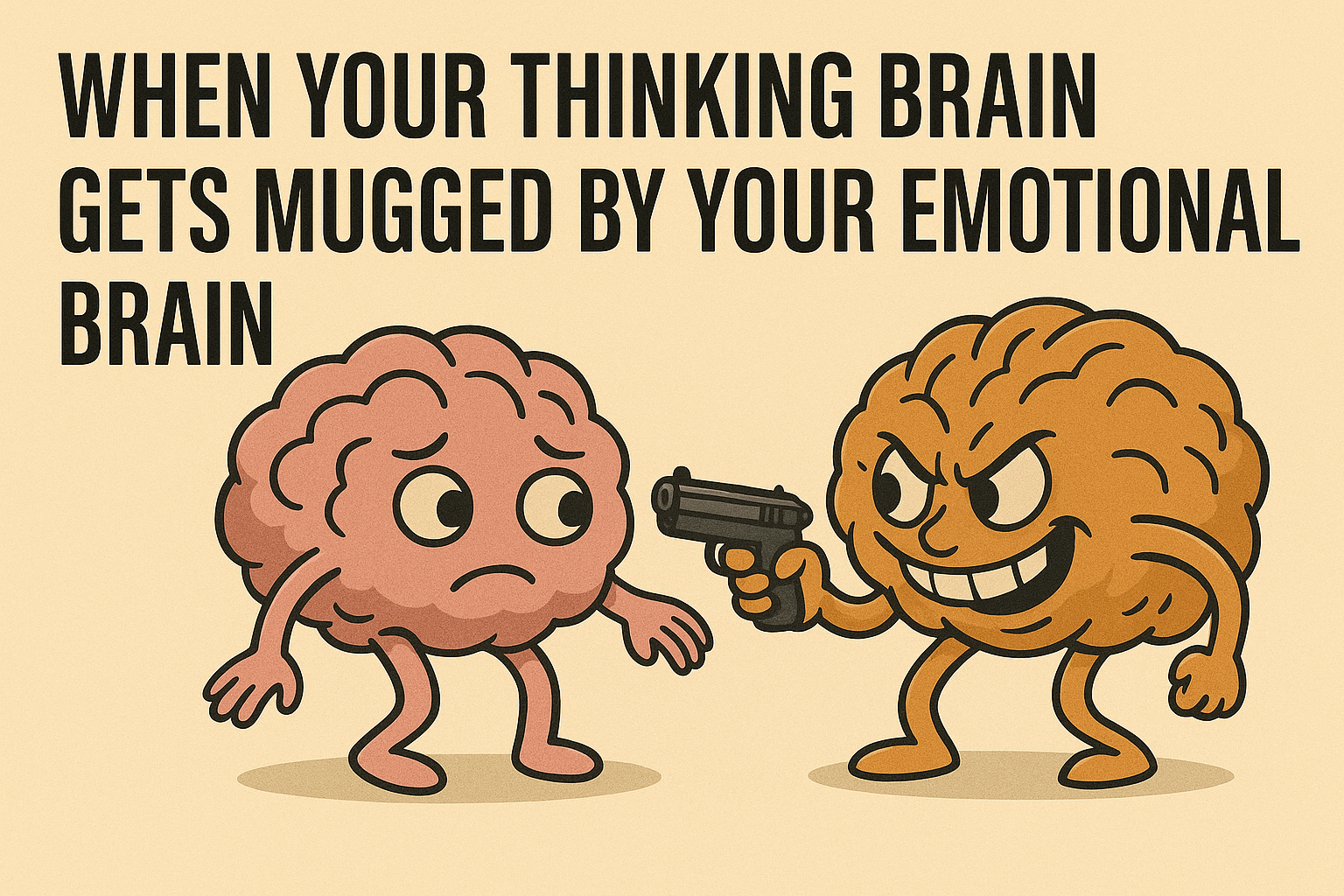
    There’s a moment in trading when you realize your thinking brain has left the building. It doesn’t slam the door or even say goodbye—it just quietly exits stage left while your emotional brain lights a cigarette, takes over the terminal, and mutters, “I’ve got this.”

    Today, that moment cost me $895 – multiplied across all of my accounts on copy-trade. Ouch!

    Let me walk you through it, not because I enjoy public self-flagellation, but because this is the lesson. And if I’m going to drag myself through the emotional mud, I may as well leave footprints others can follow—or avoid.


    🚨 The Setup: Everything Was Fine Until It Wasn’t

    It started with a long trade. Nothing fancy. Clean enough structure. It moved in my favor by a modest $40.

    Then… whipsaw. Straight down. -$160.

    That’s my cue to cut the trade. Not later. Not “let’s see what happens.” Right. There. But instead of clicking out, I let the emotional brain step in.

    “Wait. It just dropped quickly—it’ll probably snap back.”

    And it did. Briefly. Came back to -$60.
    See? Emotional brain, feeling smug: “Told you.”

    Then it dropped again. Harder. -$150.

    Now I’m not trading. Now I’m bargaining.


    🔄 The Search for Permission

    And here’s the sneaky part: instead of owning the moment, I outsourced it.

    I asked Tono, who was on the livestream with me, “Do you think it’ll come back?”

    He said yes.
    Then it dropped again, violently.

    He said, “Now I’m not so sure.”

    But by then I wasn’t listening to Tono.
    I was listening to the part of me that wanted any excuse to stay in the trade.


    🧨 Enter: The Emotional Spiral

    This is where the thinking brain, had it still been present, would have calmly said:

    “Mike, you’re breaking every rule you said you’d never break again.”

    But that guy was gone. Emotional brain was now driving, window down, hair blowing in the wind, singing, “Let’s just reverse the trade!”

    So I did.

    Yes, I reversed the trade. Not because the setup flipped. Not because structure changed.
    But because I just wanted my money back.

    Spoiler: that didn’t work either.

    That one went $120 against me, then $200.

    That’s when I finally did the one thing I should have done just under 4 minutes earlier when the trade began: I exited.


    💔 Total Damage: $895

    On one trade.
    Not because of poor market reads.
    Not because of slippage.
    But because I abandoned my rules the moment they mattered most.


    🧭 The Real Lesson

    You don’t rise to your level of potential.
    You fall to the level of your discipline.

    And if your discipline isn’t rock solid in the moment of maximum discomfort, the market will remind you—mercilessly.

    Today, it reminded me.

    Not with a total account blow-up.
    Not with margin calls.
    But with that sick feeling in your stomach when you know, without a doubt, that you knew better and still didn’t act.


    🔒 Going Forward

    That trade is now burned into my brain.
    Not as a failure—but as a boundary marker.

    I’m done asking for permission to break my rules.
    I’m done “just seeing what happens.”
    And I’m damn sure done letting a trade morph into a rescue mission.

    If you’re reading this, take it as your sign:
    Don’t wait for the big drawdown to rebuild your discipline. Build it now. Because when it gets tested, you won’t have time to think.

    And thinking is optional.
    Discipline isn’t.

  • How The U.S. Benefits by the Dollar Being the World’s Reserve Currency – and Why It Matters to Traders

    How The U.S. Benefits by the Dollar Being the World’s Reserve Currency – and Why It Matters to Traders

    Everyone’s always yelling about “de-dollarization,” like it’s going to happen next Tuesday.
    Spoiler: It’s not.

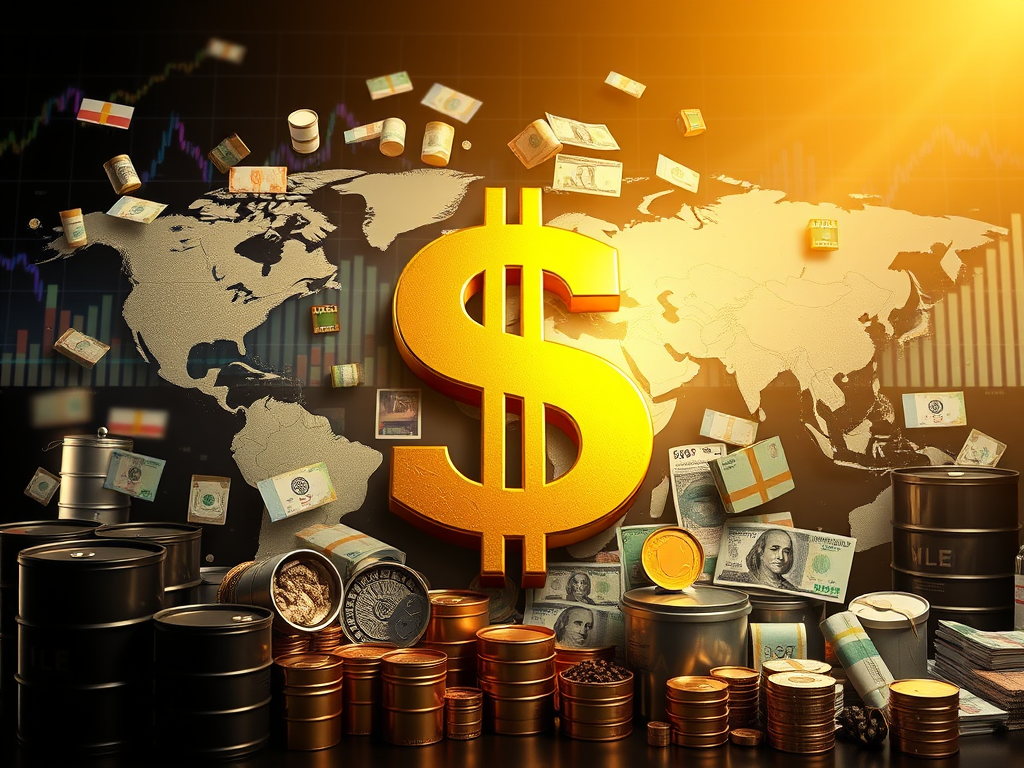
    And here’s why—the U.S. dollar is the world’s reserve currency.
    Which, if you’re new to this, is kind of like holding the master key to the global economy.

    So what does that actually mean?

    1. America gets to print the money everyone else needs.

    Let’s start here: most international trade—especially in oil, commodities, and global finance—is settled in USD.
    That means countries need dollars on hand at all times.
    So when the U.S. runs a deficit? It just issues more dollars.
    Other countries? They have to earn those dollars by exporting goods or holding U.S. debt.

    That’s not just power—it’s leverage.

    2. Global demand for dollars props up U.S. debt.

    The U.S. has a massive national debt.
    But because the dollar is the reserve currency, global central banks buy U.S. Treasuries like they’re gold.
    Why?
    Because they need safe, liquid, dollar-denominated assets.
    That constant demand keeps U.S. borrowing costs artificially low.

    You and I don’t get that luxury when we’re broke.

    3. The dollar lets America export inflation.

    When the U.S. prints money, it doesn’t just affect domestic prices.
    Because so many other countries use the dollar for trade, dollar inflation gets exported.
    That means rising U.S. liquidity gets diffused globally—watering down the full impact at home.

    In other words: America can flood the world with dollars, and everyone else helps clean it up.

    4. It gives U.S. sanctions real teeth.

    When the U.S. wants to punish a country (see: Iran, Russia, Venezuela), it doesn’t just send troops.
    It cuts off access to dollars and the SWIFT system.
    No dollars = no trade = economic suffocation.

    That only works because the dollar is the system.

    5. It creates forced demand—even in crisis.

    During global uncertainty, everyone runs to the dollar.
    Even if the U.S. caused the crisis.
    Why? Because when things go sideways, investors don’t want risk—they want liquidity.
    And nothing’s more liquid than the dollar.

    It’s the ultimate “we may be crazy, but we’re the best house in a bad neighborhood” trade.


    So why does this matter to traders?

    Because when you’re trading gold, oil, or any dollar-paired asset, you’re not just watching charts.

    You’re watching the gravitational pull of a currency that’s still the center of the financial universe.
    When DXY moves, the world adjusts.

    And until someone builds a global alternative with equal trust, liquidity, legal enforcement, and geopolitical power?

    The dollar’s still king.

    And if you’d like to keep reading, I’ll tell you how the dollar became the world’s reserve currency.

    It didn’t happen by accident.
    It happened at a little gathering in 1944 called the Bretton Woods Conference—basically the global finance version of drafting a new constitution.

    World War II was still wrapping up. Europe was wrecked. Currencies were unstable. Global trade was chaos.
    So 44 countries got together in New Hampshire (because apparently the Ritz in Geneva was booked) and agreed to something radical:

    The U.S. dollar would be pegged to gold.
    And every other major currency would peg to the dollar.

    This meant the dollar became the convertible anchor of the entire postwar financial system.

    Why the dollar?
    Because the U.S. had two things nobody else had in 1944:

    • A stable government with global influence
    • Most of the world’s gold reserves

    The deal was simple:
    You trust the dollar because we’ll redeem it for gold.
    And in return, the U.S. becomes the backbone of global finance.

    That system lasted until 1971, when Nixon pulled the plug and took the U.S. off the gold standard.
    Why? Because Vietnam was expensive, inflation was spiking, and America didn’t feel like bleeding gold to every country that showed up with a redemption slip.

    So what happened?

    Everyone panicked…
    And then?

    Nothing.
    They kept using the dollar anyway.

    Because there was no alternative.
    And because by that point, the U.S. had embedded itself so deeply into global trade and debt markets that switching awaywould’ve caused more damage than staying.

    And here we are.

    The gold is gone. The promise is gone.
    But the trust, the infrastructure, and the dominance remain.

    That’s how the dollar became—and stayed—the world’s reserve currency.

  • The Secret Is There Is No Secret

    The Secret Is There Is No Secret

    You know the videos I’m talking about.

    The YouTube Shorts, the TikToks, the reels…
    All with the same formula:
    “Trading made no sense to me—until I discovered this ONE secret indicator…”

    And suddenly, the clouds parted, the strategy clicked, and now they never lose a trade again.

    Yeah. No.

    Let me tell you who those videos are for:
    They’re for already-profitable traders who might be looking to sharpen their edge.
    They’re for people who already know how to control risk, follow a plan, and execute with discipline.

    They are not for you if you’re still trying to become consistent.

    Because if you’re a beginner, or even just someone who hasn’t crossed into profitability yet, all those “secrets” do is distract you.

    You don’t need 12 indicators.
    You don’t need to learn a new strategy every weekend.
    You don’t need to chase some mystical concept called “Smart Money” that sounds more like a religion than a method.

    What you need is focus.

    One strategy.
    One setup.
    One process.
    Repeated.
    Refined.
    Mastered.

    Until you can take that one thing and execute it flawlessly, in any market condition, with zero hesitation, you have no business trying something new.

    Adding more tools before you’ve mastered the ones you already have is like trying to build a second floor before you’ve poured the foundation.
    It looks exciting. But it collapses every time.

    I’ve been there.

    I consumed every new concept.
    I tested every flashy indicator.
    And all it did was postpone the one thing that actually worked:

    Focus. Discipline. Simplicity.

    The secret isn’t in the indicator.

    The secret is in your ability to stick with something long enough for it to actually teach you something.

    So if you’re tired of spinning your wheels…
    Close the Shorts tab.
    Open your journal.
    Pick your one setup.
    And get to work.

    That’s the only “secret” that works.

  • The Part No One Talks About

    The Part No One Talks About

    There’s a part of the trading journey that almost no one warns you about.

    It’s not the beginning—when you’re reckless and euphoric and think you’re going to master the markets in six months.
    It’s not the blow-up phase either—when you burn an account and realize this game isn’t as easy as the YouTubers made it look.

    No, this part is later.
    This part is worse.

    It’s when you’re doing almost everything right… and it still isn’t showing up in your P&L.

    You’re finally sticking to your plan.
    You’re not revenge trading.
    You’re managing risk.
    You’re walking away when the market’s not clean.
    You’re doing all the internal work—but the external results still suck.

    This is the part where it’s darkest before the dawn.

    It’s brutal. Because the dopamine is gone. The chaos is behind you. But the consistency hasn’t paid off yet.

    You’re no longer a bad trader.
    But you’re not yet a profitable one.

    You’re stuck in the hallway between who you were… and who you’re becoming.

    And let me tell you—this is where most traders quit.
    Not because they’re failing. But because they’re improving… and it still feels like failure.

    But here’s the truth:
    This phase isn’t punishment. It’s proof.
    Proof that you’re getting closer.

    You’re not making impulsive trades anymore—so you’re not getting lucky.
    You’re not violating your plan—so there’s no home-run outliers.

    You’re left with the truth.
    The slow, grinding truth of a process that hasn’t finished yet.

    Keep going.

    This is the stretch where all the invisible work starts to compound.
    Where your equity curve feels flat, but your discipline curve is steep.
    Where your P&L is quiet, but your brain is finally rewiring.

    If you’re here, don’t quit.
    Don’t go looking for a new system.
    Don’t start over.
    Just keep showing up.

    Because if you make it through this phase—
    The results come fast.
    And they come from you—not a signal, not a fluke, not a lucky week.

    They come from the foundation you’re laying right now.

    You’re closer than you think.
    Stay in it.

  • Why Traders Get So Intense about Trading

    Why Traders Get So Intense about Trading

    Ever notice how traders become a little much?

    Not just interested. Not just focused.

    But full-blown, charts-in-the-shower, “I’ll be there after London closes” obsessed?

    You start out thinking you’ll learn to make a little money on the side.

    Two years later, you’re ignoring dinner, talking about liquidity sweeps like they’re plot twists in a Scorsese film, and arguing with your own journal.

    What is it about trading that turns normal people into hyper-disciplined, caffeine-fueled, market-monitoring maniacs?

    Here’s my take.

    1. It’s brutally honest.

    In a world full of spin and sugarcoating, trading tells you the truth—daily.

    You’re either right or you’re not.

    You respected your risk or you didn’t.

    There’s no boss to blame. No co-worker to cover for you. Just your decisions, reflected back in numbers. It’s clarity—and it’s addictive.

    2. It promises freedom—but makes you earn it.

    The idea that you can master a skill, deploy it from anywhere, and build your own financial runway? That’s powerful.

    But unlike get-rich-quick schemes, trading doesn’t hand it to you.

    It demands effort. Consistency. Self-awareness.

    The harder it is, the more legit it feels. And when you finally make it through the fog, it changes you.

    3. The game never ends.

    Every day is a new puzzle.

    No two sessions are the same. There’s always something to improve. A better entry. A cleaner exit. A more disciplined mindset.

    It becomes a self-mastery project disguised as a career.

    4. You see progress—and that’s intoxicating.

    Not every day. Not every trade.

    But slowly, you see it. The restraint. The setups you walk away from. The losses you take without spiraling.

    And you start thinking: What else in life could I apply this to?

    That’s when you realize… you’re hooked.

    5. It makes you better. Or it breaks you trying.

    And deep down, we respect that.

    Trading doesn’t care about your résumé. It cares about your resolve.

    It forces you to confront your ego, your habits, your fears—and either fix them or keep paying for them.

    There’s something quietly beautiful about that kind of accountability.


    So yeah—traders can be intense.

    We get weird. We wake up early. We cancel plans. We say things like “price is building energy.”

    But we’re not crazy. We’re just called.

    Because once you taste what it feels like to trade with clarity—to trust yourself under pressure—you don’t want to go back.

    And when that happens?

    You’re not “interested” anymore.

    You’re in.