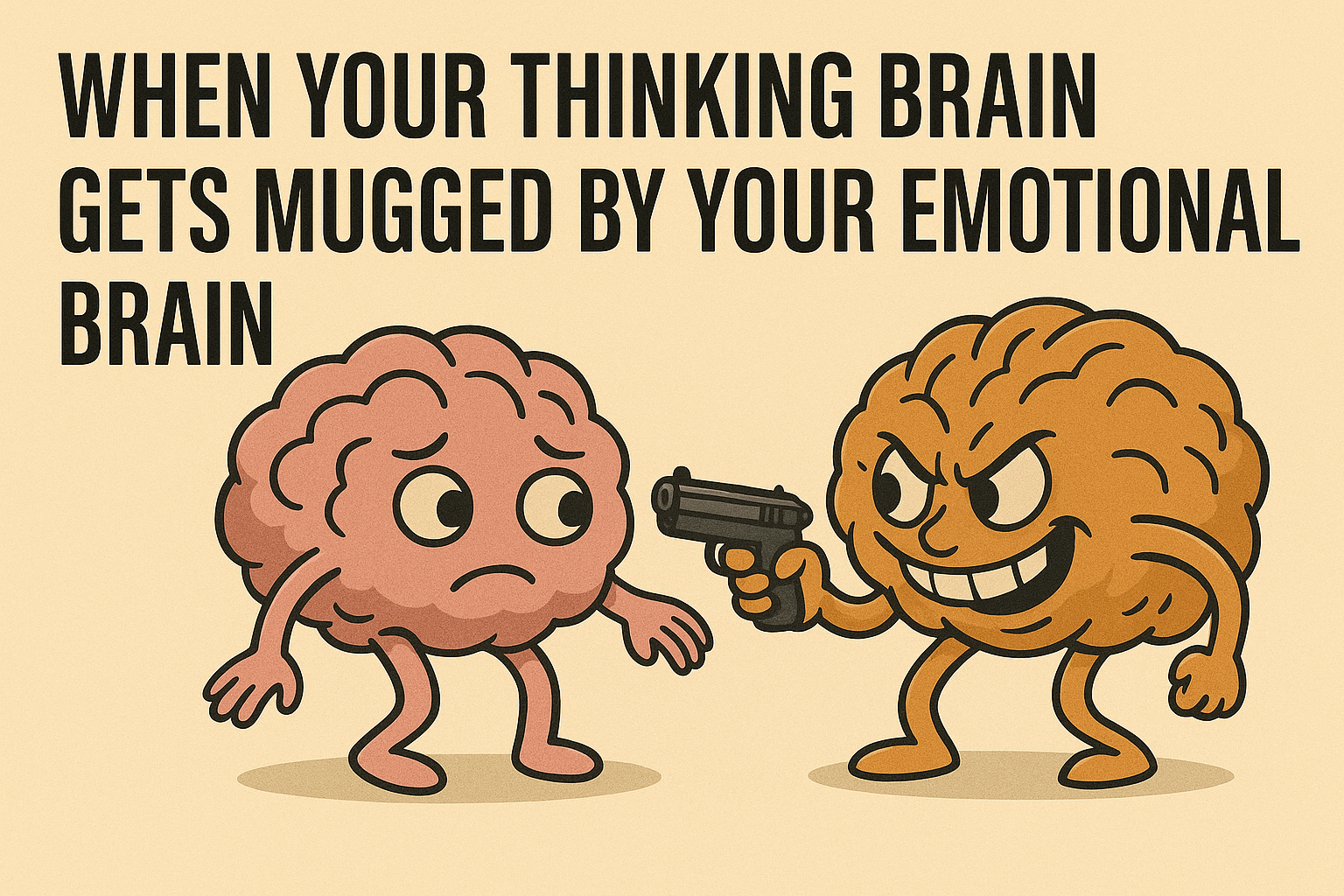
To a new trader, signals seem like a no-brainer.
Someone who knows what they’re doing tells you when to enter.
You copy the trade. You size it properly. You exit when they say.
Done.
So why doesn’t that work?
Here’s the truth:
Signals seem simple. But trading isn’t.
And the second you try to reduce a live, high-stakes decision-making process to a notification on your phone, the whole thing starts to fall apart.
Let’s break this down.
1. Trading is more than entry and exit.
A trade signal gives you a moment in time.
But it doesn’t give you the reasoning behind it, the conditions for exiting early, or the context that shaped the decision in the first place.
The signal provider might:
- Be scaling in or out
- Have a hedge running
- Be adjusting risk mid-trade
- Be trading a specific news narrative you’re unaware of
You don’t see any of that.
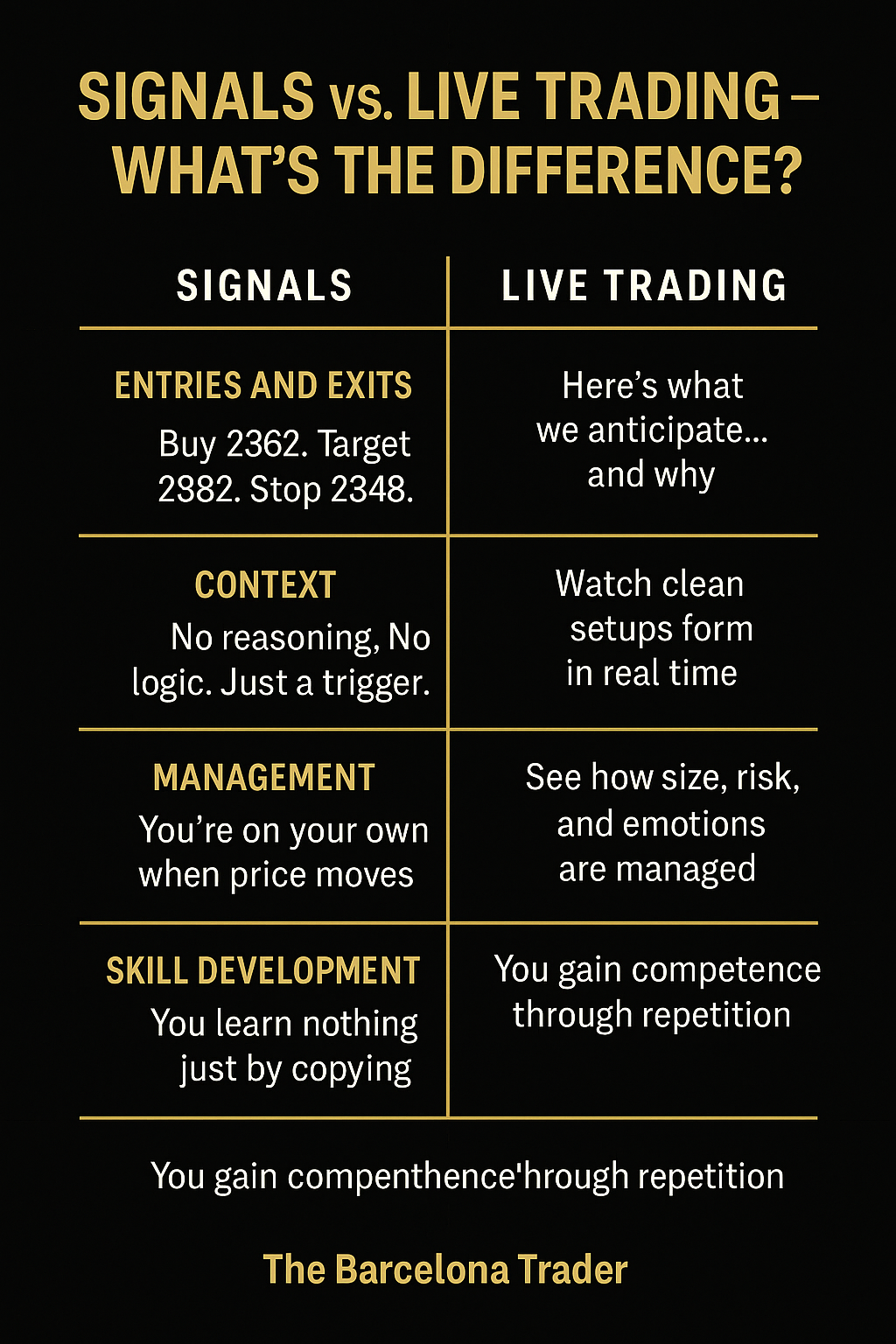
All you get is “Buy 2362. Target 2382. Stop 2348.”
You think you’re copying their trade.
You’re not.
You’re copying a snapshot—without the logic, the management, or the mindset.
That’s not replication. That’s blindfolded imitation.
2. Even “good” signals don’t account for your psychology.
Let’s say the trade goes red at first.
The signal provider is calm—they’ve seen this setup play out a hundred times.
You? You panic, bail early, then watch the trade hit full TP.
Now you’re gun-shy.
The next trade? You hesitate—or size up to make back what you missed.
Your mindset is compromised.
That’s not the signal’s fault. But it is your outcome.
Trading success isn’t just about what you do.
It’s about how you react to what happens after.
And no signal can manage your fear, your greed, or your FOMO for you.
3. You’re not learning. You’re leaning.
Following signals might feel like progress.
But it’s not. It’s stalling.
- You’re not building skill
- You’re not learning structure
- You’re not developing any self-trust
So the moment the signals stop—or the provider has a bad week—you’ve got nothing to fall back on.
You didn’t grow. You just followed.
And now you’re back where you started, only more frustrated and down a few thousand dollars.
4. Copy trading systems are built differently. Signals aren’t.
Let’s get one thing straight:
Copy trading ≠ signal following.
With copy trading, the provider’s exact trades are executed on your account in real time—same entry, same exit, same scale.
But with signals? You’re placing your own trade, at your own broker, with your own latency, your own emotions, and your own money.
There’s nothing “automatic” about it.
And unless you’re glued to your screen with zero distractions, it’s easy to miss a signal—or worse, execute it late and at the wrong level.
Signals don’t account for slippage, spreads, emotions, or context.
That’s why they fail.
So what does work?
Live trading. In real time. With real context.
When you trade live with us—watching the charts as we mark levels, explain setups, manage risk, and take positions—you’re not just copying a call.
You’re learning how to:
- Spot clean entries before they form
- Understand why a trade is taken—or skipped
- Manage size, cut losses, and hold through volatility
- Adapt when the market fakes out or flips
- Control your own decision-making under real pressure
It’s not signals. It’s training.
Because the goal isn’t to follow someone forever.
The goal is to eventually not need anyone at all.
Signals can show you what someone else did.
Live trading shows you how to do it yourself.
And in the long run, that’s the only skill that matters.