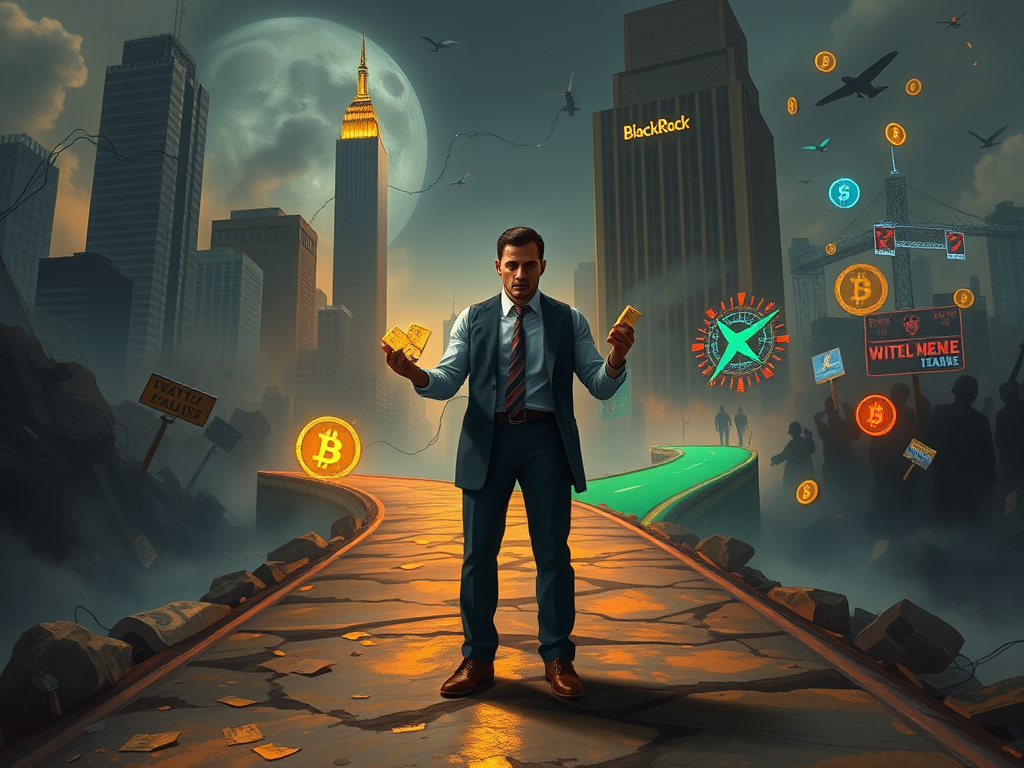
You ever feel like the world is changing so fast that your charts need a geopolitical analyst and a therapist sitting next to you? Yeah. Me too.
If you’ve been around long enough to trade through rate hikes, crypto booms, a pandemic, and the return of populism, you may have heard this phrase tossed around: late-stage capitalism. And you may be wondering: what happens after that?
Let’s break it down—for gold traders like us. Because while the macro drama might seem a step removed from our scalps and hedges, the system you’re trading inside of is evolving fast. And if you’re not paying attention, it’ll run you over like a rogue CPI candle.
Wait—What Is Late-Stage Capitalism, Exactly?
It’s not a formal term. It’s more like an eye-roll from economists who see the system cracking at the seams. We’re talking about a phase where:
- Mega-corporations run the show
- Wealth inequality looks medieval
- Markets are propped up by central bank steroids
- “Jobs” become gigs with no benefits
- Rent, healthcare, and education are luxury items
Basically, capitalism stops being about opportunity and starts feeling like a casino rigged for the house.
You’re not imagining it: the middle class is shrinking, trust in institutions is in freefall, and the word “freedom” is now a marketing slogan slapped on $70k pickup trucks and processed cheese.
So What Comes After This? And What Does It Mean for Gold Traders Like Us?
Good question. Nobody knows for sure, but there are a few likely paths. Some are survivable. Some are lucrative. Some… not so much. Let’s walk through the scenarios.
1. State-Driven Capitalism
The government doesn’t end capitalism. It just drives the bus now.
Think: China-lite. National security becomes economic policy. Markets are “free,” but only as long as they don’t interfere with strategic goals.
📌 What this means for you:
Expect more interventions. Gold could surge or flatline based on policy whims, not price action. New regulations could restrict leverage, tax capital gains at higher rates, or limit short-term speculation. Brokers may face tighter controls. You’ll need to be nimble—and very plugged in to macro shifts.
2. Technocratic-Neo-Feudalism
Capitalism doesn’t die. It just puts on a hoodie and starts charging subscription fees for everything.
This is where corporations become the real governments. BlackRock, Amazon, OpenAI—they’re not just companies anymore. They’re the new fiefdoms.
📌 Impact for traders like us:
If you’ve got elite tools, fast data, and discipline? You thrive. If not? You’ll drown in fees, algorithmic latency, and compliance screens. Getting access to real-time order flow and premium platforms might start to look more like joining a private club than opening a brokerage account.
Welcome to trading as a privilege, not a hustle.
3. Eco-Social Market Economies
Capitalism with a conscience… and a carbon tax.
Here, governments shift hard toward sustainability, worker protections, and climate action. Think UBI, green investments, and strict limits on speculation.
📌 For us:
Gold might benefit in the short term if fiat currencies wobble, but over time, financial speculation could be frowned upon—or taxed out of existence. Platforms might require stricter disclosures, and high-frequency scalping could be collateral damage in a crackdown on “unproductive capital.”
Might be time to learn how to swing trade compost futures.
4. Decentralized Utopianism
Crypto wins. The empire falls. Welcome to the Wild West.
A long shot, but not impossible. This is the future libertarians dream about: DAOs, DeFi, no central banks, and a peer-to-peer financial system that lives on-chain and outside the Fed’s reach.
📌 For traders like us:
The upside is huge—massive volatility, no middlemen, 24/7 liquidity. But it’s also the jungle. Scams, rug pulls, and total lack of recourse. You’ll need a PhD in digital security just to withdraw your profits.
If you’re nimble and fast? It’s gold rush 2.0. If not? It’s game over in a flash crash.
5. Collapse or Authoritarianism
The system breaks. Markets get shut down. Gold becomes… gold.
Worst case scenario. Political unrest, debt default, climate shocks, or military conflict tip the balance. In these cases, gold may skyrocket—but the ability to trade it might disappear.
📌 Implications:
You’re not scalping 10-second candles anymore. You’re holding physical bullion. Maybe burying it in the backyard. Maybe fleeing with it in a backpack. Trading platforms go dark. Capital controls come in. Trust is gone. It’s not a chart setup—it’s survival.
Let’s hope we don’t get here.
So… What’s the Move?
For now, we’re still in the middle game. But the endgame pieces are moving. If you’re a serious gold trader—especially a scalper like me—you want to be:
- More aware of the macro (and less reliant on the illusion of a stable system)
- More adaptable (because the rules will change)
- More strategic (build edge not just in entries, but in your understanding of the playing field itself)
Late-stage capitalism may be giving us volatility—and volatility is oxygen for traders. But after that? The terrain gets wild.
If you’ve got a system, a brain, and a sense of humor, you’ll make it.
If you’re still looking for a savior or a shortcut… the next chapter might not be so kind.
Want to keep up with the future of gold trading as it unfolds? Follow along, subscribe, or join the tribe. The system may change—but edge adapts.
Leave a Reply