Tag: finance

  • The Gold Market Isn’t a Fair Fight — And That’s Exactly Why We Trade It

    The Gold Market Isn’t a Fair Fight — And That’s Exactly Why We Trade It

    I used to think the gold market was a dignified place — a realm where central banks, jewelers, and bullion dealers transacted based on genuine supply and demand. A place where price moved because someone needed to hedge, deliver, or diversify.

    How quaint.

    Then I started trading it.

    What I discovered is that beneath the polished veneer of the gold market lies a battleground teeming with sharks, spoofers, and algorithmic predators. It’s less of a serene exchange and more of a high-stakes poker game — except the house has a PhD in behavioral finance and an army of bots sniffing out retail fear like blood in the water.


    🕵️‍♂️ The Puppet Masters Behind the Curtain

    Let’s start with spoofing — the art of placing massive orders with no intention of executing them, purely to trick the market into thinking there’s demand or supply. It’s like shouting “fire” in a crowded theater just to cut to the front of the popcorn line.

    Example? Look no further than JPMorgan, whose traders spent nearly a decade playing the precious metals markets like a piano — layering fake orders to move price and triggering stop-losses for fun and profit. The result? A tidy $920 million fine, which sounds like a lot until you consider how much they probably made. No criminal charges. Just another day in the financial Hunger Games.

    And then there’s Andrew Maguire, the whistleblower who exposed manipulation in the silver market — watching in real-time as massive sell orders were dumped to create panic, only for the same players to scoop it up cheaper seconds later. This isn’t conspiracy theory. It’s documented market behavior.


    🧠 Why Retail Traders Are So Often the Punchline

    The average retail trader is taught that the market is logical, efficient, and maybe even a little fair. Which is adorable.

    What really happens is this: large players — institutions, market makers, and liquidity providers — spend a non-trivial amount of effort figuring out where retail money is sitting. They want to know:

    • Who’s long?
    • Where are the stops?
    • Where is the “obvious” breakout entry?

    And then?

    They trigger those levels on purpose.

    Enter the bull trap: price rips above resistance, retail floods in long, thinking “we’re breaking out!” — only for it to reverse and cascade down. Retail gets stopped out. Institutions scoop it up cheaper.

    Or the bear trap: price plunges below support, retail shorts in a panic, convinced the bottom’s falling out — and then the market V-shapes higher, fueled by their stop orders.

    It’s not personal. It’s just math. When you’re running millions or billions, you need liquidity to enter a position. You find it where the retail stops are — just beyond the obvious lines on the chart.

    This isn’t theoretical. It happens every day.

    If you’ve ever had a perfect breakout trade reverse the moment you entered — congrats. You’ve been stop-hunted.


    🎯 Why We Still Trade Gold Anyway

    So if it’s rigged, manipulated, and full of traps… why trade gold?

    Because volatility is opportunity. And gold — unlike most markets — moves every day. It doesn’t sit around waiting for an earnings report or some quarterly guidance. It breathes. It pulses. It reacts to everything — inflation prints, rate whispers, war rumors, DXY jitters, 10-year yields, and occasionally just the mood of the room.

    We don’t trade everything. We trade gold. Because when you focus on one instrument long enough, you start to see the traps before they’re laid. The price action whispers to you. You sense when a candle is real and when it’s bait. You stop being lunch, and start getting your share.

    But here’s the thing: gold isn’t just any market. It’s one of the hardest instruments in the world to master. It moves fast. It fakes out both sides. It responds to signals from five different markets at once. It humbles the cocky and rewards only the obsessive.

    Which is why we believe: if you can learn to ride the gold bull, you can ride any bull in the rodeo. All it takes is a few adjustments to your saddle.


    📉 Our Edge: Specialization, Not Magic

    Most retail traders lose because they try to trade everything — chasing action instead of mastering one battlefield. But gold rewards patience. It rewards focus. Every fake breakout, every stop hunt, every trap becomes a lesson — if you’re paying attention.

    Our group doesn’t claim perfection. We take hits. But we understand this market. We know what it’s capable of. And we know what we’re capable of when we stick to the plan.


    So yes — the gold market is rigged, sharp-edged, and full of people trying to take your money.

    But that’s why it’s worth mastering.

    Not because it’s safe.

    Because it’s real.

  • Many Gurus Just Make Up New Words for the Same Trading Terms

    Many Gurus Just Make Up New Words for the Same Trading Terms

    If you’re new to trading and feel like every guru is speaking a different language, you’re not crazy. You’re just surrounded by a bunch of guys trying to copyright Fibonacci.

    Here’s the truth:

    Most of them are describing the exact same things.

    They just rename everything to sound smarter—or to sell you something.

    Let’s decode a few:

    • Supply and Demand ZonesThese are just Support and Resistance with a rebrand.Same zones. Same price reaction. Slightly better graphics.
    • Contraction > Expansion > TrendOr if you’re into Wyckoff: Accumulation > Manipulation > Distribution.Or if you’re into memes: Chop > Fakeout > Dump.Same movie, different subtitles.
    • Liquidity GrabStop hunt. Nothing new here. Just the market doing what it does best:faking you out so it can run the other direction and ruin your morning.
    • ImbalanceA fancy word for “Price moved too fast and left a gap.”You could just say “gap,” but that won’t get you followers on TikTok.
    • Fair Value Gap (FVG)Price might come back here. Or not. Who knows.But call it a Fair Value Gap and suddenly it sounds like Morgan Stanley left a breadcrumb trail for you to follow.
    • Institutional CandleThis is just an engulfing candle, people.JP Morgan didn’t specially handcraft that wick for you. Calm down.
    • Premium and Discount ZonesHighs and lows of a range.In other words: Buy Low. Sell High. Revolutionary stuff, right?
    • Breaker Block vs Order BlockOne faked out. One didn’t. But sure, let’s treat it like a cosmic distinction that unlocks the secrets of the universe.
    • Mitigation ZoneThe market came back to a level and respected it.Otherwise known as… Support. Again.
    • Smart Money Concepts (SMC)This one’s special because it’s just structure, liquidity, and S&R…with attitude.

    None of these terms are wrong. They’re just… dressed up.

    Like putting aviators on a cat and calling it a tiger.

    And the worst part?

    I learned all of this the hard way.

    I spent months—years—listening to every guru, every strategy, every contradictory opinion. I chased one shiny system after another thinking I was missing some crucial piece of the puzzle.

    Turns out, they were all saying the same thing. Just using different vocabulary to sell it as exclusive.

    So if you’re confused, frustrated, or feel like everyone else gets it but you?

    You’re not behind. You’re just at the part of the journey where the fog hasn’t cleared yet.

    Stick with it.

    Pick a language that makes sense to you, and stop jumping ship every time someone on YouTube invents a new term for “price bounced.”

    Because in the end, trading isn’t about knowing every term.

    It’s about knowing yourself.

    And sticking to a system long enough for it to actually work.

    That’s the part no one can sell you.

  • Trading Is Like Learning to Fly—But the Sky Is Made of Data

    Trading Is Like Learning to Fly—But the Sky Is Made of Data

    When you first start trading, you probably imagine yourself mastering price action, calmly executing, and steadily growing your account like a seasoned assassin.

    And then reality hits:
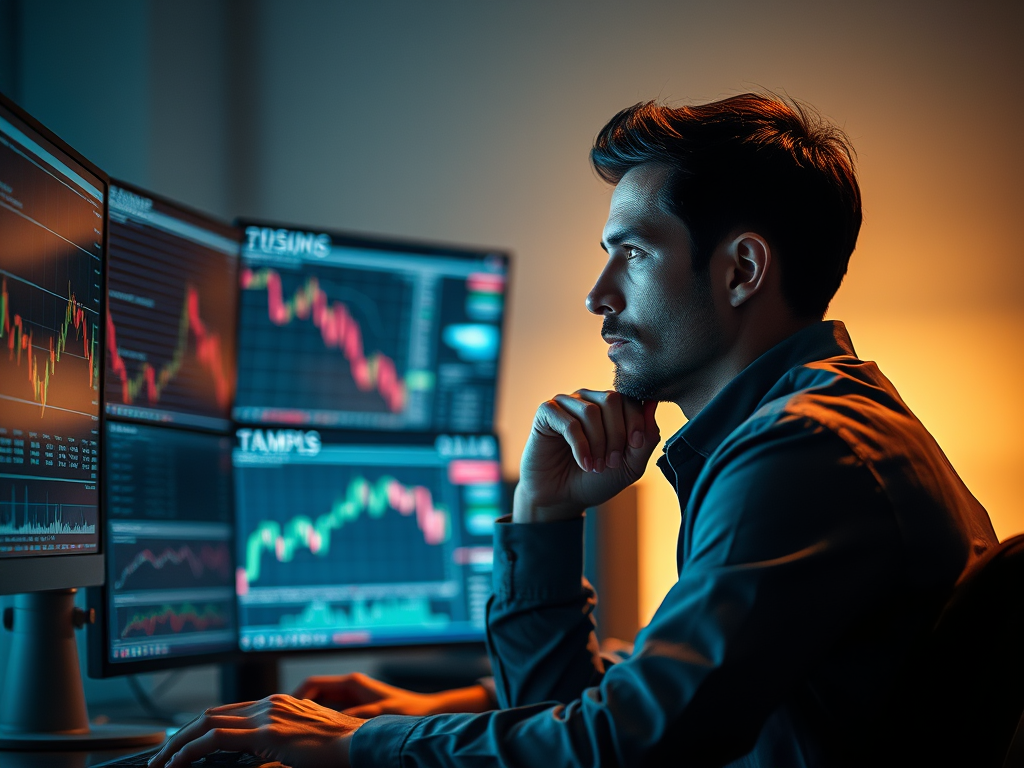
    You spend the first month just figuring out how the hell to arrange your monitors.
    You install indicators you don’t understand.
    You hear terms like RSI, VWAP, MACD, Renko, EMAs—and suddenly it feels like you’re trying to fly a 747 in the dark… with the cockpit manual written in a different language.

    Welcome to the real beginning.

    The truth is, trading is a bit like flying on instruments.

    The market isn’t something you can physically see.
    It’s not a mountain you can climb or a ball you can chase.
    It’s a data stream. A shifting emotional tide. A multi-billion-dollar organism that’s alive, but invisible.

    And your indicators?
    They’re the cockpit instruments telling you where you are—relative to structure, trend, momentum, liquidity. You’re not seeing the market. You’re reading it. Feeling it through dials, lines, and flashing lights.

    And guess what?
    Learning to trust those instruments takes time.

    Because indicators don’t always agree. Sometimes they lag. Sometimes they lead. Sometimes they lie.
    You have to watch what they say when the market does XY, or Z. You have to get a feel for how they behave in motion. That means repetition. Observation. Context.

    Yes, your mentor will help.

    They’ll give you a starting setup. Maybe introduce you to the indicators that work for them.
    But over time, you’ll figure out which ones speak to you.
    Which ones give you confidence.
    Which ones let you breathe.

    And that discovery?
    That’s not the “advanced stage.” That’s the actual learning curve.

    It’s the quiet work that makes the difference between “following a system” and owning your process.

    My setup didn’t happen overnight.

    I tweaked. I replaced. I threw half of it out and started over.
    Eventually, I stopped asking, “What indicator is best?” and started asking:
    “Which one helps me see more clearly—and act more confidently?”

    That’s when it clicks.
    That’s when your station becomes yours.
    That’s when you stop flying blind—and start flying on feel, with instruments that were built around your brain.

    So yeah—don’t rush it.
    Your mentor’s system is your launchpad.
    But your real edge? That gets built dial by dial, over time, by you.

    Update: I have written a follow-up to this piece here.

  • Why the World Trades Gold (And Why We Do Too)

    Why the World Trades Gold (And Why We Do Too)

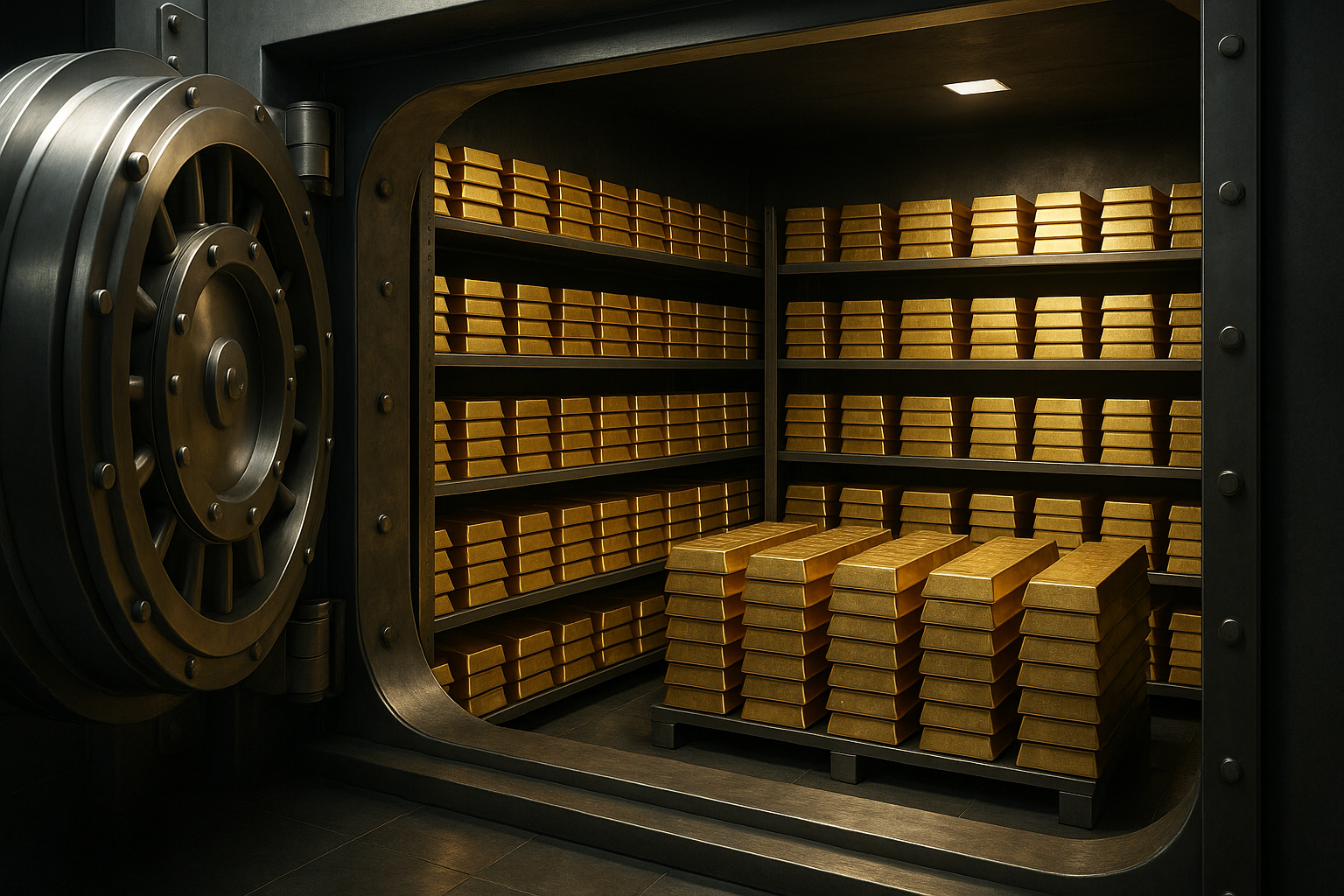
    Gold is a funny thing. It has no earnings, no dividends, no quarterly reports. You can’t eat it, and it’s not especially useful for modern industrial processes. But somehow, it still commands the attention of central banks, hedge funds, sovereign wealth managers, and your cousin Dave who owns “a little physical, just in case.”

    The reason is simple: gold is trust on a chain. It’s the asset that steps in when fiat feels fragile, when bonds look shaky, or when the geopolitical tea leaves start swirling in unpredictable ways. It doesn’t promise yield — it promises stability. And in a world increasingly short on that, gold gets traded. A lot.


    🌍 Global Gold Trading — Bigger Than Most People Realize

    Let’s talk scale. Each day, depending on the source and how you count it, roughly $130–$200 billion worth of gold changes hands globally across all markets — futures, spot, ETFs, OTC, and physical. That’s more than the daily volume of the S&P 500.

    To break that down:

    • Hourly, we’re talking $5–8 billion.
    • Per minute, about $100–150 million.
    • Per second, you could argue the world blinks and $2 million in gold just moved.

    This isn’t just day traders poking at XAUUSD. We’re talking about:

    • Central banks quietly adjusting their reserves.
    • Algorithmic traders scalping GC1! contracts.
    • Physical deliveries being arranged via the LBMA or the Shanghai Gold Exchange.
    • Bullion dealers hedging forward contracts through COMEX futures.

    And yes — retail traders (like us) taking breakout scalps off key pivots at 7:32 a.m. because we think the DXY’s losing steam.


    🧠 Why We Trade Gold

    We could trade anything — indices, currencies, soybeans if we felt like it. But we trade gold.

    Why?

    Because gold moves. It gives us real opportunities every single day. Whether it’s reacting to a Fed comment, a war headline, or just bouncing off a key level, gold offers the kind of intraday volatility that scalpers dream about. Not random chaos — but consistent rhythm. It stretches and contracts in ways you can come to know, if you pay attention long enough.

    That’s why our team doesn’t try to be masters of everything. We specialize. Because every instrument has its own personality, and developing instinct — real gut feel — only happens when you commit to learning one market inside and out. For us, that’s gold.

    Over time, the setups start to scream instead of whisper. The traps get easier to spot. And edge starts to look a lot like intuition.

    So no, we don’t trade everything.

    We trade the one thing that rewards mastery.


    🧭 Who Sets the Price?

    Despite all these trading venues, there’s one main benchmark the world references — COMEX futures. That’s where most of the price discovery happens. Spot gold (XAUUSD) follows it. The Shanghai Gold Exchange reflects it. Even over-the-counter billion-dollar private deals are priced off it.

    Central banks may not click the “Buy” button on GC1!, but when they rebalance reserves, they’re staring at that same number you and I are.

    And so while gold might feel old-school, the ecosystem around it is anything but. It’s global, fast, liquid, and surprisingly modern — with price feeds pinging from New York to London to Shanghai in milliseconds.


    So if you’ve ever wondered how gold really moves — who moves it, when, and why — the following table gives you a cheat sheet to the major players and platforms. From spot to futures to physical, here’s how the world trades gold:

    🌐 Gold Price Market Comparison: Who’s Driving What?

    FeatureCOMEX (Futures)SGE (Shanghai Gold Exchange)OTC Market (e.g., LBMA)XAUUSD (Spot Gold)
    Role in Price Discovery🏆 Primary benchmark — sets global toneSecondary — reflects Chinese physical demandInfluences via large private flows💡 Follows futures, reflects global sentiment
    TransparencyHigh — public, regulated, real-time dataMedium — less real-time depthLow — private & bilateralMedium — varies by broker, influenced by liquidity feeds
    ParticipantsHedge funds, banks, asset managersChinese institutions, refiners, central bank-affiliatesCentral banks, sovereigns, bullion banksRetail traders, brokers, liquidity providers
    CurrencyUSDCNY (Yuan)USDUSD
    SettlementMostly cash-settled contracts (GC1!)Physical delivery onlyPhysical & forwards, swapsCash-settled, no physical delivery
    Volume & LiquidityVery high (esp. front-month contracts)High, domestic to ChinaMassive but opaqueHigh — driven by retail + broker-dealer liquidity pools
    Pricing Influence🧭 Global benchmark— base reference for allFollows COMEX + adds regional premium/discountPrices referenced to COMEXMirrors COMEX/OTC but often leads intraday sentiment
    Arbitrage PotentialYes — vs SGE & OTCYes — via premium arbitrageLimited but presentNo — derivative of other markets
    Used by Central Banks?🏦 Yes — for reserve benchmarking and hedgingYes — esp. ChinaYes — primary for physical reserve acquisitionNo — not directly used by central banks
    Market Hours23 hours/day (CME Globex)Chinese trading hours (approx. 13 hours/day)24/7 (unofficial)24/5 (with gaps at rollover and weekends)

    🧠 Key Takeaways

    • COMEX: Serves as the primary platform for global gold price discovery, influencing other markets worldwide.
    • SGE: Reflects China’s domestic gold market dynamics and often trades at a premium or discount to COMEX.
    • OTC Market: Comprises large, private transactions that can influence pricing but lack transparency.
    • XAUUSD: Represents the spot price of gold in USD, closely tracking COMEX and OTC prices, and is widely used by retail traders.
  • Trading Can Be Like Learning to Ride a Bike

    Trading Can Be Like Learning to Ride a Bike

    You can read every book ever written on how to ride a bike.
    You can study the mechanics, watch slow-motion videos, break down the physics of balance and torque…
    But the first time you actually get on a bike?

    You’re going to fall.

    Trading is exactly like that.

    You think, “I’ve got this. I’ve been watching charts for weeks. I understand support and resistance. I even know what a fair value gap is.”

    Then you place a real trade.
    You watch it turn red.
    And suddenly—
    You realize you don’t know anything about balance.

    Because just like a bike, trading requires feel.
    Micro-adjustments. Confidence through wobbles. A relationship with risk that can’t be taught—only lived.

    Enter: The Training Wheels

    For most of us, that means a mentor.
    Someone who’s been through the crashes and can help you stay upright long enough to build some muscle memory.

    They’ll tell you when to brake, when to pedal, when to coast, and when to get the hell off the sidewalk.
    They’ll show you what not to do.
    And if they’re good, they won’t just hand you a strategy—they’ll help you build your own balance.

    But even with training wheels, you’re going to tip over.
    Your stops will get hit. You’ll fumble an entry. You’ll panic, hold too long, exit too early.
    That’s not failure. That’s learning to ride.

    The Most Dangerous Phase?

    When the training wheels come off, and you think you’ve got it figured out.
    You get overconfident. You start taking corners too fast. You forget the market is still the pavement—and it doesn’t care how good you felt yesterday.

    You’re still building reflexes.
    Still calibrating judgment.
    Still earning the ability to stay upright without thinking about every tiny move.

    But eventually—if you stick with it—you stop wobbling.
    You ride clean. You navigate with confidence. You feel when something’s off.
    You even start to enjoy the ride.

    And that’s when you know:

    You’re not trying to learn trading anymore.
    You’re just… trading.

  • I Am My Edge

    I Am My Edge

    People are always chasing “edge” in trading.

    They want the secret indicator. The right signal.

    They think somewhere out there — maybe in a Discord, maybe behind a paywall — there’s a method that will let them finally win.

    But here’s what I’ve learned:

    The edge isn’t out there.

    It’s in here.

    It’s not the strategy. It’s not the setup.

    It’s not the candle pattern or the moving average or the Renko box that whispered “buy me.”

    I am my edge.

    Because give two traders the same chart, the same level, the same conditions — and one will walk away with profit, the other with pain.

    Why? Because edge isn’t the strategy. It’s the person using it.

    It’s how I wait.

    It’s how I enter.

    It’s how I manage the trade when it goes my way — and how I manage myself when it doesn’t.

    It’s the risk I take.

    The discipline I enforce.

    The self-awareness I build when I walk away from B setups, even when I’m bored and hungry for action.

    I’ve spent years thinking the edge was some external advantage.

    Some tool I hadn’t discovered.

    Some technique I hadn’t mastered.

    But now I know the truth:

    The real edge is how consistent I can be —

    when the market isn’t.

    It’s how I respond to chaos.

    How I stay calm when the dollar’s sliding, gold’s snapping, and my last trade just clipped my stop by a pip and reversed 200 in the right direction.

    (It’s fine. I’m fine.)

    My edge is knowing that I only need a few good setups a day.

    That the rest is noise.

    That discipline isn’t boring — it’s lethal.

    So no, I don’t need a crystal ball.

    I don’t need to know what gold will do next.

    I just need to stay locked in long enough for the opportunity to show itself —

    and sharp enough to act when it does.

    I am my edge.

    And if I forget that —

    I lose it.