Tag: personal-growth

  • The Dirty Secret About Trading Discipline (It’s Not About Willpower)

    The Dirty Secret About Trading Discipline (It’s Not About Willpower)

    Let’s get this out of the way: trading discipline is not about being a badass with nerves of steel. If that were true, Navy SEALs would all be fund managers and monks would be crushing the futures market between meditation sessions. But they’re not.

    Discipline in trading has almost nothing to do with raw willpower. That’s the dirty secret.

    Willpower is like a battery — it runs out, usually right when you need it most. And if your entire plan for success relies on your brain saying no to temptation a hundred times a day, then congratulations: you’ve already lost.


    Why Grit Alone Fails

    We’ve all been there. You swear you won’t revenge trade. You tell yourself you’ll cut the loser at minus one hundred and twenty-five. And then the candle spikes, your pulse jumps, and suddenly you’re in a position twice as big as you meant to take.

    What happened? Did your inner warrior take the night off? No. You tried to fight chaos with nothing but personal grit — and chaos always wins.


    Systems Beat Willpower

    The traders who survive (and thrive) don’t rely on moment-to-moment strength. They build systems that do the heavy lifting for them.

    • Rules: Pre-defined exits, entries, and hot stove limits. Clear, simple, enforceable.
    • Structure: Trading sessions you treat like a job — not like a late-night casino run.
    • Processes: Journals, checklists, and reviews that make you painfully honest with yourself.

    Systems don’t care if you’re tired. They don’t care if you’re emotional. They don’t care if you just had three losing trades in a row. They only care about execution.


    Think Guardrails, Not Heroics

    Picture a highway with no guardrails. Most drivers would eventually drift off the edge. It’s not because they’re bad drivers; it’s because we’re human. Guardrails exist so that when you inevitably swerve, you don’t go over the cliff.

    Trading rules are those guardrails. They’re not there to make you a better person. They’re there to keep you alive.


    The Paradox of Freedom

    Here’s the funny part: the more structure you build, the freer you actually become. Without it, every trade feels like life or death. With it, you know exactly where you stand.

    When you trust your system, you can shut down the self-talk, the bargaining, the “just one more” spiral. You don’t need to be Superman — you just need to show up and follow the map.


    Final Word

    So stop worshiping willpower. It’s a fragile, fleeting thing. Build rules. Build structure. Build systems that are stronger than you on your worst day.

    Because in trading, your worst day will come. The question is: will your framework hold, or will you bet it all on being superhuman in the moment?

    Spoiler: the market doesn’t care.

  • Market Update: Oct. 8, 2025: Gold Breaks $4,000 — The New Frontier of Fear, FOMO & Fiscal Fragility

    Market Update: Oct. 8, 2025: Gold Breaks $4,000 — The New Frontier of Fear, FOMO & Fiscal Fragility

    Gold just crossed a line. Not a soft one, not a rumor — a clean, unapologetic $4,000 per troy ounce mark. It hit $4,036 early in the session, extending what’s already been a dizzying, >50 % leap this year. 

    This is the stuff market legends are made of. But it’s also the kind of move that demands you peel back every layer of exultation and ask: Why now? And how much of this is conviction vs. mass hysteria?

    The Anatomy of the Surge

    Let’s unpack what’s fueling this run — and what might snap it back.

    1. Havens in Demand, Dollar Under Siege

    The U.S. government shutdown is stirring extra uncertainty. Markets hate their oracle broken. With key data releases delayed and fiscal dysfunction looming, those seeking a soft place to land are piling into gold. 

    Meanwhile, the dollar is wobbling. Inflation fears, mounting sovereign debt, and whispers of compromised Fed independence are nudging traders to look for non-yielding but durable stores of value. Ray Dalio’s voice echoes louder: gold as a “safer alternative to the dollar.” 

    2. Central Banks: Not Just Watching, But Buying

    This rally isn’t just public hysteria — it has institutional legs. For three years running, central banks have purchased ~1,000 tonnes of gold annually, and 2025 is shaping up to be another banner year. 

    These aren’t momentum traders. They’re sovereign reserve managers, diversifying away from dollar exposures, hedging geopolitical risk, and attempting to future-proof national balance sheets. Michael Haigh of Société Générale remarked that “price insensitive central bank buying” is a consistent engine underneath this move. 

    A 2025 World Gold Council survey backs the trend: 76 % of central banks expect to increase their gold holdings over the next five years; nearly three-quarters expect to reduce dollar reserves. 

    3. ETF Inflows & Public FOMO

    Gold ETFs are eating up capital like there’s no tomorrow. Over the past weeks, inflows have been enormous, and the pace is breaking records. 

    These vehicles make gold accessible to regular investors (and quant funds), letting capital cascade in. And once momentum is visible, FOMO feeds itself. It becomes comedic, in a tragic way: people buy gold because gold is going up — not necessarily because of fresh fundamental insight.

    Ross Norman, veteran trader, warned of the “parabolic nature of the move, without a pause for breath.” 

    Gold’s motley history is full of numeric milestones at times of chaos. $1,000 in the crisis years, $2,000 in COVID panic, $3,000 ahead of tariff shockwaves — and now $4,000 in a storm of fiscal, monetary, and political uncertainty. 

    What Can Go Wrong? (And When)

    None of this is “it’s different this time” proof. Overshoot is real. The crowd is always a double-edged sword.

    • Real yields rebound / rate surprises: If central banks tighten unexpectedly, gold’s lack of yield becomes a liability.
    • Dollar correction: A forced flight back to the U.S. currency — or even a strong technical bounce — could spook leverage and fast money.
    • Sentiment shift: When gold becomes the “everyone owns it” asset, it’s closer to peak “story.” The better trades often come after the mania.
    • Interruptions in chain flows: ETF outflows, shift of capital into alternative hedges, or fading central bank appetite could all sap momentum.

    Goldman Sachs now targets $4,900/oz, up from $4,300, citing continued central bank buying and ETF strength. 

    Other institutions (HSBC, UBS) are more cautious but still bullish. 

    What This Means for You (Trader, Speculator, Hedger)

    • Don’t confuse headline numbers with staying power. Enter with a plan, guardrails, and the humility to recognize you might be entering too late.
    • Watch central bank reports, gold reserve disclosures, and ETF flow data harder than macro narratives.
    • Use gold as a hedge, not a pure bet. Let it sit in your portfolio as insurance, not your only missile.
    • Keep eyes on real rates and confidence in monetary policy stability — those may be the handbrakes that reset the move.
    • Don’t be shy about taking profits. In moves like this, it’s better to leave something on the table than cling like a debtor on payday.

    Final Word

    Gold breaking $4,000 isn’t just a headline — it is a warning signal. It says: the system is under stress, the faith in conventional stores of value is eroding, and capital is hunting for alternative oxygen in thinner air.

    Yes, fundamentals are backing it. Yes, capital is piling in. But gold doesn’t care about your logic or your conviction. Whether this becomes a multi-year secular bull run or one for the record books rests on what happens after the euphoria.

    You want to ride this? Do so with respect, not hubris. Stay nimble. Because when one of those crowd trades turns on a dime, you don’t get a refund.

  • Trading Is Like Learning an Instrument, a Sport, and a Language — Except It Hits Back

    Trading Is Like Learning an Instrument, a Sport, and a Language — Except It Hits Back

    Most people ask the same question when they start trading: Why is this so damn hard?

    Here’s the short answer: because trading is like learning any other deep, complex skill — except meaner.

    Let’s break it down.


    How trading is like other complex skills

    • Layers of competence. Just like piano, chess, or a new language, you start clumsy, move into pattern recognition, and eventually build automaticity with reps.
    • Feedback loops. Every decision gives you feedback, but it’s noisy. Like golf — sometimes you make a bad swing and the ball still lands well. Sometimes you swing perfectly and the wind punishes you.
    • Plateaus and breakthroughs. You hit stretches where you feel stuck, then suddenly something clicks — chart reading is like grammar rules in a new language: frustrating until it’s not.
    • Discipline beats raw talent. Most people don’t fail because they’re “not smart enough.” They fail because they can’t repeat the right process under pressure.

    What makes trading different

    • Financial pain as feedback. Unlike chess or guitar, every mistake costs real money. The tuition is brutal and personal.
    • The casino paradox. Short-term variance can reward bad behavior (holding losers, revenge trading, oversized bets). That doesn’t happen when you’re practicing violin.
    • No finish line. You don’t “graduate.” Markets evolve, edges decay, and you have to keep adapting. It’s like learning tennis, but the racket and the court keep changing every year.
    • Emotion as the hidden opponent. Most skills test your technique. Trading tests whether you can master yourself — patience, fear, greed, tilt.

    Side-by-side analogies: trading vs. other skills

    • Trading vs. an instrument. Early days: clunky finger work, ugly sounds. Then muscle memory builds, patterns emerge, you can play a tune. But in trading, each sour note costs you $200.
    • Trading vs. a sport. At first you don’t even know how to hold the racket. Then you start catching balls cleanly, then playing points. But in trading, the net and racket size keep changing mid-match — and every missed shot dings your account.
    • Trading vs. a language. At first you’re memorizing vocabulary and rules that feel alien. Then you hit the “I kind of get it” stage, where you can stumble through sentences. But in trading, a bad sentence doesn’t just confuse the waiter — it empties your wallet.

    The takeaway

    Trading, like any high-skill pursuit, demands time, deliberate practice, and structured reps. But unlike most skills, the cost of failure isn’t embarrassment or wasted time. It’s money. And the markets don’t care whether you’ve “practiced enough.”

    The curve is steep, the tuition is brutal, and the opponent is often yourself.

    But if you stick with it, there’s no other skill in the world quite like it.

  • The Boredom Trap: What Nobody Tells You About Trading Mastery

    The Boredom Trap: What Nobody Tells You About Trading Mastery

    Most traders never get good enough to even see the boredom trap.

    That’s the cruel little secret of trading mastery.

    You spend years grinding, sweating, bleeding, blowing accounts, rebuilding, questioning your sanity…

    …all so you can eventually sit down at your desk, execute a handful of trades, and feel…

    nothing.

    No thrill.

    No panic.

    No drama.

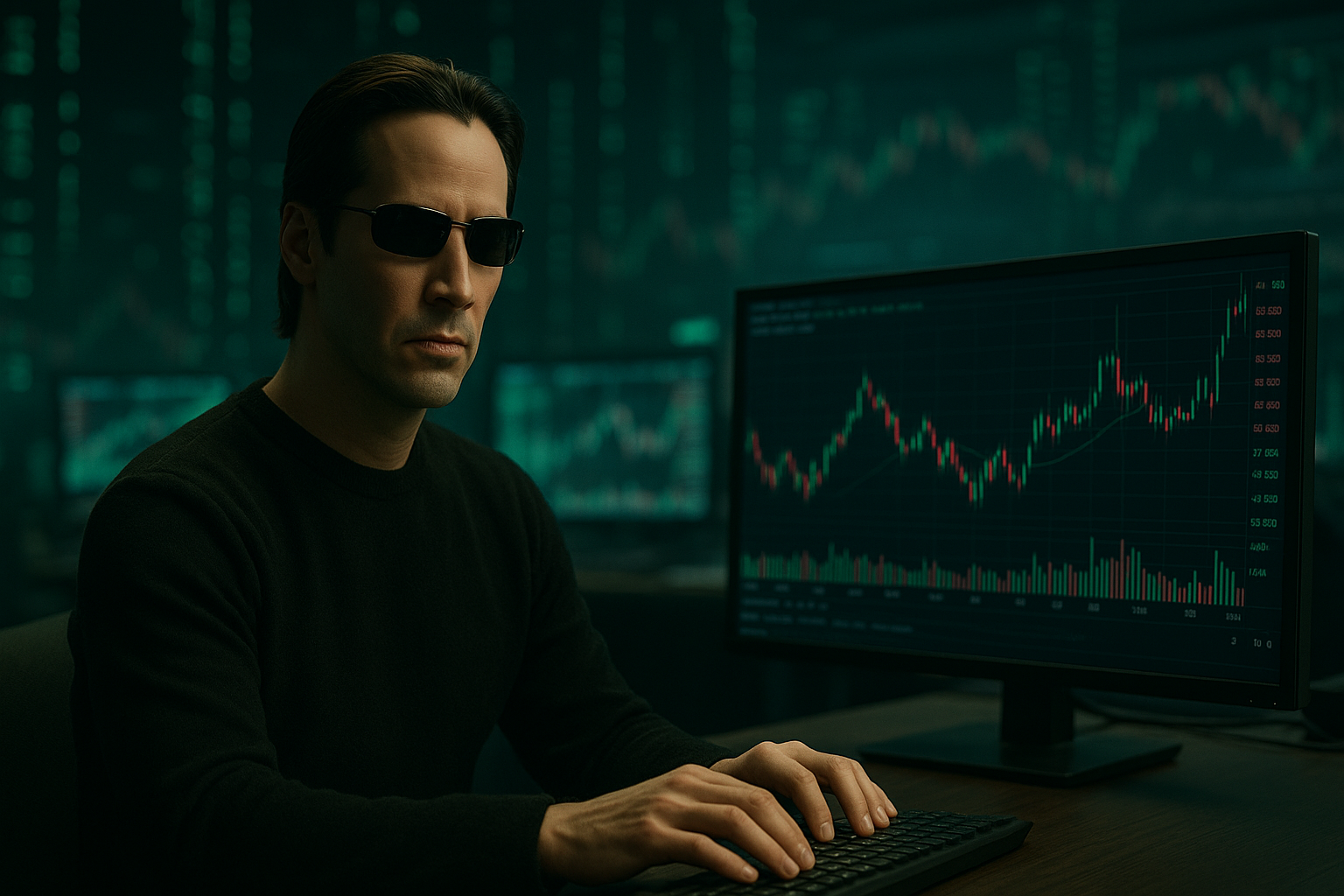
    Just… mechanical, procedural execution— like that scene in The Matrix when Neo finally sees the code for what it is, stops dodging, and effortlessly controls the fight against Agent Smith. The bullets slow. The chaos dissolves. He’s no longer reacting — he’s simply operating inside the system with total calm.

    Congratulations.

    You’re now boring.


    But here’s the danger:

    Boring is not the enemy.

    But boredom is.


    Why The Boredom Trap Exists

    When you were in the “struggle phase,” every trade felt important.

    Every session was an emotional referendum on whether you were good enough.

    Every mistake triggered a self-examination.

    You were alive in the fight.

    But eventually, if you actually do the work, something incredible happens:

    • The setups become obvious.
    • The entries become automatic.
    • The exits happen without bargaining.
    • The losses no longer shake you.
    • The wins no longer thrill you.

    You are simply… executing.

    That’s mastery.

    That’s where the real money is made.

    And that’s also where many traders slowly start self-sabotaging.


    The Two Types of Traders Who Reach Mastery

    1️⃣ The Identity Seeker

    They were addicted to becoming a trader.

    The challenge was the thrill.

    The struggle defined them.

    Now that it’s just execution? They feel empty.

    So they unconsciously seek out ways to bring back the feeling — often by taking dumb risks they don’t need to take.

    2️⃣ The Operator

    They weren’t in it for the thrill.

    They were in it to build something durable.

    To master a complex skill and run it like a business.

    For them, the absence of emotional spikes is not boring — it’s deeply satisfying.

    They scale quietly.

    They compound wealth.

    And they don’t need drama to feel alive.


    Which One Are You?

    Here’s the test:

    If you secretly fear that once trading feels easy, you’ll lose interest — that’s a good sign.

    It means you’re self-aware enough to recognize the trap before you fall into it.

    If you’re excited to make trading so boring that you forget what you traded yesterday?

    You’re wired for long-term wealth.


    What to Do About the Boredom Trap

    1️⃣ Build Rituals of Professionalism

    Treat your trading desk like an operating room.

    Pre-session checklist.

    Post-session logs.

    High-level journal entries.

    It’s not entertainment. It’s precision.

    2️⃣ Find Satisfaction in Clean Execution

    Every perfect HSE exit? A private fist bump.

    Every day you followed your rules? Another brick laid.

    Build your identity around the behavior, not the P&L.

    3️⃣ Avoid the Dopamine Drift

    The second you start “spicing things up” with unnecessary size or marginal setups, catch yourself.

    That’s boredom whispering in your ear.

    Ignore it.

    4️⃣ Respect the Machine

    Once you’ve built the machine, your job is to operate it, maintain it, and keep it fed.

    You don’t need to tinker with it every day.

    5️⃣ Create Meaning Outside the Charts

    Boring trading gives you something far more valuable than excitement:

    Freedom.

    Use it.

    Spend time with your family.

    Build something new.

    Mentor someone.

    Write.

    Travel.

    Leave the charts alone after the session ends.

    The goal isn’t to fill your emotional needs through trading.

    It’s to let trading fund the life you want to live.


    The Real Mastery

    You don’t master trading by chasing excitement.

    You master trading by building a machine that produces capital without your emotions being involved.

    Boredom isn’t failure.

    Boredom is the victory lap.

    Stay sharp.

    Stay grounded.

    Stay boring.

  • Trading: The Fine Art of Not Maiming Yourself

    Trading: The Fine Art of Not Maiming Yourself

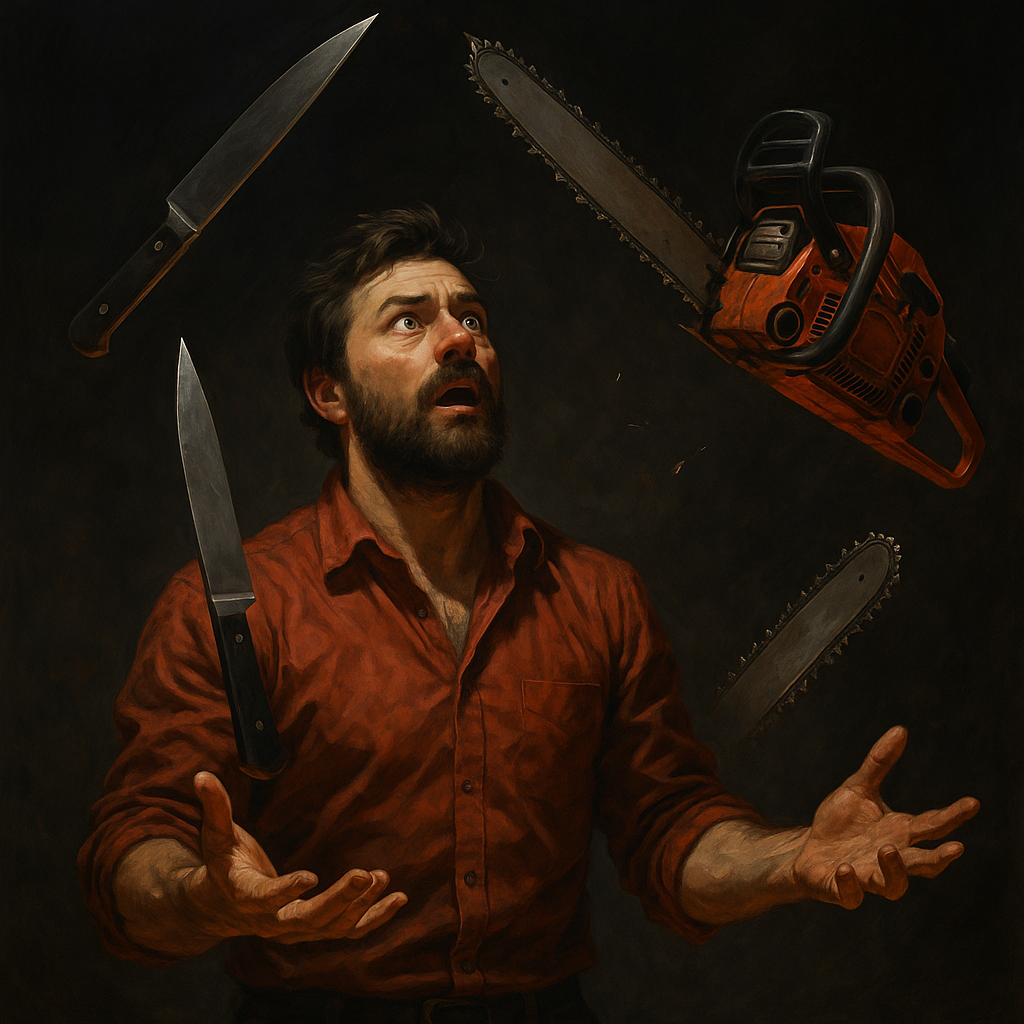
    Trading is a little like juggling knives. At first, you’re terrified. Every toss feels like a near-death experience. Then you get used to it. You start to think, Hey, maybe I’m actually good at this. You start flipping them higher, showing off. And that’s exactly when you lose a finger. Or two.

    The danger isn’t that the knives suddenly get sharper—it’s that you forget what you’re holding. You forget that one bad catch and you’re bleeding on the carpet.

    Or take juggling chainsaws. Sure, the teeth don’t bite you every time. Sometimes you can toss them around for hours without incident. But one slip when you’re tired, distracted, or just a little too cocky—and the chainsaw reminds you what it was built for.

    Trading is the same. The market doesn’t even have to do anything unusual. It’s you. Lack of sleep. Revenge trading. That little voice saying, Just one more trade, I’ll get it back. That’s the moment you’re reaching up with bare hands into spinning steel.

    I’ve seen it in myself and in others:

    • Trading is like walking a tightrope. You can cross it ten times, twenty times, and then on the twenty-first you decide to look at your phone. Gravity doesn’t care how many times you’ve been lucky.
    • Trading is like cooking with hot oil. Most of the time it just sizzles. But turn your back for a second, toss something in carelessly, and suddenly you’re explaining to the ER nurse how you got third-degree burns trying to make onion rings.
    • Trading is like keeping a tiger on a leash. It might seem tame—heck, you might even start to think it likes you. But it’s still a tiger. The moment you forget that, you’re dinner.

    The point is: the risk never goes away. You can get sharper, faster, better at catching the knives. You can even add more knives, or a chainsaw or two. But the danger never leaves the act—it only hides behind your growing comfort.

    And that’s the trap. Comfort is what gets traders killed. Confidence is fine. Overconfidence is where the blood starts to spatter.

    So don’t forget: every session, every trade, you’re back on stage, tossing blades under hot lights. Respect the knives. Respect the chainsaws. Respect the tiger. Because the moment you don’t—you’ll be counting your fingers and realizing you’ve got fewer than when you started.

  • How to Handle the Weekend After a Bad Trading Week

    How to Handle the Weekend After a Bad Trading Week

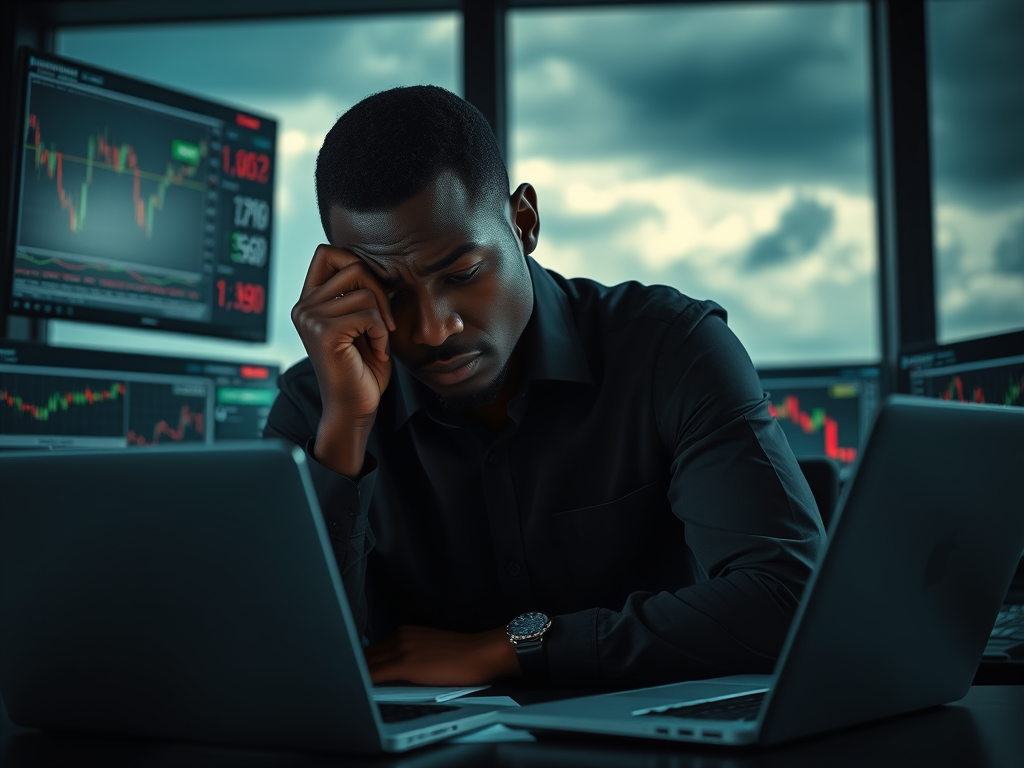
    There’s a very specific kind of pain that only traders know.

    You’ve had a rough week.

    You’re sitting in drawdown.

    You’re disappointed, angry, frustrated.

    And worst of all?

    The markets are closed.

    You can’t fix it.

    You can’t take action.

    You just sit there.

    Marinating in your own bad decisions.


    The trader’s weekend dilemma:

    When you’re in a losing streak, the weekends feel longer.

    Because unlike most normal people, weekends aren’t rest for traders — they’re emotional purgatory.

    • Your brain obsesses over charts that aren’t moving.
    • You replay trades you should’ve exited earlier.
    • You run fantasy simulations of what would’ve happened “if only.”

    The urge to make the pain stop starts to build.


    Here’s where it gets dangerous:

    The natural instinct is to reach for a dopamine hit to alleviate the discomfort:

    • Binge Netflix.
    • Scroll social media endlessly.
    • Overeat.
    • Numb yourself with alcohol.
    • Start planning “big” trading adjustments.
    • Fantasize about how you’ll make it all back Monday morning.

    Anything to make the emotional sting feel less sharp.


    But here’s the truth nobody wants to hear:

    Every time you seek relief, you train your brain to seek immediate comfort instead of long-term discipline.

    And that’s the exact dynamic that shows up when:

    • You revenge trade to erase losses.
    • You overtrade trying to feel “back in control.”
    • You hold losing trades beyond your stop because “it might come back.”

    Seeking relief becomes your default trading behavior.


    The real work is done in this weekend pain.

    This is your training ground.

    Not the charts.

    Not the trades.

    Right here. Inside this discomfort.

    Because trading success isn’t about feeling great while you trade.

    It’s about executing correctly while you feel like absolute garbage.


    What to do instead:

    1️⃣ Sit in the pain.

    Feel it. Let it wash over you without trying to numb it.

    This is the currency you’re paying for your growth.

    2️⃣ Reflect with brutal honesty.

    • What actually happened this week?
    • What rule did you break?
    • Where did your emotional brain hijack you?

    3️⃣ Journal with purpose, not fantasy.

    • Write down what you’ll do differently.
    • Write out your process for catching yourself next time.
    • Don’t write “how you’ll make it back.” That’s poison.

    4️⃣ Respect Monday.

    Monday is not your redemption day.

    It’s just another session. Another opportunity to execute cleanly.

    If you try to erase last week’s losses emotionally, you’ll just compound them.


    In truth:

    This weekend pain is exactly why most people never make it as traders.

    They’re not willing to sit in the discomfort long enough to retrain their nervous system.

    But if you can build the muscle to act correctly inside discomfort,

    You’re doing the real work most traders will never do.


    Final thought:

    The pain you feel this weekend is the tuition.

    How you process it determines whether you’re building mastery or simply running laps around your same old cycle.

    If you want comfort, there are easier careers.

    If you want mastery, lean into the pain.


  • Trading Is Psychological Pain Tolerance. The Gym Bros Are Half Right.

    Trading Is Psychological Pain Tolerance. The Gym Bros Are Half Right.

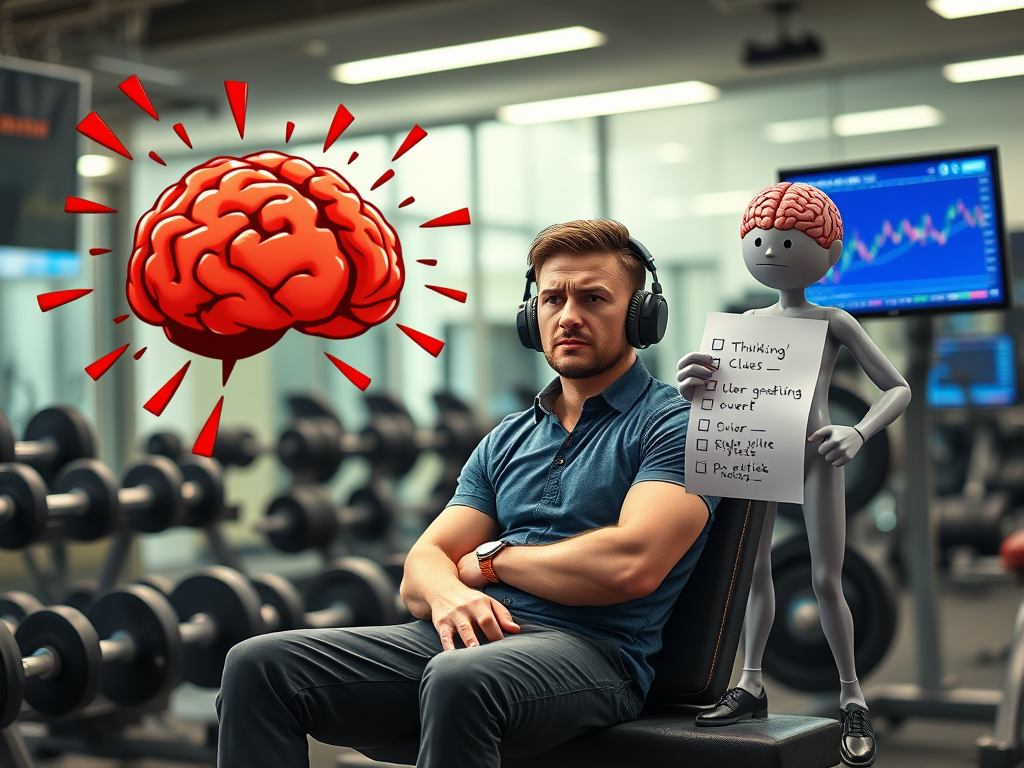
    There’s a certain flavor of trading guru out there—you’ve seen them.
    Tight T-shirt, protein shake, testosterone-infused motivational posts.
    Discipline starts at 5 AM in the gym, bro. If you can’t do that, you’ll never be a trader.

    And to be fair, they’re not entirely wrong.

    But they’re not entirely right either.


    Trading is a form of psychological athleticism.

    At its core, trading is about doing the correct thing while your brain is screaming at you to do the wrong thing.
    Over.
    And over.
    And over.

    It is pain tolerance, but not physical.
    It’s not about how much you can bench press.
    It’s about how long you can sit inside a trade that’s gone $150 against you and calmly click out exactly where your exit rule tells you to, rather than where your ego wants you to.


    Where the gym analogy works

    When you train physically, you deliberately introduce discomfort to build resilience.
    You force yourself into pain under controlled conditions.

    • You’re sore, but you do the reps.
    • You’re tired, but you finish the workout.
    • You’re tempted to quit, but you don’t.

    That process does strengthen your nervous system.
    It builds tolerance for discomfort.
    It creates evidence that you can act correctly even when uncomfortable.

    That skill absolutely transfers into trading.


    But here’s where the gym bros lose the plot:

    They make it sound like you need to be in peak “Alpha Mode” before every trading session.

    Like if you don’t get 8 hours of sleep, eat salmon and quinoa, meditate for 20 minutes, and hit a personal deadlift record…
    … you’re not “primed” to execute.

    And while yes—healthy routines help—it’s a false expectation that you can or need to be at peak readiness every time you sit at the screens.


    The uncomfortable truth:

    You will trade tired.
    You will trade frustrated.
    You will trade stressed.
    You will trade while your kid is sick, your dog puked on the carpet, and your neighbor’s leaf blower is firing up for the third time that morning.

    And you still have to execute.

    Because the real skill isn’t trading while feeling good.
    It’s trading well while feeling like garbage.


    So does trading become easier?

    Yes — but not because the discomfort goes away.
    It gets easier because you stop fearing the discomfort.

    You stop negotiating with your emotional brain.

    You stop arguing with the voice that says:

    • “This feels bad.”
    • “I want out.”
    • “I can’t take another loss.”

    And instead you calmly say back:

    “Noted.
    But I will still obey my system.”


    Eventually, it becomes muscle memory. Sort of.

    When you start, trading feels like learning a foreign language while someone screams in your ear.
    Every decision feels loaded with pressure.

    But over time, as you consistently act correctly inside discomfort, your brain starts to rewire:

    • The discomfort remains.
    • But your response becomes automatic.
    • You act correctly faster.
    • You spend less time spiraling.

    That’s the true version of “muscle memory” in trading.


    So, should you hit the gym?

    Yes.

    But not because your biceps will make you a better trader.

    You do it because voluntarily enduring discomfort in any domain trains your nervous system for voluntary discomfort everywhere.

    And trading is voluntary discomfort on steroids.


    The real takeaway

    Trading mastery isn’t about achieving perfect emotional neutrality.
    It’s about executing correctly despite imperfect emotions.

    Every rep in the gym, every hard conversation you have in your personal life, every time you face a stressful truth you’d rather avoid —
    —it’s all training for the psychological game you’ll face at the charts.

    Because in the end, trading mastery is nothing more than emotional pain tolerance, skillfully directed.

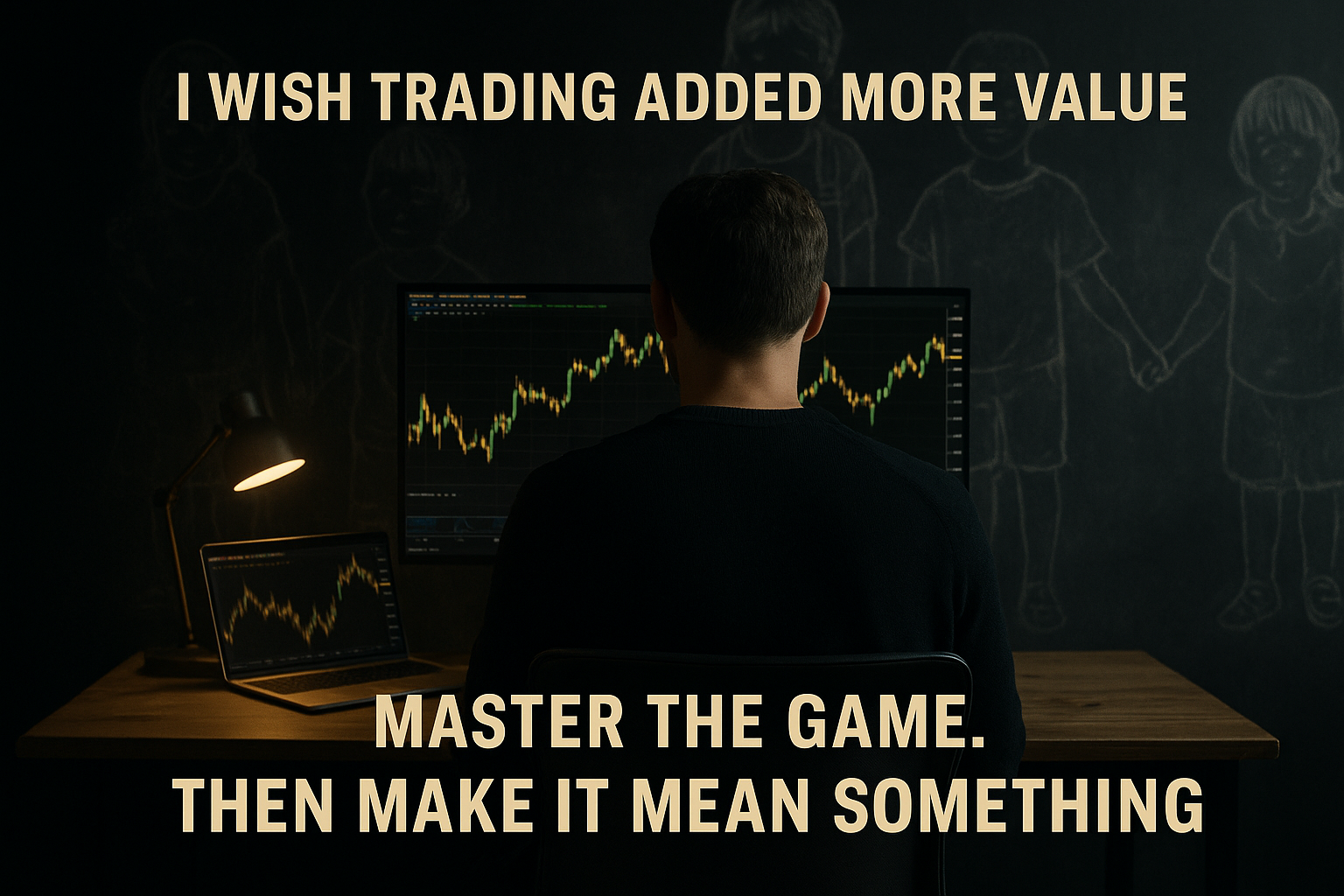
  • I Wish Trading Added More Value

    I Wish Trading Added More Value

    By The Barcelona Trader

    There’s a lot of content out there comparing traders to elite athletes.

    And sure—we train like them. We review tape. We build routines.

    We talk about discipline, precision, mindset, and performance.

    I just wrote a post about it.

    (It was good. You should read it.)

    But if I’m being honest?

    I wish it mattered more.

    Because here’s the truth I don’t see many traders say out loud:

    We don’t fix anything.

    We don’t build anything.

    We don’t make anything better.


    We Exploit a Money Glitch

    What we do is find inefficiencies.

    Tiny moments of imbalance in a system that was designed—poorly, beautifully, and sometimes accidentally—to let us take advantage of price movement for profit.

    It’s a glitch.

    A repeatable, learnable glitch.

    It feels like a game.

    But the money’s real.

    And every dollar we make?

    Someone else loses.

    Usually a beginner.

    Often someone overleveraged.

    Sometimes someone who can’t afford to be wrong.

    We tell ourselves we’re “competing with institutions,” and sometimes that’s true.

    But a lot of the time?

    We’re just better at the game than the people on the other side of our trades.


    The Internal Conflict

    I’m not writing this because I’m ashamed to be a trader. I’m not.

    I’ve worked damn hard to be good at this.

    But I do feel the contradiction.

    There’s a quiet dissonance that comes from knowing that I’ve built a skill that:

    • Creates freedom for me
    • Offers precision, structure, and mastery
    • …but doesn’t really give anything back

    Not like a teacher.

    Not like a doctor.

    Not even like a coder or a builder or a writer.

    We don’t leave anything behind.

    We don’t plant anything that grows.


    So Why Do It?

    Because it’s honest.

    That may sound strange. But there’s something clean—stripped down—about trading.

    • It doesn’t lie to you.
    • It doesn’t pretend to be noble.
    • It rewards clarity, discipline, and execution. Nothing else.

    And maybe, just maybe…

    If we can master this thing that rewards nothing but control and commitment, we can free ourselves up to do something that does matter.

    Trading doesn’t have to be our legacy.

    But it can fund one.


    I don’t pretend trading is saving the world.

    But I do think it can give us the time, the focus, and the freedom to try.

    And maybe that’s enough—for now.

  • Why Trading Is More Like Pro Sports Than You Think

    Why Trading Is More Like Pro Sports Than You Think

    By The Barcelona Trader

    Let’s kill the myth right now:

    Trading is not about freedom.
    Not at the top level. Not if you’re serious.

    It’s not about beach laptops, passive income, or sipping margaritas while price hits your TP.

    That’s Instagram.
    Real trading?

    It’s elite performance.
    It’s blood, sweat, and drawdown.
    It’s discipline over dopamine—every damn day.


    Think Trading’s Not a Sport? Ask Your Heart Rate.

    You want to know if trading is athletic?

    Check your pulse the next time you’re:

    • Managing a $1,200 unrealized loss
    • Fighting off revenge trade temptation
    • Or staring at a high-probability setup you just know will fake you out the moment you enter

    The stress is real. The emotional stakes are high.
    And if you think pushing buttons isn’t physical, then you’ve never sweated through a T-shirt while scalping NFP.


    Here’s Why It Maps to Athletics

    1. Routine = Results
      Athletes warm up. Review tape. Sleep well. Eat right.Traders?
      You prep levels. Journal sessions. Reset your mindset. Sleep—or don’t—and see what it costs you.
    2. You Train in Silence. You Perform in Public.
      No one sees the work.
      They just see the outcomes: “You made how much this month?”But they didn’t see the losses you walked away from.
      The setups you passed on.
      The months where you played defense, not offense.
    3. You Fight Yourself More Than You Fight the Market
      Ask any fighter what the real battle is.
      It’s not the opponent—it’s themselves.Same in trading.Your edge doesn’t matter if you can’t execute it.
      And most of us aren’t beaten by the chart—we’re beaten by our own impatience, our ego, or our inner 3rd grader who just wants to press the button because it’s shiny.

    The Habits of an Elite Trader (Read: Athlete)

    • You follow the plan even when it’s boring.
      (Welcome to the gym. You’re doing reps.)
    • You take clean setups only.
      (Would you sprint a 400m at full speed during warm-up? No? Then don’t trade chop.)
    • You recover after losses.
      (Traders rest. They study film. They come back stronger. The amateurs rage-click and blow the account.)
    • You train your psychology like a pro.
      (Visualization. Affirmations. Self-talk. You think athletes are the only ones who do this?)

    What Makes Trading Even Harder Than Sports

    Here’s the kicker:

    In sports, you get immediate feedback.
    In trading? Not so much.

    You can do everything right and still lose money.
    You can break every rule and still walk away green.

    That kind of uncertainty doesn’t exist on the field.
    Only here.

    That’s why traders need even more discipline than most athletes.
    We don’t just manage performance. We manage ambiguity.


    The Point

    If you want to trade at a high level, stop looking at it like a shortcut to freedom.

    Start looking at it like training camp.

    • Show up early.
    • Stick to your routine.
    • Track everything.
    • Rest like it matters.
    • Respect the craft.

    Because trading, like sport, rewards the prepared, punishes the sloppy, and makes legends out of the disciplined.


    Trading isn’t a hustle. It’s a performance.
    And the market doesn’t care if you’re tired. It only cares if you’re ready.


  • What If “Giving It My All” Isn’t Good Enough?

    What If “Giving It My All” Isn’t Good Enough?

    Every trader has asked it. Usually in silence. Often in the dark.

    “What if I’m doing everything right… and I still fail?”

    It’s the kind of thought that doesn’t just whisper—it haunts. And it hits hardest when you’ve finally stopped half-assing it and gone all-in. When you’ve sacrificed time, pride, and a chunk of your identity to this pursuit.

    Because if your all isn’t enough—what’s left?


    The Fear That Only the Serious Feel

    Here’s the thing: This fear doesn’t show up for dabblers.

    People who aren’t taking trading seriously don’t ask this question. They’re too busy blaming the market, the broker, the indicator, the moon phase.

    But if you’re feeling this? You’re probably dangerously close to being good.

    That’s the irony. The self-doubt isn’t a sign you’re failing—it’s often a sign you’re leveling up. You’re noticing nuance. You’re battling the inner critic because you actually care.

    That’s not weakness. That’s growth.


    The Myth of the Natural

    Part of what feeds this fear is the myth that great traders are born with it. That some people just “have it”—and if you don’t, you’re doomed.

    That’s crap.

    Elite trading is learned. It’s painful. It’s repetitive. It requires more emotional rewiring than most people can stomach.

    So if you’re in the thick of that? You’re not broken. You’re becoming.


    But What If I Really Do Fail?

    Let’s get uncomfortable. Let’s say you give it your all. And after a year—or a few—you still don’t make it.

    Then you’ll know. And that alone is worth everything.

    Because the worst outcome isn’t failure. It’s not knowing. It’s years spent half-invested, always wondering if you could’ve made it if you’d just committed.

    If you go all-in and fail, you walk away with clarity, emotional toughness, and a better version of yourself. If you half-ass it and fail, you walk away with regret.


    Here’s the Truth

    Your all is already better than you think. Most people never even get to the point where they can recognize their mistakes, let alone articulate them in real time and improve them.

    Hopefully, you’re doing that.

    Maybe you’re stacking clean sessions. You should be managing emotional state. You shouldn’t be chasing, spiraling, or giving in to the noise.

    You’ve probably already passed the “could I do this?” test. Now you’re just in the “how far can I go?” phase.

    And if you keep showing up—clean, focused, honest—you’ll find out.

    You’ve got more in the tank than you think.