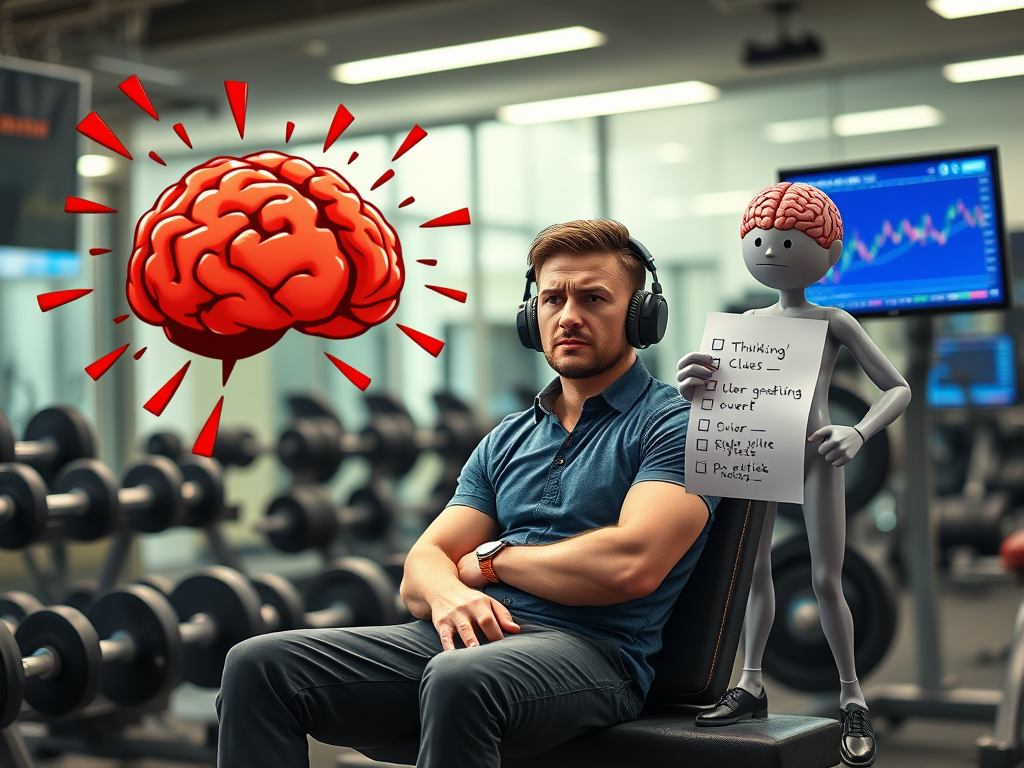
There’s a certain flavor of trading guru out there—you’ve seen them.
Tight T-shirt, protein shake, testosterone-infused motivational posts.
“Discipline starts at 5 AM in the gym, bro. If you can’t do that, you’ll never be a trader.”
And to be fair, they’re not entirely wrong.
But they’re not entirely right either.
Trading is a form of psychological athleticism.
At its core, trading is about doing the correct thing while your brain is screaming at you to do the wrong thing.
Over.
And over.
And over.
It is pain tolerance, but not physical.
It’s not about how much you can bench press.
It’s about how long you can sit inside a trade that’s gone $150 against you and calmly click out exactly where your exit rule tells you to, rather than where your ego wants you to.
Where the gym analogy works
When you train physically, you deliberately introduce discomfort to build resilience.
You force yourself into pain under controlled conditions.
- You’re sore, but you do the reps.
- You’re tired, but you finish the workout.
- You’re tempted to quit, but you don’t.
That process does strengthen your nervous system.
It builds tolerance for discomfort.
It creates evidence that you can act correctly even when uncomfortable.
That skill absolutely transfers into trading.
But here’s where the gym bros lose the plot:
They make it sound like you need to be in peak “Alpha Mode” before every trading session.
Like if you don’t get 8 hours of sleep, eat salmon and quinoa, meditate for 20 minutes, and hit a personal deadlift record…
… you’re not “primed” to execute.
And while yes—healthy routines help—it’s a false expectation that you can or need to be at peak readiness every time you sit at the screens.
The uncomfortable truth:
You will trade tired.
You will trade frustrated.
You will trade stressed.
You will trade while your kid is sick, your dog puked on the carpet, and your neighbor’s leaf blower is firing up for the third time that morning.
And you still have to execute.
Because the real skill isn’t trading while feeling good.
It’s trading well while feeling like garbage.
So does trading become easier?
Yes — but not because the discomfort goes away.
It gets easier because you stop fearing the discomfort.
You stop negotiating with your emotional brain.
You stop arguing with the voice that says:
- “This feels bad.”
- “I want out.”
- “I can’t take another loss.”
And instead you calmly say back:
“Noted.
But I will still obey my system.”
Eventually, it becomes muscle memory. Sort of.
When you start, trading feels like learning a foreign language while someone screams in your ear.
Every decision feels loaded with pressure.
But over time, as you consistently act correctly inside discomfort, your brain starts to rewire:
- The discomfort remains.
- But your response becomes automatic.
- You act correctly faster.
- You spend less time spiraling.
That’s the true version of “muscle memory” in trading.
So, should you hit the gym?
Yes.
But not because your biceps will make you a better trader.
You do it because voluntarily enduring discomfort in any domain trains your nervous system for voluntary discomfort everywhere.
And trading is voluntary discomfort on steroids.
The real takeaway
Trading mastery isn’t about achieving perfect emotional neutrality.
It’s about executing correctly despite imperfect emotions.
Every rep in the gym, every hard conversation you have in your personal life, every time you face a stressful truth you’d rather avoid —
—it’s all training for the psychological game you’ll face at the charts.
Because in the end, trading mastery is nothing more than emotional pain tolerance, skillfully directed.
Leave a Reply