Author: Mike McCready

  • Gold at $3,400: Mania, Momentum, or Just the End of the World?

    Gold at $3,400: Mania, Momentum, or Just the End of the World?

    Gold’s doing what gold does when the world looks like a powder keg with a matchbook addiction: it’s going up. Not politely. Not steadily. I mean up—like it overheard Jerome Powell whispering “rate cuts” and decided it was 2008 with a vengeance.

    We’re nearly 30% higher on the year. That’s right: Gold has outperformed stocks, bonds, crypto, and probably your therapist’s investment portfolio. Even Bitcoin’s having to take a back seat in the Fear Trade limo. The yellow metal has swagger again—pirate-level swagger.

    So what’s driving this Gold Rush, 2025 edition?

    Spoiler: It’s not euphoria. It’s dread.

    Geopolitical Chaos: Gold’s Favorite Playlist

    At the top of the fear list is the simmering pot of Middle East tensions—Israel and Iran are doing that thing where markets pretend not to panic… and then panic. The worry is that the conflict will spread and disrupt oil supplies. Less oil = higher prices = more inflation anxiety = more central bank constipation.

    The logic is pretty simple: If you think the world might be going to hell, gold is your emergency go-bag. No counterparty risk. No default. No real yield, either—but let’s not get picky when the house might be on fire.

    Have We Hit Peak Panic?

    Some experts think yes.

    Jim Paulsen—ex-Wells Fargo, now a Substack guy with time to think—says gold has basically become the solution to whatever keeps you up at night. Debt, war, inflation, weak leaders, strongmen, climate chaos, TikTok bans—you name it, gold’s your safe word.

    But Paulsen warns: when fear hits a fever pitch, the trade often hits its peak. Consumer confidence, for example, is sitting near post-WWII lows. That’s not bullish for humanity—but ironically, it might mean gold has already priced in the apocalypse.

    And here’s where it gets weird: the VIX is under 20. In English: Wall Street’s fear-o-meter is chilling out. We’re not exactly calm, but we’re not screaming anymore either. Stocks are clawing back toward all-time highs. Labor’s cooling gently, inflation isn’t spiraling, and the Fed’s flirting with rate cuts again like it’s prom season.

    So… is gold about to run out of steam?

    The Dissenters: Gold Isn’t a God

    Enter the skeptics.

    Mona Mahajan at Edward Jones says gold’s been riding momentum and may soon burn out like every other meme-fueled trade that forgot to check the fundamentals.

    Chris Brightman of Research Affiliates doesn’t mince words: “Gold is not a store of value. It’s a speculative asset.”

    Translation: If you think of gold as some quiet, reliable Swiss banker in your portfolio, you’re mistaking it for the wrong metal. Gold is more like a drama queen with trust issues—it might protect you from currency collapse, or it might leave you stranded in a $300 drawdown wondering why you didn’t buy T-bills like a grown-up.

    But Then There’s Yardeni…

    Of course, no gold debate would be complete without a bullish oracle. Ed Yardeni predicts gold will hit $4,000 by New Year’s Eve, and $5,000 by the end of 2026—if, you know, things keep unraveling.

    That’s a big “if” with a lot of fireworks behind it. But hey, if anyone knows how to draw up a doomsday rally chart, it’s Yardeni.

    So What Do We Actually Know?

    • We know gold has momentum.
    • We know fear fuels gold.
    • We know fear is high, but maybe no longer rising.
    • We know oil markets are one bad headline away from a coronary.
    • And we know that if the world keeps wobbling, gold still has room to run.

    But we also know this: gold doesn’t pay rent. And when the fear fades (or just pauses), that shiny yellow rock can drop faster than a TikTok influencer’s crypto coin.

    So what do you do?

    Simple: Diversify. (Yes, it’s boring. Yes, it’s correct.)


    TL;DR

    Gold is up. So is anxiety. Maybe the fear rally has more legs. Maybe it’s cooked. Either way, gold isn’t your religion—it’s just one part of the plan. Stay nimble. Stay hedged. And maybe don’t bet the farm on a rock, no matter how shiny.

  • Gold Just Dethroned the Euro—And Central Banks Are Hoarding It Like It’s the Last Can of Beans in a Fallout Shelter

    Gold Just Dethroned the Euro—And Central Banks Are Hoarding It Like It’s the Last Can of Beans in a Fallout Shelter

    Something strange is happening behind the curtain of global finance. And it’s not a magician pulling rabbits—it’s central banks pulling bullion.

    According to a new report by the European Central Bank, gold has leapfrogged the euro to become the second-most important reserve asset in the world. That’s right—second only to the almighty (and increasingly wobbly) U.S. dollar.

    Gold now makes up 20% of global central bank reserves, while the euro trails behind at 16%. It’s the kind of headline that makes you wonder if Bretton Woods is about to rise from the dead wearing a “Told You So” T-shirt.

    And this isn’t some fluke driven by one country going full pirate and burying treasure under their central bank. We’re talking about a record-shattering accumulation spree: over 1,000 tonnes of gold bought by central banks for the third year in a row. That’s one-fifth of all the gold dug up worldwide in 2024—and twice the average haul from the entire 2010s.

    What’s going on? Well, it turns out when geopolitics start looking like the Season 9 finale of Game of Thrones, central banks stop trusting IOUs and start reaching for things that can’t be frozen, sanctioned, or inflated into confetti.

    Let’s talk numbers.

    • Gold reserves held by central banks are at 36,000 tonnes—just a whisker shy of the 1965 peak during the Bretton Woods era, when the world ran on a gold-backed dollar and haircuts were flatter than interest rates.
    • Buyers leading the charge? India, China, Turkey, and Poland. Yes, Poland is stacking bars like it’s 1938 and the neighbors are getting twitchy again.
    • Gold hit $3,500/oz in 2024, up 30% last year and another 27% since January. Not bad for a rock that does absolutely nothing except not go to zero.

    Why Now?

    The usual objections—gold doesn’t pay interest, costs money to store, and can’t be emailed—are getting drowned out by louder concerns:

    • U.S. debt is ballooning.
    • The dollar is still dominant but increasingly weaponized.
    • If you’re a central bank in a country that might tick off Washington, you don’t want your reserves held in dollars or euros that can be frozen with a single press conference.

    In fact, the ECB found a correlation worth raising an eyebrow over: five of the ten biggest gold-hoarding years since 1999 came from countries that were sanctioned that year or the year before. Coincidence? Nope. This is about sanction-proofing.

    A recent survey of 57 central banks backed it up. The big motivators?

    • Fear of sanctions.
    • Anticipation of a shift in the global monetary order.
    • A growing need to diversify away from the dollar—without jumping into the arms of the euro or renminbi.

    Oh, and remember how gold used to move opposite to real yields? Not anymore. That classic inverse relationship snapped in 2022. Now, gold isn’t trading as a hedge against inflation—it’s trading as a hedge against everything.

    What This Means

    • For traders like me: The gold market’s no longer just about Fed whispers and CPI prints. There’s a geopolitical undercurrent that’s turning this market into a molten blend of macro chess and fear management.
    • For the world: The dollar’s still king, but its crown is tarnishing. Gold is back in the conversation—not as a relic, but as the silent asset that can’t be hacked, sanctioned, or reprinted by a politician with a reelection campaign to fund.

    Final Thought

    The euro just got demoted, gold is flexing like it’s 1965, and central banks are hoarding metal like they know something we don’t. You don’t need to be a conspiracy theorist to see the writing on the vault wall.

    So, next time someone tells you gold is a boomer asset, just smile and tell them: “So are central banks.”

  • Why I Adopted the Name The Barcelona Trader

    Why I Adopted the Name The Barcelona Trader

    By The Barcelona Trader (obviously)

    Let’s start with the obvious:

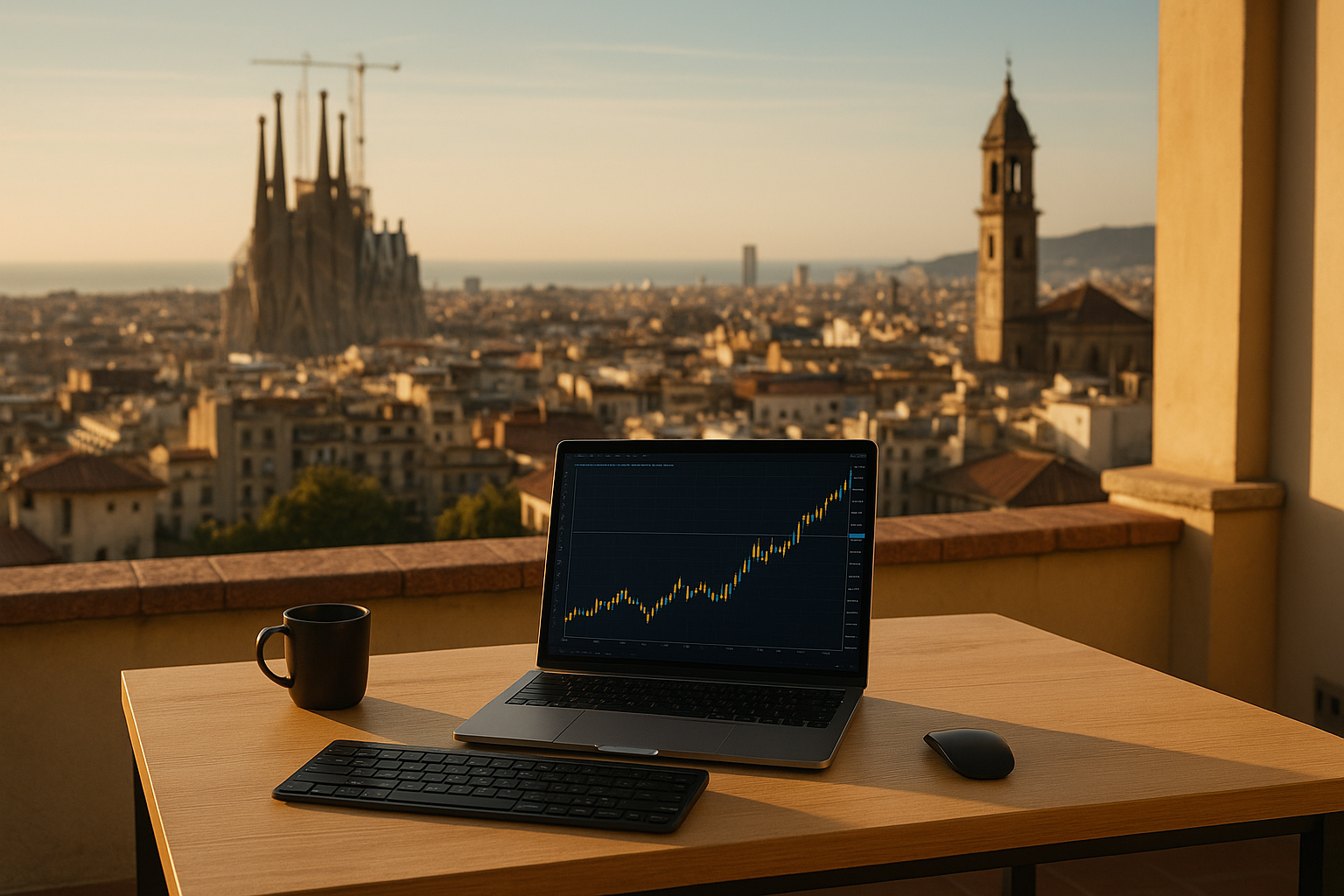
    No, I don’t trade from a Gaudí balcony sipping vermut while sardana dancers whisper trade signals in the wind.
    And no, the name isn’t about branding.
    At least—not the kind you think.

    The Barcelona Trader isn’t a costume.
    It’s a reflection. A flag. A reclamation.


    A City That Shaped Me

    I spent some of the most formative years of my life in Barcelona and in a small town to the north called Cardedeu.

    It wasn’t just where I lived—it’s where I became me. In fact, by the time I moved back to the U.S. in 2008, I had lived over half of my life there.

    I built businesses there.
    Launched a Catalan watch brand that went cult-famous.
    Ran concerts that brought legends like Prince, Springsteen, and U2 to town.
    And I immersed myself in a culture that values art, passion, rebellion, and clarity—all things I still carry into the markets.

    Barcelona taught me to see structure in chaos.
    To lead with instinct, but back it with discipline.
    To understand that sometimes, the best move is a bold one.


    Not Just a Memory—Still a Home

    Even now, as I split time between New York City and Barcelona, that connection runs deep.

    Barcelona isn’t just in the rearview mirror—it’s still home.
    I have a place there. I spend real time there. I have roots, friendships, and a deep sense of belonging.
    And yes, I speak Spanish and Catalan like a native—because they’re not just languages to me. They’re a part of who I am-and sometimes I’m doing our YouTube live trading streams from there.

    Barcelona shaped my ear for rhythm, my eye for detail, and my appetite for reinvention.


    So Why the Name?

    Because after everything—the music, the accolades, the media attention, the Harvard case study, the business exits,—I found myself wanting to go back to the start.
    Reinventing.

    This time not in the music industry, but in the markets.
    And once again, I needed something to anchor me.

    Not a trading strategy.
    Not a dream of freedom – I’m fortunate to already have that.
    But a state of mind.

    Barcelona is that for me.

    It reminds me:

    • That creativity and structure can coexist
    • That rhythm matters—even when the tempo changes
    • That beauty and precision are not opposites
    • That no one hands you success, but you can build it (again)

    The Barcelona Trader Isn’t a Persona. It’s a Standard.

    It’s not about geography.
    It’s about identity.
    It’s about showing up to the screen every day with the intention to trade like a professional, even when the market is throwing chairs.

    It’s about clarity over chaos.
    Craft over clickbait.
    Discipline over dopamine.

    And maybe most importantly—it’s about carrying everything I learned as a creative, as a builder, as a musician, and channeling it into a new frontier that rewards execution over ego.


    The Barcelona Trader is who I am when I’m at my best.
    And every session, I trade to earn that name all over again.

  • The Fixed Range Volume Profile: Why It Matters, and How to Use It

    The Fixed Range Volume Profile: Why It Matters, and How to Use It

    By The Barcelona Trader

    Let’s talk about a tool that actually matters.

    Not a gimmick. Not a “secret weapon.” Not some recycled 2007 YouTube strategy rebranded with a new acronym and a $997 course.

    I’m talking about the Fixed Range Volume Profile—also known as FRVP—and it’s one of the most powerful, overlooked tools a serious trader can add to their chart.

    If you trade gold and you’re not using it, you’re operating half-blind.


    What Is It?

    The Fixed Range Volume Profile shows you how much volume was traded at each price level—not over the entire chart, but over a specific window of time that you define.

    In TradingView, it’s already built in.

    Here’s how to find it:

    1. Open your chart
    2. Hit Indicators → search for “Fixed Range Volume Profile”
    3. Click it
    4. Then click and drag across any time segment you want to analyze—consolidation, breakout leg, pullback, whatever

    And just like that, the chart stops whispering and starts telling the truth.


    Let’s Talk About the Terms That Actually Matter

    There are a few key concepts FRVP gives you—and they’re not complicated, just underutilized:

    • POC (Point of Control):
      The price level where the most volume was traded in that time range.
      Think of it as the market’s center of gravity. The most accepted price.
      👉 Don’t trade into it blindly. Watch how price reacts around it—magnet or repeller?
    • Value Area (VA):
      The range that contains roughly 70% of all traded volume in your selected range.
      👉 Inside the value area = indecision. Outside it = opportunity.
    • HVN (High Volume Node):
      Thick volume = sticky price. Price tends to stall or revert here.
      👉 Don’t expect explosive moves through HVNs—they’re built for chop.
    • LVN (Low Volume Node):
      Thin volume = low interest = fast movement.
      👉 When price hits an LVN, it usually doesn’t stick around to negotiate.

    How I Use It (And How You Should Too)

    When I’m trading gold, I’m not just clicking buttons. I’m reading footprints. Here’s how FRVP helps:

    1. I define the zone.
      Drag the tool over a specific time range—like a recent breakout leg, a pre-market consolidation, or a trend correction.
    2. I identify the POC.
      I want to know where the market was most comfortable. Spoiler: that’s not where I want to be trading.
    3. I watch for reaction at the edges.
      The edges of the value area and the nearby volume nodes tell me whether this is a breakout, a rejection, or a trap waiting to happen.
    4. I trade away from acceptance, not into it.
      Think like a magnet: price is attracted to the POC, but once it gets there, it’s just as likely to spring away from it as it is to stay. Context is everything.

    Why It’s So Useful—Especially on Gold

    Gold is a twitchy, emotionally charged instrument.
    It reacts to structure. It respects levels. And it loves to trap traders at the worst possible moment.

    The FRVP gives you clarity about where the market actually did business.
    Not where you think it should have. Not where your Fibonacci said it might.
    Where traders actually showed up with size.

    That’s an edge.


    One Last Thing

    Don’t treat this like a magic wand. It’s not a signal generator. It’s a context tool.

    Use it to:

    • Frame your bias
    • Stay out of trouble
    • Avoid chasing candles through chop
    • And stop trying to buy pullbacks that are actually just re-tests of a sticky high-volume node

    Trade like a professional: wait for the market to leave a trail—then follow it.


    The Fixed Range Volume Profile doesn’t predict anything.
    But it does explain everything.
    And sometimes, that’s exactly what you need.

  • The Forgotten Power of Pivots

    The Forgotten Power of Pivots

    By The Barcelona Trader

    Let me tell you something the YouTube trading bros won’t:

    Pivots still matter.

    I know—I know. They’re not shiny. They don’t come with acronyms like ICT or SMC. They’re not based on smart money, liquidity raids, or whatever other spooky bedtime story is trending this week in Trading TikTok land.

    But pivots? They’ve been around longer than most of these kids have been alive.
    And they still work—especially on gold.


    A Brief History of the Pivot

    Pivots were originally created by floor traders. Not the latte-sipping, dual-screen influencers of today, but actual open-outcry traders—guys who wore weird jackets, shouted across rooms, and made six figures while doing math with a pencil stub.

    They used pivots to figure out:

    • Where price might stall
    • Where the market might reverse
    • Where they might finally stop averaging into a loser and cry into their trading jacket

    The Daily Pivot Point (DPP) was the anchor. Everything else—support and resistance levels—was built from that.

    And it wasn’t just daily. You’d calculate weekly pivots. Monthly. And then you’d watch for confluence. Because that’s where things got interesting.


    What Tono Taught Me to Use (And Why It Works)

    Here’s my pivot stack:

    • DR3 – Daily Resistance 3
    • DR2 – Daily Resistance 2
    • DM4 – Midway between DR2 and DR3
    • DR1
    • DM3
    • DPP – Daily Pivot Point
    • DM2
    • DS1
    • DM1
    • DS2 – Daily Support 2
    • DS3 – Daily Support 3

    I use the same structure for weekly and monthly pivots.

    And no, it’s not because I’m nostalgic for the ‘90s.

    It’s because when a Daily and a Weekly pivot align? That’s not just a level—it’s a statement.
    Same goes for a Monthly and a Weekly, or a Daily and a Monthly.
    These are the levels where the market pauses, thinks about its life choices, and often turns around.


    Why Most Traders Ignore Them (And Why That’s a Mistake)

    Pivots have fallen out of fashion because they’re too simple.
    They don’t come with a 20-hour video course or a 200-page PDF with watermark branding and “edge” in the title.

    They’re just math.
    But guess what?

    So is the market.

    The big players still see these levels. Banks, institutions, prop firms—they may not talk about pivots, but they absolutely react to them. And when you’re trading something as volatile and technically sensitive as gold, those reactions matter.


    Why Pivots Work So Well on Gold

    Gold is emotional.
    It’s reactive.
    It’s loved, hated, hoarded, and dumped.

    And it respects technical levels better than just about any other instrument. Especially when the world’s on edge—which, spoiler, is always.

    That’s why when DR1 lines up with the Weekly Pivot and price slams into it?
    I’m watching.
    That’s not a coincidence. That’s order flow memory.

    You can trade gold without pivots, sure.

    You can also skydive without a parachute.
    It’s only a problem once.


    The Point

    If you’re serious about trading gold—especially if you’re scalping it or working breakouts on the lower timeframes—pivots aren’t optional. They’re your context. They’re your map. They help you understand when a move has juice… and when it’s running into a wall that price has respected 300 times over the last five years.

    SMC? ICT? Smart money this, imbalance that?

    Cool. If it works for you, great.

    But don’t throw out the tools that have been working longer than you’ve been alive just because some guy in a backwards hat on YouTube called them “retail nonsense.”

    Because let me tell you what’s nonsense:

    Ignoring a Monthly Pivot that just aligned with a Weekly and a Daily—and has already seen reactions all week—just because it doesn’t fit your “order block narrative.”


    Use your pivots.
    Stack your timeframes.
    And trade like someone who didn’t just Google “how to become a millionaire in 30 days.”

  • Market Update: Friday June 20, 2025: Gold Slips Into a Third Day of Losses — But Don’t Break Out the Bear Suits Just Yet

    Market Update: Friday June 20, 2025: Gold Slips Into a Third Day of Losses — But Don’t Break Out the Bear Suits Just Yet

    Gold’s had a bit of a breather this week — or depending on your position, a bit of a gut-punch. After an impressive multi-week climb, we’re now looking at three consecutive days of losses. This morning saw spot gold break below $3,350, dipping as low as $3,342 after opening around $3,370.

    And honestly?
    Not much really happened to trigger it.

    No breaking news. No geopolitical drama (for once).
    Just… quiet markets. Which means all eyes shift to technicals.


    The Technical Guys Are Loving This

    With nothing juicy to trade off in the headlines, the technical analysts have taken center stage. And right now, the bears are enjoying themselves. Gold is on track to close out the week roughly 2.5% lower — snapping what had been a strong two-week winning streak.

    But — and it’s a big but — let’s not lose the forest for the trees.


    The Bigger Picture: Gold’s Still King in 2025

    Despite this short-term pullback, gold is still laughing at almost every other major asset class this year. Year-to-date, bullion is up an impressive 28% — handily outperforming both the S&P 500 (+1.9%) and Bitcoin (+12%).

    Zoom out and gold remains very much in a dominant long-term uptrend.


    What’s Behind the Pullback?

    The Fed threw a little water on the fire earlier this week by holding rates at 4.5% and signaling stickier inflation expectations — in part thanks to ongoing tariff uncertainty out of the Trump camp. The result? A slightly stronger dollar and a bit of downward pressure on gold.

    Higher rates always take a little shine off non-yielding assets like gold. When interest rates are high, there’s more incentive for funds to flow into fixed income where you actually get paid to sit still — instead of hoping gold continues to rise.


    Key Levels to Watch

    Technically, gold is still sitting comfortably above its major simple moving averages:

    • 50-day SMA: $3,317
    • 100-day SMA: $3,139
    • 200-day SMA: $2,901

    In other words: the long-term trend remains fully intact.

    The real question is whether bulls can clear the double-top resistance hovering around $3,450. If that breaks, we could see a retest of the $3,500 all-time highs. Until then, the market may stay choppy while traders jockey for positioning.


    Eyes on Next Week

    Next week could deliver the kind of volatility that breaks us out of this technical grind. Here’s what’s on deck:

    • Tuesday & Wednesday – Fed Chair Powell speaks (and traders hang on every word)
    • Thursday – U.S. GDP data drops
    • Friday – The Fed’s preferred inflation measure: PCE data

    Any surprise from Powell or the inflation numbers could light the fire again — in either direction.


    My Take:

    Short-term? Choppy.
    Medium-term? Still bullish until proven otherwise.
    Long-term? The big shiny rock is still doing exactly what it’s supposed to do — remind us why it’s called a store of value.

  • Why Gold Futures Start Out Priced Higher and End Up Right Next to Spot

    Why Gold Futures Start Out Priced Higher and End Up Right Next to Spot

    So, here’s a little market oddity that’s bugged me for a while—one of those background quirks you only notice after months of staring at gold charts with the intensity of a TSA agent who’s just started their shift.

    When a new futures contract kicks off—say, GC for August delivery—it starts out trading noticeably higher than spot gold (XAUUSD). Like clockwork. It’s not a glitch. It’s not an arbitrage. It’s… normal?

    But then something sneaky happens.
    As we get closer to expiry, that shiny little premium starts to melt. By the time the current contract is rolling over, GC1! and spot are basically cuddling on the chart.

    And I’ve always wondered—how does that actually happen?
    Where does that price difference go?
    Does it evaporate in a puff of wizardry, or is there a more grounded, mechanical explanation?

    So I dug in.


    💡 The Premise: Why Futures Start Higher Than Spot

    Futures have an expiration date. Spot doesn’t.
    That difference gives futures a little extra price “fluff”—a premium that accounts for:

    • Interest rates (the cost of money over time)
    • Storage and insurance
    • Opportunity cost
    • Market expectations for future supply/demand imbalances

    When you’re trading gold futures for delivery two months from now, you’re pricing in what gold might be worth then—not what it’s worth right now. So naturally, you pay a bit more. That’s called contango, and it’s the default setting for gold when things are relatively calm.


    📉 The Convergence: From Lofty Futures to Grounded Reality

    But time doesn’t stand still. April becomes May. May becomes “oh crap, it’s rollover week.” And the futures price? It slowly starts kneeling down to meet spot.

    At first glance, this convergence seems mysterious. Like there’s some unseen clock striking midnight and—poof—the premium disappears.

    Not quite.

    Here’s what actually happens:

    The decay is slow. Subtle. Relentless.

    GC1! doesn’t drop all at once. It just starts underperforming spot. Not by much. Just enough that if you weren’t copy-trading your soul across 21 accounts, you might miss it.


    🔬 The Micro-Movement Mechanics

    Let’s say spot gold breaks upward by $10.
    GC1! might only move $9.80.
    Or maybe it moves the full $10, but gives back $0.20 more on the pullback.

    Over the course of one candle? Shrug.
    Over 5,000 candles on a 10-second chart? That gap gets ground down like cheap brake pads.

    That’s how convergence actually happens:
    A series of infinitesimal underperformances that, brick by brick, close the gap between futures and spot.

    If you’ve ever traded options, think of it like time decay.
    The market isn’t doing anything dramatic—you just wake up one day and realize the premium is gone.


    🧭 Does It Always Work This Way?

    Mostly, yes. But sometimes, macro winds shift mid-contract—central banks get feisty, inflation data ruins brunch, or Iran and Israel decide to relive the Cold War with more drones.

    That can widen the gap again—briefly. But unless something truly breaks, the natural course of a contract is to start high and slide home.


    📈 So What’s the Takeaway for a Trader?

    If you’re charting spot and GC1! side by side—and wondering why GC1! seems a touch lazy—now you know. It’s not your chart. It’s not your broker. It’s the math.

    That soft premium at the beginning of the contract? It’s like balloon air.
    And the slow hiss you hear over the next 60 days? That’s convergence.

    The price doesn’t suddenly drop into alignment. It gets there one tick at a time.

    And if that’s not a metaphor for trading itself, I don’t know what is.

  • The Discomfort You’re Trying to Escape Is Exactly Where Mastery Lives

    The Discomfort You’re Trying to Escape Is Exactly Where Mastery Lives

    Here’s a brutally honest truth about trading that almost nobody tells you when you start:

    It’s going to make you feel like absolute hell.

    Not every time. Not forever. But for long stretches, especially when you’re closing in on real consistency. That’s when the internal war gets loud.

    • You’ll feel anxiety rise in your chest.
    • You’ll feel shame over mistakes.
    • You’ll feel desperate to “fix” losses quickly.
    • You’ll feel the overwhelming urge to just feel better right now.

    And if you’re like most people, you’ll instinctively search for anything that offers relief — news, analysis, someone to talk to (even an AI), a revenge trade, anything to pull you out of that discomfort.

    That’s the trap.

    Because trading mastery isn’t about eliminating that discomfort.

    It’s about learning to trade inside it.


    Your brain thinks it’s protecting you.

    What you’re feeling in those moments isn’t weakness — it’s biology. The same emotional wiring that kept our ancestors alive on the savannah is now screaming at you while you sit at your desk looking at flashing candles.

    “You’re in danger.

    Get out of this trade.

    Fix that loss.

    Do something — anything — to stop feeling this.”

    This is why we freeze. This is why we hesitate. This is why we revenge trade. This is why we exit too early.

    And this is why most people will never succeed at trading.


    The mission isn’t to feel better.

    This is the single most important shift:

    You don’t need to eliminate the discomfort.

    You need to execute cleanly in its presence.

    That’s it.

    You execute anyway.

    You follow your exit rule anyway.

    You honor your process anyway.

    You let the emotional discomfort scream, and you simply refuse to negotiate with it.


    The ironic part?

    Over time — and only through repetition — your brain starts to trust you. It learns that the discomfort isn’t fatal. That you’re safe even when losing. That you’re capable of holding the tension without needing to fix it instantly.

    That’s when you wake up one day and realize:

    “I still feel the tension, but it doesn’t control me anymore.”

    That’s how real traders are built.


    So if you’re in that stage right now — scared, frustrated, raw, hyper-aware of every mistake — understand this:

    You’re not broken.

    You’re not failing.

    You’re standing directly inside the forge where true mastery is made.

    The discomfort you want to escape is exactly where your edge lives.

  • When You Don’t Know What You Don’t Know: The Trader’s Early Years

    When You Don’t Know What You Don’t Know: The Trader’s Early Years

    There’s a special kind of purgatory in trading. Not the blow-up-your-account-on-a-whim kind. I’m talking about the early years. The “I think I might be getting good but also I might be an idiot” phase. The silent, maddening ambiguity of not knowing if your strategy is flawed, the market’s just acting up, or you’re the problem.

    Spoiler: it’s probably all three. But the worst part? You can’t tell.

    If this is you, I’ve got good news and bad news. The good news: you’re not alone. The bad news: that doesn’t make the fog go away.


    Welcome to the Dunning-Kruger Forest, Population: You

    At first, you think you’ve found it—the setup, the edge, the holy grail with three confirmations and a candle pattern that whispers sweet profits into your ear. You win a few trades and suddenly the world makes sense.

    Then you lose. Then you lose again. And now every candle looks like it’s gaslighting you. Your confidence? Gone. Your strategy? A fever dream. Your trading desk? A crime scene.

    The ambiguity of this stage is brutal. You don’t yet have the reps to know if your idea would work in the long run. You haven’t been burned enough to recognize a broken system—or to realize that maybe your system is fine, but you keep throwing your hand on the stove.


    What You Need to Know About Shortcuts

    Here’s where I have to stop you, gently but firmly, and drop a word of caution.

    There are no shortcuts in this game. None. Zero. It doesn’t matter how clever you are or how many motivational YouTube reels you watch and no matter what that scene in Limitless makes you believe, if only you had the right drugs.

    Sure, some people pick things up faster than others—just like some folks can learn a new language in six months while others take six years. But everyone has to learn the grammar, the syntax, the meaning behind the noise. Trading is no different.

    If you’ve come into this because you need to make money fast—or because you’re hoping to be the exception—you’re going to be especially tempted to engineer a shortcut. And the cruel irony is, if you are that one-in-a-million with a special knack, you’ll only know it in hindsight. There’s no reliable way to tell upfront.

    So please hear this: I don’t know a single successful trader who hasn’t blown multiple accounts. Not one. They’ve all had their ‘this is the bottom of the pit’ moments. You are doing yourself a disservice if you don’t give yourself the room to try, fail, and try again.

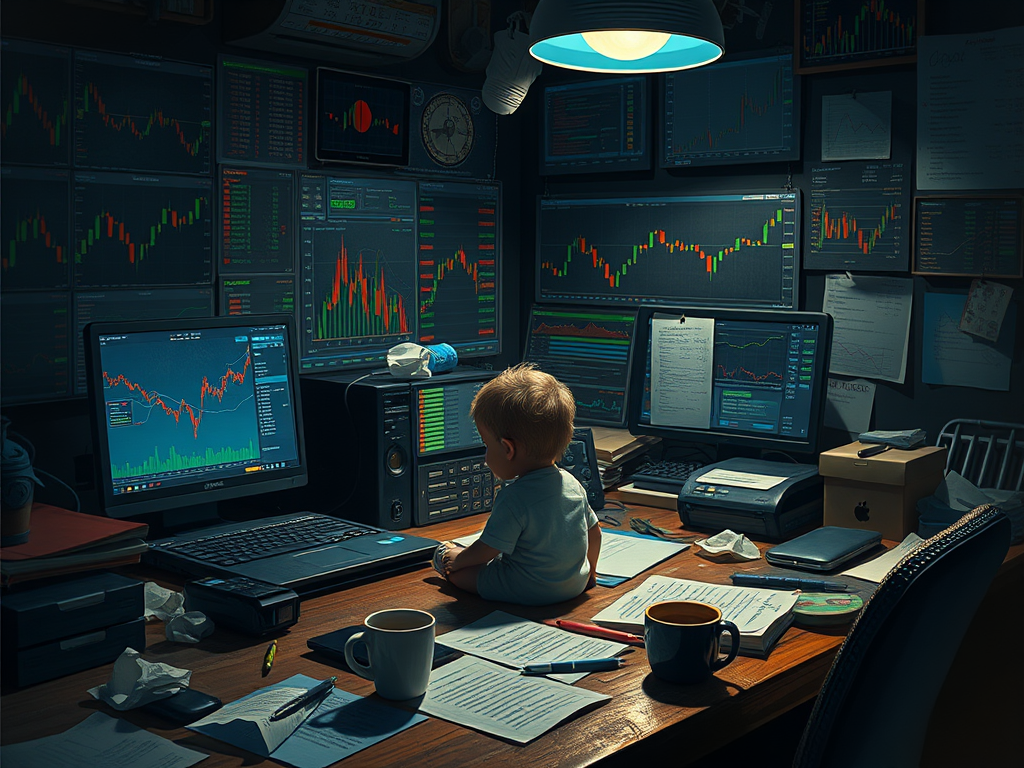
    Think about how babies learn to walk. There is no such thing as the baby who stands up one day and just struts off across the room like a tiny little Steve Jobs in a diaper. Every single one of them falls. It’s not just expected—it’s how they learn balance, strength, and how to recover.

    Same with trading. If you haven’t fallen down, you don’t even know what you don’t know.


    How to Tell If This Is You

    Here’s a quick check. If you answer “yes” to more than a few of these, you’re in the early fog—and that’s okay:

    • Are you changing your rules every week because “this week’s market was different”?
    • Do you find yourself winning and still feeling confused?
    • Do you lose and immediately go back to the drawing board, convinced your strategy is trash?
    • Do you get shaken out of trades right before they do what you originally expected?
    • Do you feel like trading is 70% technical and 30% sorcery?
    • Are you suspicious that other traders are seeing something you’re not?

    Sound familiar?


    The Real Problem: No Control Group

    In science, if something fails, you rerun the experiment. You isolate variables. You tweak one thing at a time.

    In trading? Good luck. Markets change. Your discipline fluctuates. News bombs drop. And the sample size is never large enough for comfort. So you don’t know if your system works. You don’t know if your edge is real. And that not-knowing will eat you alive if you let it.


    What You Can Do

    Here’s the lifeline: you need structure. Not answers. Not certainty. Structure.

    • Pick a strategy and stick to it for 100 trades.
    • Track everything—setup type, execution, emotion, result.
    • Categorize your losses: was it you, the market, or the system?
    • Revisit only after you’ve collected real data—not vibes.

    And above all, start building the muscle of self-trust. That means obeying your own rules. That means exiting when you said you’d exit. That means not revenge-trading because your feelings got hurt.


    Final Word

    The early years are foggy for everyone. That’s not a failure. That’s the climb. And clarity doesn’t come from brilliance—it comes from endurance, data, and doing the work. The traders who make it through aren’t necessarily the smartest. They’re the ones who kept walking through the fog without throwing away the map.

    If that’s you—keep going.

    You’re not lost. You’re just early.

  • Why Learning to Trade Is So Hard

    Why Learning to Trade Is So Hard

    Learning to trade is hard.

    Not “organic chemistry” hard. Not “learning Mandarin from scratch” hard.
    It’s something worse: It’s ambiguous.

    You don’t get a clean answer. No red X or green check.
    No clear sense of whether you did it right—only a P&L that whispers, “Maybe.”

    And that’s the killer.

    Most things you learn have a feedback loop that makes sense. You shoot a basketball. It goes in or it doesn’t. You write a song. It moves someone or it doesn’t. But trading? You can do everything wrong and still make money. Or do everything right and get stopped out like a rookie.

    So let’s get to the real reason this is so brutal:

    You can’t tell if your system is bad—or if you’re just bad at executing it.

    And that’s where traders lose their minds.

    You start second-guessing.
    You change systems too early.
    You stick with losers too long.
    You tell yourself it’s just variance—but secretly you think you’re the problem.

    Spoiler: You might be the problem.
    But the system might be garbage too. And until you get consistent, you won’t know.

    Welcome to the most maddening apprenticeship in the world.


    The Real Curriculum of Trading

    You thought you were here to learn price action?

    Nah.

    You’re here to learn how to not lose your mind while waiting to know if you’re good.

    You’re learning how to:

    • Trust a process you can’t prove until after the fact.
    • Take the same setup five times in a row even if the last three were losers.
    • Exit a losing trade even when every bone in your body says “just hold a little longer.”
    • Walk away from the screen when your P&L is red and your ego is screaming.

    These are not “trading skills.”
    These are emotional skills. Psychological endurance. Risk tolerance. Identity management.

    No course on candlestick patterns is going to give you that.


    Why Most People Quit

    Most people don’t quit trading because it’s boring or because they can’t understand the mechanics.

    They quit because they can’t tolerate the ambiguity.
    They can’t sit with the idea that they’re six months into this thing and still don’t know if they’re improving—or just creatively blowing up their account in slower motion.

    They crave certainty in an uncertain game.

    And that’s fatal.

    Because trading doesn’t hand you certainty. It offers you probability.
    It offers you edge.
    And it offers you pain.

    Your job is to get good enough at managing the pain to let the edge play out.


    If You’re Still Here…

    If you’re still at it—still refining your process, still showing up, still trying to do the boring, disciplined thing instead of chasing dopamine—then you’re already further than most.

    And if you’ve got a system with a true edge, even a small one?
    Then it’s not about your strategy anymore.
    It’s about your survival.

    Not blowing up. Not giving in.
    Not needing to be right—just needing to follow the rules long enough to become right.

    Because the truth is:

    Trading doesn’t reward intelligence. It rewards endurance.

    So ask yourself:

    Can you execute a good plan poorly without losing faith in it?

    Can you trade like a machine even when your emotions are howling?

    Can you sit in ambiguity long enough to find clarity on the other side?

    If the answer is yes—even on your bad days—then you might actually make it.